
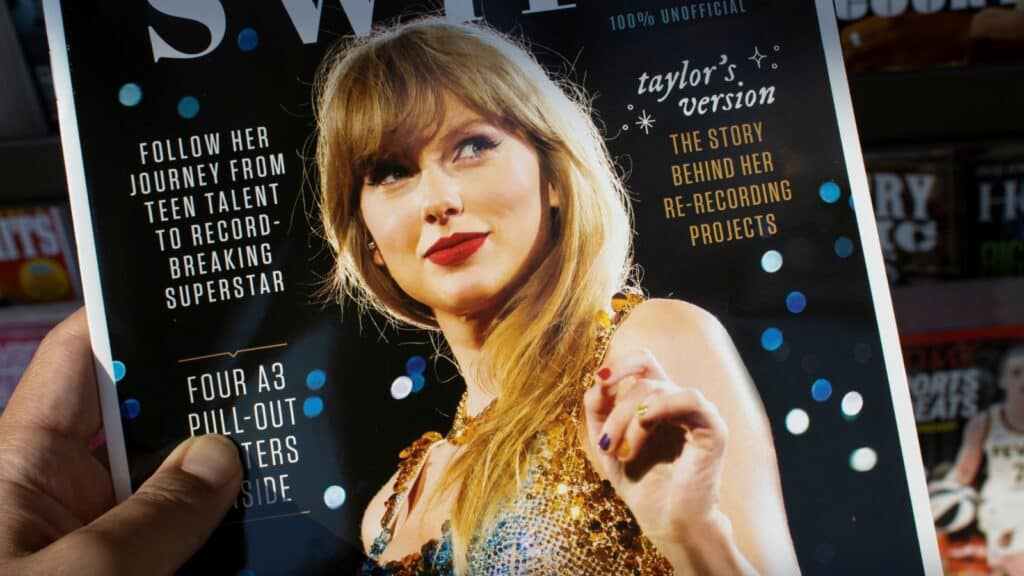
Taylor Swift has the kind of fans who don’t simply like her but instead stick with her for life. They’ll memorize music videos and analyze every word she’s ever said for new clues, somehow finding little details in everything. She has inspired a kind of loyalty in her fans that has even interested psychologists, who are curious to know how so many people have built their own identity around a single person. Let’s find out the facts.
Parasocial relationships
Psychologists use the term “parasocial relationship” to describe the kind of connection that feels personal to one person, even though the feelings aren’t actually two-sided. Essentially, a parasocial relationship happens when somebody becomes part of your mental circle because you’ve watched them or listened to them for a long time. You absorb years of their personality.
Donald Horton and Richard Wohl actually described this sort of relationship decades ago, long before social media existed. But today, Taylor Swift’s sheer level of popularity and her fans’ love for her fit the characteristics of a parasocial relationship.
People who have listened to her for years often claim that they feel as though they’ve grown up alongside her, even though they don’t actually know her personally. But experiencing her songs at different ages and having different albums tied to different memories makes her seem like a familiar person. Psychologists say that familiarity itself is enough to create emotional closeness.
Self-disclosure and Taylor Swift’s online persona
One of the big reasons why Swift’s fans feel so close to her is down to how much she shares. Not necessarily in an appropriate way, but rather, the sheer number of behind-the-scenes posts and the long captions on her social media. It’s the little notes about writing and the pieces of her life she chooses to put out there that engage fans.
Psychologists refer to it as “self-disclosure,” and it’s one of the clearest ways a public figure can strengthen their fans’ parasocial feelings. When someone opens up, even a little, people naturally feel more connected to them. Many of Swift’s fans have seen or listened to her talk about heartbreak, stress, friendships, and her creative process in a rather open way.
Once you factor in that she’s been doing so for over ten years, it’s not hard to see why the emotional bond deepens between Swift and her fans. That’s not to say that the relationship is mutual. Rather, it’s simply that the human brain reacts to personal information from celebrities in the same way that it does from loved ones. We see it as a sign of closeness.
Fan identity and the “Swiftie” label
Let’s not forget about the name that Swift’s fans have for themselves. They’re called “Swifties,” and the term itself has quite a bit of weight to it. People build part of their identity around groups they feel good about being part of. It’s part of identity theory, which states that when a group makes you feel connected or understood, it becomes part of how you describe yourself.
For many Taylor fans, being a Swiftie is a part of their identity. Some fans even say that one of the first times they felt part of a community was through listening to her music, causing the term to be even further ingrained in people’s sense of self. The label of “Swiftie” has become a part of how people talk about themselves.
When Taylor wins something, Swifties feel like they’ve won. When she loses, they lose. The emotional reaction feels more intense for her fans because it connects to their sense of personal identity, rather than simply music taste.
Intense enthusiasm and fanaticism in pop fandom

Everybody is a fan of something or other. Psychologists sometimes use the word “fanaticism” to talk about people’s love for something, although not necessarily in a negative way. Instead, the term is used to describe enthusiasm that becomes a big part of someone’s routine. It might include planning outfits for a concert months out, or keeping track of release dates like they’re holidays.
Researchers have looked into high-engagement fan groups, and they’ve noticed certain patterns among them. Intense fans spend lots of time thinking about the artist and have strong emotional reactions to whatever the star does. They have a tendency to make their sense of fandom part of their everyday life. Taylor’s fans match that description.
Her fans are fans of her in the same way that major sports fans are of their teams. They build habits around the things they love. Instead of the focus on being “too much,” this is simply how passionate groups behave when something gives them energy or a sense of comfort.
Music, emotion, and personal storylines
Music usually becomes part of someone’s emotional history, and psychologists have found that people will tie a song to a breakup or a move. They’ll connect the song to a friendship or a lonely year, perhaps even a good year, whatever was happening at the time. Taylor Swift’s writing style practically invites that.
Swift’s songs are usually centered around a kind of storytelling. Her fans say things like “that album reminds me of college” or “this song got me through that bad breakup,” and that perfectly fits what the research describes. Her music becomes a timeline for people. The fact that Swift re-releases music or tours through older eras means people revisit those memories over and over. It reinforces the emotional connection.
Clearly, her fans’ intensity doesn’t come out of nowhere.