
Few topics reveal how much the world has changed quite like the way people fall in love, commit, and break apart. Ask your grandparents how they met and you'll likely hear a story from a school dance or a neighborhood gathering. Ask a Gen Z adult the same question and you might get something involving an algorithm, a curated profile, or a slow-burn situationship that never quite had a label.
What's truly fascinating is that right now, four distinct generations are navigating romance at the same time, each shaped by wildly different economic pressures, cultural turning points, and technological realities. The gap between a Baby Boomer's approach to marriage and a Gen Z-er's reluctance to even define a relationship is wider than most people realize. Let's dive in.
Baby Boomers: The Generation That Rewrote the Rules on Divorce

Baby Boomers: The Generation That Rewrote the Rules on Divorce (Image Credits: Unsplash)
Here’s the thing about Baby Boomers: they’re not the traditionalists they’re often made out to be. With Boomers, things changed drastically. Born into the prosperous post-war era, this is one of the biggest single generations in history – a group that welcomed rock and roll, civil rights, and television, and pushed hard against traditional social norms. Their rebellious streak extended directly into how they approached marriage and family life.
Baby Boomers have the highest divorce rate of any generation, especially in later life. “Gray divorce” – separation after the age of 50 – has doubled since the 1990s, according to Bowling Green State University. As of 2025, more than a third of all divorces involve people over 50, a trend largely driven by Boomers ending long-term marriages. That’s a sobering number that tells a much more complicated story than any romanticized version of Boomer love.
Generation X: The Quietly Pragmatic Middle Child

Generation X: The Quietly Pragmatic Middle Child (Image Credits: Unsplash)
Generation X takes a pragmatic approach to love and relationships, focusing on personal happiness and seeing a partner as a means to enhance that happiness. This generation values pragmatism and independence in relationships, with more emphasis on individualism than on social obligations. Honestly, Gen X often gets overlooked in these conversations, squeezed between the cultural dominance of Boomers and the obsessive coverage of Millennials and Gen Z.
Gen X came of age in the 1970s and 1980s and saw shifting attitudes around divorce. Divorce became more normalized, and people began waiting longer to marry. Expectations of personal happiness and equality in relationships became more prominent. For the most part, Generation X responded to watching their parents’ marriages implode by staying married themselves. Once they said “I do,” Gen Xers remained married at higher rates than the preceding generation. Roughly 70% of marriages that took place in the 1990s made it to their 15th anniversary.
Millennials: Delaying the Aisle, Not the Dream

Millennials: Delaying the Aisle, Not the Dream (Image Credits: Unsplash)
Millennials placed a strong emphasis on equality, fairness, and partnership in relationships. Many delayed marriage to focus first on career and personal development. This isn’t cold-heartedness. It’s strategy. Millennials often face student loan debt, high housing costs, and unstable job markets. Many postpone marriage due to these financial challenges, and evidence suggests that waiting longer is correlated with a lower divorce rate among Millennials.
Studies show that only around 18% of millennial marriages end in divorce after 10 years, compared to 23% for Generation X and 22% for Baby Boomers. One of the biggest shifts among Millennials is the age at which they choose to marry. Previous generations often married in their early twenties, but Millennials are waiting longer. The average age of first marriage in the U.S. is now around 30 for men and 28 for women, up from 23 and 20, respectively, in the 1960s. When they finally do commit, it seems to stick.
Gen Z and Dating Apps: Love and Loathing in Equal Measure

Gen Z and Dating Apps: Love and Loathing in Equal Measure (Image Credits: Unsplash)
A staggering nine out of ten Gen Z adults report frustration with dating apps, which is almost ironic given how digitally fluent this generation is. According to a 2023 Statista study and the 2024 Hinge D.A.T.E. report, Gen Z is becoming increasingly critical of what dating apps have to offer. The apps promised connection and delivered something far more transactional and exhausting.
According to a survey conducted in the United States in April 2024, Generation Z was more focused on finding a serious relationship through dating apps than any other generation, with roughly half stating they were looking for that type of commitment. Overall, about the same share of Millennials reported using dating apps for this reason. Yet the tools don’t seem to be delivering on that emotional need. Research from the Society for Human Resource Management found that half of employees have engaged in an office romance, while a 2024 survey from Resume Builder reported that nearly one third of workers aged 18 to 44 have started a workplace relationship since returning to in-person work. Gen Z appears most likely to pursue these connections, with nearly half saying they have dated a coworker.
The Communication Gap: What Gen Z Actually Struggles With
The Communication Gap: What Gen Z Actually Struggles With (Image Credits: Pexels)
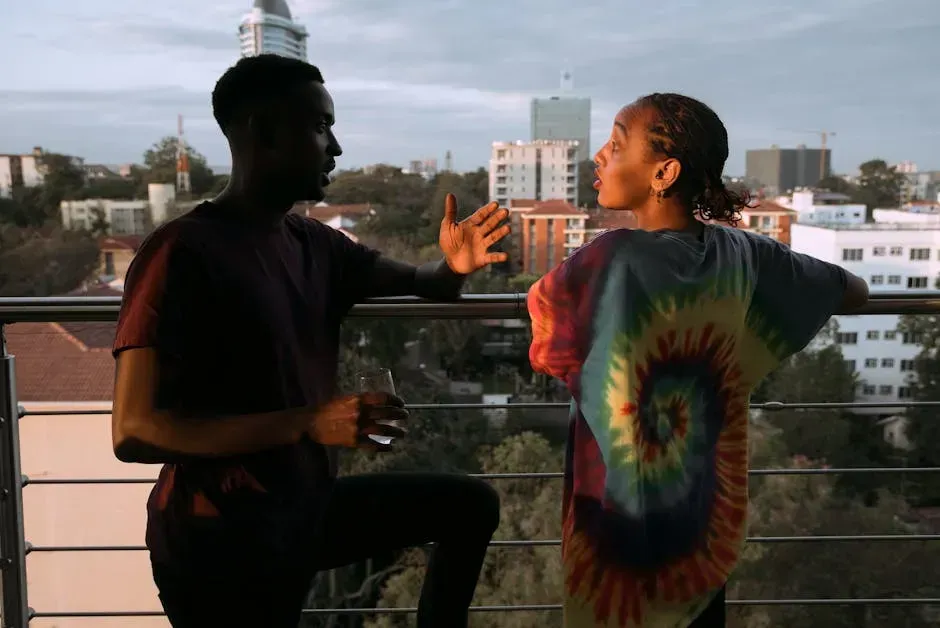
You’d think a generation raised on social media would be the most expressive in history. The data says otherwise. After surveying more than 30,000 Hinge daters across identities, a 2025 Hinge report revealed that the vast majority of Gen Z daters want to find new ways to build deeper connections with the people they’re dating. However, Gen Z daters are 36% more hesitant than Millennials to begin a deep conversation on the first date – a disconnect Hinge calls “The Communication Gap.”
Behind the hesitation to connect is something almost universal: the fear of what the other person will think about you if you open up. As a result, many daters experience a “vulnerability hangover” – when they’ve shared openly, feel exposed, and second-guess every word. A 2023 Match study found that roughly six in ten Gen Z adults are confident in their ability to speak openly and honestly with their partner, which suggests the challenge lies less in the will and more in the moment when things get real.
Gen Z and Monogamy: The Surprising Comeback of Commitment

Gen Z and Monogamy: The Surprising Comeback of Commitment (Image Credits: Pixabay)
I know it sounds crazy given the reputation Gen Z has for “situationships” and undefined entanglements, but here’s a plot twist: this generation is surprisingly pro-monogamy. A survey published by Feeld in September 2024 found that monogamy was the “most preferred relationship style” among Gen Z – a contrast to Millennials, whose preference was for ethical non-monogamy. Gen Z was also the generation most likely to report fantasizing about monogamy, and the least likely to fantasize about being in an open relationship.
Gen Z has adopted a more idealistic attitude toward love, with many saying they want to find their soulmate. More than 40% are in serious relationships, and more than a quarter are looking for “the one,” according to 2024 findings from Her Campus Media. Overwhelmingly, 93% said they were interested in the idea of marriage. Only about one in five young people today agrees with the notion that marriage is irrelevant. Compared to 20 years ago, when roughly four in ten Millennials said the same thing, there seems to be a growing acceptance toward tying the knot.
The Romance Gap: Why Young Men Are Stepping Back

The Romance Gap: Why Young Men Are Stepping Back (Image Credits: Unsplash)
One of the most striking and honestly troubling trends in generational relationship data is what researchers have started calling the “romance gap.” A survey conducted by the Survey Center on American Life found that only 56% of Gen Z adults, and 54% of Gen Z men, said they were involved in a romantic relationship at any point during their teenage years. More than three quarters of Baby Boomers and Generation Xers report having had a boyfriend or girlfriend as teenagers. Meanwhile, nearly half of Gen Z men today report having no relationship experience at all during their teen years – double the rate for older men.
Young men are more likely to be single, contributing to what some researchers describe as a “relationship recession.” When it comes to relationships, a fair percentage of Gen Z men are more patriarchal in their desires than not just Millennials, but Gen X and Boomers too. In a global study of 23,000 people, almost a quarter of Gen Z men agreed that a woman should not appear too independent or self-sufficient, compared with roughly one in eight Baby Boomer men. It’s a contradiction that researchers are still trying to fully understand.
Identity, Sexuality, and How Each Generation Defines "Normal"
Identity, Sexuality, and How Each Generation Defines "Normal" (Image Credits: Pixabay)
Perhaps nowhere is the generational divide more visible than in how each cohort understands sexual identity and the very concept of a relationship structure. Seventeen percent of Generation Zers, on average across 26 countries, currently identify as LGBT+, compared to 11% of Millennials, 6% of Generation Xers, and 5% of Baby Boomers. That’s not a small difference. It reflects a fundamentally different relationship with identity itself.
Recent surveys show that nearly one in four Gen Z adults identifies as LGBTQ+, far exceeding the national average of 10%. Millennials follow at around 15%, with older generations reporting much lower rates. Among Gen Z, young women in particular are significantly more likely to identify as LGBTQ+. Gen Z’s approach to monogamy and fluid identities reflects a reimagining of traditional values through a contemporary lens. Gen Zers are leading the charge in demonstrating how sexual and gender identities are becoming part of people’s evolving journeys rather than fixed points.
The Situationship Era: Why Labels Feel Like a Trap

The Situationship Era: Why Labels Feel Like a Trap (Image Credits: Unsplash)
The word “situationship” barely existed a decade ago. Now it defines an entire generation’s dating vocabulary. Despite wanting the steadiness and stability of monogamy, Gen Z keeps finding themselves in ambiguous and ill-defined situationships, given that this is a particularly risk-averse generation. However, there’s a growing awareness that skirting around the “what are we?” question doesn’t eliminate the risk of getting hurt – if anything, it actually raises the likelihood of experiencing misunderstanding and heartbreak.
As dating apps continue to dominate the landscape, many Gen Z singles say initiating contact is becoming increasingly difficult. According to one survey, nearly three quarters of Gen Z singles believe people their age are less likely to make the first move, compared with roughly six in ten singles overall. This hesitancy adds another layer of complexity to modern dating. Think of it like everyone standing at a door, waiting for someone else to knock first. Research supports the idea that young people are having less sex than previous generations, birthrates are falling, and people are so socially isolated that loneliness has been declared a global public health concern by the World Health Organisation.
What All Generations Actually Have in Common
What All Generations Actually Have in Common (Image Credits: Pexels)
Strip away the generational labels, the app preferences, the political differences over gender roles, and something surprisingly consistent remains. We usually have more in common than not, regardless of age. When it comes to romantic relationships, almost everyone wants to foster good communication, deep emotional connections, and physical intimacy. The destination is the same. The routes just look completely different.
The lives of younger Americans were uniquely affected by the 2020 pandemic. About 60% of Gen Z adults and 59% of Millennials report that the 2020 pandemic influenced the trajectory of their lives either a great deal or a fair amount. Less than half of Generation X and only 43% of Baby Boomers report that the pandemic altered their lives in a meaningful way. That shared disruption of the last few years may have reshuffled priorities across every generation, pushing even the most commitment-averse to wonder what they actually want from another person. It’s hard to say for sure, but it seems like the hunger for real human connection has never been stronger – no matter how old you are or what app you’re using to find it.
What surprises you most about how your own generation approaches love? Tell us in the comments.