
Nobody hands you a script when you become a parent. You figure it out as you go, which means plenty of moments that make you want to melt through the floor. The fumbled explanation of where babies come from. The public tantrum you couldn’t stop. The silence after your teenager has clearly heard something you didn’t mean to say.
What’s interesting, though, is that research consistently separates the moments that merely feel mortifying from those that leave a genuine mark on a child’s development. The two lists don’t always overlap. Some of parenting’s most cringe-worthy exchanges turn out to be relatively harmless. Others, so small they barely register in the moment, shape a child’s sense of safety and self for years to come. Here’s an honest look at both.
Awkward Moment #1: The "Where Do Babies Come From?" Question

Awkward Moment #1: The "Where Do Babies Come From?" Question (Image Credits: Pexels)
It usually arrives at the worst possible time. In the grocery store checkout line. At a family dinner. In earshot of a grandparent who has strong opinions. Most parents feel a jolt of panic, even though the question is completely developmentally normal. When caregivers are asked to rank the parenting conversations they find most stressful, talking about sex and reproduction almost always tops the list. Common fears include saying the wrong thing or explaining it in a way that's confusing.
The good news: the discomfort you feel is not a sign you're doing it wrong. Parents should answer questions honestly, even when it's awkward. Children typically ask questions they are ready for the answers to, so you can answer what they've asked without going into more detail than needed. They'll ask for more when they're ready. The question isn't a crisis. It's an opening.
Awkward Moment #2: Losing Your Temper in Front of Your Kids
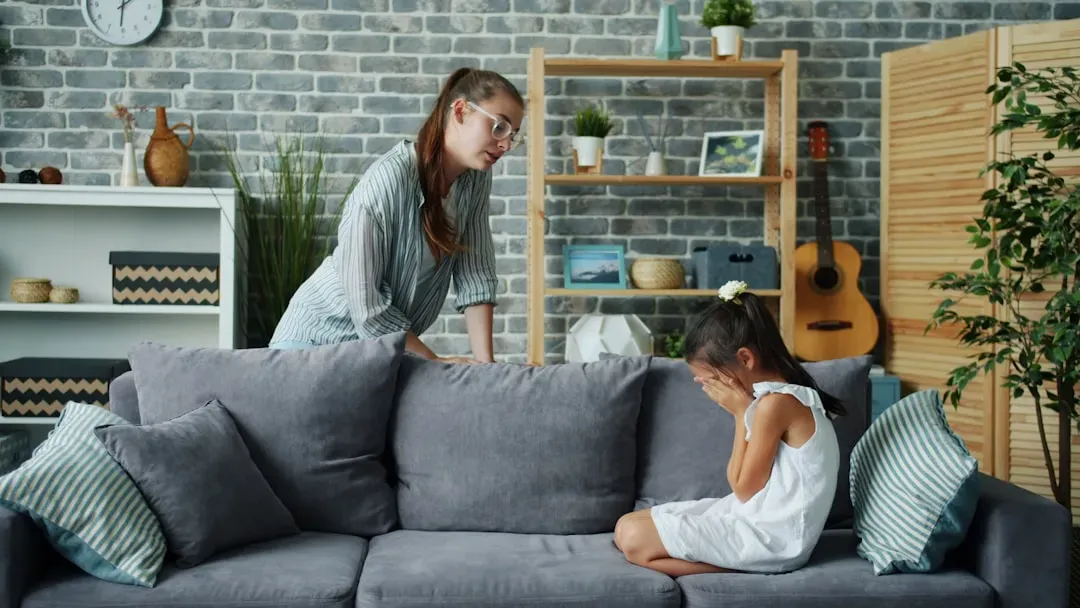
Awkward Moment #2: Losing Your Temper in Front of Your Kids (Image Credits: Unsplash)
Every parent snaps at some point. It might be after the third spilled cup of the morning or after a homework battle that's run forty-five minutes longer than it should have. The guilt that follows tends to feel enormous, often disproportionate to what actually happened. Parenting today may feel more difficult in part because of the rise of intensive parenting, a standard characterized by consistent involvement and emotional responsiveness uniquely tailored to each child. That standard makes a single flare of temper feel like a major failure.
The reality is more forgiving. All parents snap. What matters most is showing your child how to make things right. Acknowledging what happened and taking responsibility teaches accountability in a way that staying silent never could. The loss of temper is the awkward part. What comes after it is the part that counts.
Awkward Moment #3: The Puberty Talk That Came Out Completely Wrong

Awkward Moment #3: The Puberty Talk That Came Out Completely Wrong (Image Credits: Pexels)
Most parents approach the puberty conversation with the best of intentions and emerge from it feeling like they said everything in the wrong order. Too clinical. Too vague. The child stared at the wall the whole time. It's deeply uncomfortable for everyone involved, and that's essentially universal. Caregivers might be uncomfortable about the topic of sex because of personal histories, family upbringing, or cultural taboos. Many parents also report that they themselves had little or no such conversations with their own parents.
Still, the stumbling doesn't cancel the value of having tried. Children and teens who have ongoing conversations with caregivers about puberty and sex tend to delay the onset of sexual behavior, end up with fewer sexual partners during adolescence, and are much more likely to engage in safer and healthier behaviors. These conversations have a protective rather than harmful effect. The awkwardness is real. So are the benefits of pushing through it.
Awkward Moment #4: Your Child's Public Meltdown
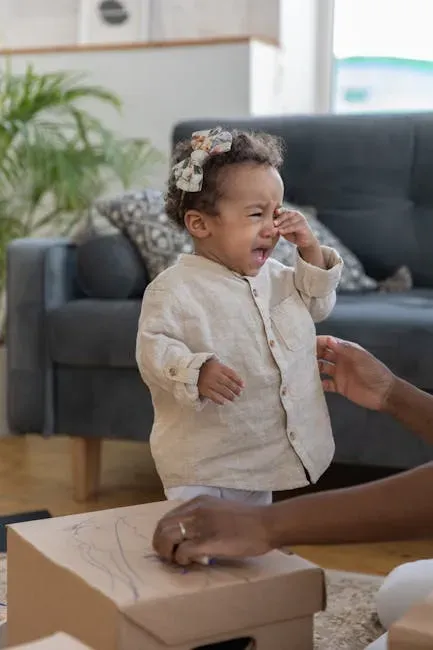
Awkward Moment #4: Your Child's Public Meltdown (Image Credits: Pexels)
Few experiences feel as isolating as standing in the middle of a supermarket while your child screams, and every nearby adult decides this is the moment to offer their quiet judgment. The heat of embarrassment is real. So is the instinct to do anything, say anything, just to stop the scene. Childhood defiance is exhausting, but it's rarely random. Research shows that what looks like willfulness is often a child trying to get a legitimate need met.
In developmental terms, public meltdowns are normal. They're not evidence of a parenting crisis. Feelings drive behavior. When adults help kids label emotions and calm their bodies, behavior usually improves. Offering simple choices that restore a sense of control, like a sip of water or a short walk, can help. Over time, this kind of emotion coaching becomes second nature. The onlookers will forget it by tomorrow. Your child won't forget that you stayed calm.
Awkward Moment #5: Catching Your Teenager in an Obvious Lie

Awkward Moment #5: Catching Your Teenager in an Obvious Lie (Image Credits: Unsplash)
You know. They know you know. They're deciding whether to double down or fold. There's a particular tension in that moment that makes most parents either react too harshly or say nothing at all, just to escape the discomfort. Neither tends to go well. Parent-teen disagreements are common and frustrating, but if you know what to look for, these moments can become opportunities to strengthen your relationship with your child.
What tends to help is a measured, non-escalating response that keeps the door open rather than slamming it shut. Support from caring adults is essential as teenagers navigate experiences that build the autonomy and resilience they need to thrive as adults. Even as they seek independence, young people want their parents to notice and acknowledge them. In some precarious moments of adolescent uncertainty, parental support can have a powerful impact. The lie itself matters less than whether your teen believes they can come to you next time.
Awkward Moment #6: Not Knowing the Answer to Your Child's Question

Awkward Moment #6: Not Knowing the Answer to Your Child's Question (Image Credits: Pexels)
Kids ask things that would stump a philosophy professor. Why did that person die? Is there a God? Why are some people mean? The instinct to provide a confident, reassuring answer is understandable, but the uncomfortable truth is that you don't always have one. Many parents bluff, then feel quietly bad about it afterward. Modern parenting often comes with pressure to do more, buy more, and plan more. The evidence, though, consistently points to something far simpler: you are the most important factor in your child's development, not because you need to be perfect, but because your presence, responsiveness, and connection shape your child in ways nothing else can.
Saying "I don't know" with honesty and curiosity is genuinely better than a wrong answer delivered confidently. It models intellectual humility and shows your child that not knowing something is not something to be ashamed of. Life is full of teachable moments. Uncertainty handled gracefully is one of the best ones.
Awkward Moment #7: The Birds-and-Bees Talk with a Teenager Who Already Knows Everything

Awkward Moment #7: The Birds-and-Bees Talk with a Teenager Who Already Knows Everything (Image Credits: Unsplash)
By the time many parents work up the courage to have a more detailed conversation about sex with a teenager, the teen has already absorbed a version of that information from friends, the internet, or both. Sitting down for an earnest talk and being met with eye-rolls and exasperated sighs is genuinely deflating. About half of all teens feel uncomfortable talking with their parents about sex, compared to far fewer parents who feel the same discomfort.
The discomfort doesn't make the conversation pointless. Research tells us that kids and teens who have regular conversations with their parents and caregivers about sex and relationships are less likely to take risks with their sexual health and more likely to be healthy and safe. The eye-roll is just the cover. Something underneath it is still listening. Research shows that parents who talk openly about sexuality to their children have more influence over their child's sexual behaviors as they grow.
Awkward Moment #8: Giving Unsolicited Parenting Advice (and Instantly Regretting It)

Awkward Moment #8: Giving Unsolicited Parenting Advice (and Instantly Regretting It) (Image Credits: Pexels)
You watch another parent handle a situation in a way that makes you wince, and something slips out before you've had time to stop it. Or maybe a relative asks what you think, and you answer honestly, and immediately wish you hadn't. The social fallout from parenting opinions can be swift and uncomfortable. What counts as "good" parenting looks different in different contexts, different cultures, and for different young people at different ages.
The research supports a little more humility all around. Different parenting styles shape children's self-esteem, academic achievement, and emotional regulation in meaningfully different ways, and cultural contexts, social stratification, and gender dynamics all mediate these relationships. There's rarely a single right answer. Most of us are working with incomplete information, our own included.
Awkward Moment #9: Your Child Repeating Something You Said at Exactly the Wrong Moment
Awkward Moment #9: Your Child Repeating Something You Said at Exactly the Wrong Moment (Image Credits: Unsplash)
Children absorb everything. The muttered comment about a neighbor, the frustrated remark about a coworker, the word you use when you stub your toe. They tend to replay these at dinner parties, school pickup lines, and family gatherings. It's one of parenting's most reliable sources of mortification. Children learn fastest by watching. They notice how adults handle stress, speak to neighbors, and treat mistakes. Parents act as the first teachers, coaches, and advocates.
It's also a reminder that modeling is happening constantly, not just during the moments you've consciously designated as teaching moments. In everyday life, there are countless opportunities to demonstrate problem-solving, impulse control, and the healthy expression of feelings. Parents also need to stay mindful of avoiding inappropriate coping mechanisms or unproductive methods of handling conflict. The offhand remark your child parrots back to grandma is, in its own uncomfortable way, proof that you're their primary model for how to be a person.
Awkward Moment #10: The First Time Your Child Prefers Someone Else Over You
Awkward Moment #10: The First Time Your Child Prefers Someone Else Over You (Image Credits: Unsplash)
It happens earlier than most parents expect. The phase where a toddler only wants the other parent. The stage where your child announces that grandma does it better. The moment your teenager would rather talk to a friend's mom than you. It stings in a way that's hard to articulate, partly because it feels irrational to be hurt by a small child's preference. What the science tells us is that it's not so much the number of parents or even the amount of time spent with a child that matters most. It's really the quality of the relationship and the quality of interaction between the two.
The phase almost always passes. More importantly, it doesn't reflect the depth of your bond. Regular, frequent moments focused on the child, without distraction from phones or screens, form the foundation of a good relationship. It helps children build confidence and learn that they can turn to their parents when they face difficulty. Consistency outlasts any preference phase. Always.
What Actually Matters Most #1: Apologizing to Your Child After You Get It Wrong

What Actually Matters Most #1: Apologizing to Your Child After You Get It Wrong (Image Credits: Unsplash)
This one is counterintuitive for many parents, especially those who were raised in households where parents simply didn't apologize. It can feel like a loss of authority, a sign of weakness, or an admission that undermines your standing. Research says the opposite. Parents who reported apologizing more frequently to their adolescents after offending them tended to report a more securely attached relationship with their adolescents.
There is a concern that parental apologies might undermine parental authority, an important factor for healthy parent-adolescent relationships. Contrary to this assumption, research on authoritative parenting suggests that a parent's authority status may be unaffected by their decision to apologize. Apologies that acknowledge the adolescent's experience and avoid defensiveness predict higher parent-adolescent relationship satisfaction, healthier motivations to forgive, and greater openness from adolescents toward their parents. Mothers who apologized in more genuine, non-defensive ways tended to have adolescents with fewer behavioral and emotional problems and more prosocial behaviors.
What Actually Matters Most #2: Being Physically and Emotionally Present Without a Distraction

What Actually Matters Most #2: Being Physically and Emotionally Present Without a Distraction (Image Credits: Unsplash)
Not all presence is equal. Being in the same room while mentally elsewhere, phone in hand, is technically being there but practically not. Regular, frequent moments of focused attention on the child, free from phones, television, or computers, form the foundation of a good relationship. It helps children build confidence and learn that they can turn to their parents when they face difficulty.
Full attention can feel rare in a busy day, but it doesn't have to last long to matter. Even a few minutes of truly focused interaction, without distractions, can have a significant impact. Research shows that positive parenting, including distraction-free engagement, helps children do better in school, have fewer behavioral problems, and stronger mental health. The length of the moment matters far less than the quality of your attention within it.
What Actually Matters Most #3: The Serve-and-Return Exchanges in Early Childhood

What Actually Matters Most #3: The Serve-and-Return Exchanges in Early Childhood (Image Credits: Unsplash)
Back-and-forth interaction between a parent and a young child, a baby babbles, a parent responds, the baby babbles again, builds the brain in ways no app or toy can replicate. During the first few years of life, a child's brain develops at an astonishing pace, with over one million neural connections forming every second in early childhood. These connections don't form randomly; they are shaped by experience, especially relational experience. This is where the concept of serve and return becomes critical.
Among the many relationships that influence children's growth and development, perhaps the most influential is the one that exists between parent and child. Recognition of the critical importance of early parent-child relationship quality for children's socioemotional, cognitive, neurobiological, and health outcomes has contributed to a shift in understanding what shapes child development. These exchanges don't require toys, a schedule, or a lesson plan. They just require a parent who looks up and responds.
What Actually Matters Most #4: Naming Emotions for Your Child

What Actually Matters Most #4: Naming Emotions for Your Child (Image Credits: Unsplash)
When a child is melting down, the last thing most parents feel like doing is sitting with the emotion rather than fixing it or stopping it. Yet research on emotion coaching consistently shows that naming what a child is feeling, rather than rushing past it, has measurable effects on development. Feelings drive behavior. When adults help kids label emotions and calm their bodies, behavior usually improves.
Children need both love and structure to grow and thrive. Although this sounds simple, putting it into practice can be challenging. A loving relationship provides the foundation for children to regulate their emotions and develop both confidence and self-esteem. Naming emotions is not about being permissive or avoiding consequences. It's about making a child feel understood first, which is often the only condition under which they can actually hear anything you say next.
What Actually Matters Most #5: Warmth and Consistency Over Time

What Actually Matters Most #5: Warmth and Consistency Over Time (Image Credits: Unsplash)
No single conversation, bedtime, or weekend trip defines a child's development. What the research points to, again and again, is the cumulative effect of warmth and consistency across thousands of ordinary interactions. The science is clear that it's the quality, the warmth, the consistency, and the supervision that caregivers provide to the child that really matters.
The National Academy of Sciences delineates four major responsibilities for parents: maintaining children's health and safety, promoting their emotional well-being, instilling social skills, and preparing them intellectually. Numerous studies suggest that the best-adjusted children are reared by parents who find a way to combine warmth and sensitivity with clear behavioral expectations. No single day needs to be perfect. The pattern across all the days is what shapes the child.
What Actually Matters Most #6: Allowing Your Child to See You Repair After a Mistake

What Actually Matters Most #6: Allowing Your Child to See You Repair After a Mistake (Image Credits: Unsplash)
Children learn not just from what you tell them but from what you demonstrate. When a parent makes a mistake and repairs it, openly and without excessive self-flagellation, that demonstration teaches something no lecture about accountability ever could. A parent's tendency to apologize, when driven by empathy and genuine concern rather than shame or withdrawal, produces a more secure parent-child attachment.
Research indicates that apologies are important in helping children repair relationships after conflict. Children report that receiving apologies helps to repair their trust and increases positive emotions. Apologies help children feel safe to make mistakes and to be their whole, imperfect selves. They help children feel seen in a world that too often overlooks individual worth. What you model when things go wrong matters just as much as what you model when things go right.
The gap between parenting moments that feel significant and moments that actually are significant is wider than most people realize. The embarrassing ones tend to be more survivable than they seem in the moment. The truly formative ones are often quieter: a parent putting down their phone, sitting with a feeling, saying they're sorry. Parenting isn't always about big gestures. It's mostly small ones, repeated often. That turns out to be both the humbling reality and the reassuring one.