
Every parent wants to do right by their kids. That much is universal. What’s far less universal is the approach – and decades of child development research now make it clear that not all parenting styles lead to the same outcomes. Some approaches build resilient, emotionally secure, high-achieving children. Others, despite being fueled by genuine love, quietly work against the very goals parents are chasing.
Parenting styles are critical in shaping a child’s development, behavior, and long-term well-being. Research from the American Psychological Association shows that consistent parenting styles are linked to better academic performance, stronger emotional health, and fewer behavioral issues in children. The science isn’t perfect, and children are wildly different from one another. Still, the patterns are clear enough to be worth knowing.
1. Authoritative Parenting: The Gold Standard
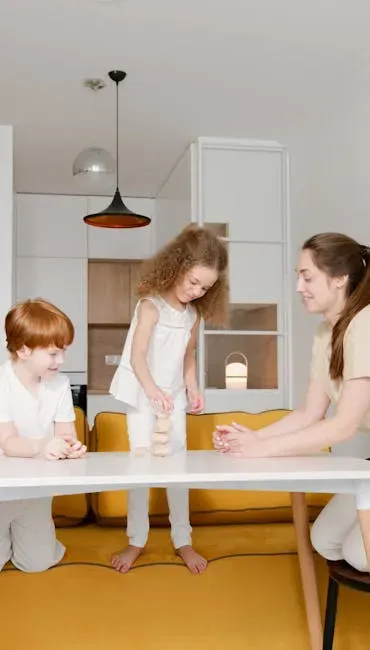
1. Authoritative Parenting: The Gold Standard (Image Credits: Pexels)
Authoritative parenting is a balanced approach where parents set clear rules and expectations but also show warmth and responsiveness to their children's needs. This style is often associated with positive child outcomes. It sits in the productive middle ground between being overly rigid and overly permissive – a balance that turns out to matter enormously for long-term development.
Research has linked authoritative parenting to many positive outcomes, including higher academic achievement, psychological well-being, executive functioning, increased motivation, better social skills, and fewer behavioral problems. Children raised by authoritative parents tend to exhibit higher academic performance, better emotional regulation, greater independence, and stronger social skills. This style's balance of warmth, structure, and high expectations promotes resilience and responsibility.
2. Positive Parenting: Connection-First Discipline

2. Positive Parenting: Connection-First Discipline (Image Credits: Unsplash)
A positive parent-child relationship contributes profoundly to effective functioning of the family and flourishing of the individual members. Empirical evidence has suggested positive associations between multiple aspects of positive parenting and offspring biopsychosocial health and well-being. For instance, greater offspring satisfaction with the parent-child relationship is associated with lower risk of subsequent drug use, unhealthy eating behaviors, insufficient sleep, and obesity.
Greater parent-child relationship satisfaction, and to a lesser extent greater parental authoritativeness and regular family dinner, were each associated with greater psychological well-being, fewer depressive symptoms, and lower risk of several adverse behaviors. Positive parenting doesn't mean conflict-free parenting. It means that the foundation is warmth and genuine connection, with discipline woven in rather than bolted on as an afterthought.
3. Attachment Parenting: Building Secure Foundations Early

3. Attachment Parenting: Building Secure Foundations Early (Image Credits: Pexels)
Attachment parenting focuses on a parent's connection and responsiveness to their child. This parenting style teaches that you can positively impact your child's emotional health and future relationships by being responsive to their needs and by keeping them physically close. Skin-to-skin contact is encouraged, and parents see a child's cry as a call for help rather than an attempt to manipulate them.
Parental attachment provides a sense of security and shapes the child's expectation from others, which sets the trajectory of child development and health. Attachment-based interventions have been shown to be effective in assisting parents and children to build more secure and healthy relationships. The research on early secure attachment is among the most robust in all of developmental psychology, making this one of the better-supported approaches in the field.
4. Gentle Parenting: Empathy With Boundaries

4. Gentle Parenting: Empathy With Boundaries (Image Credits: Pexels)
Gentle parenting is based on principles of attachment theory and positive discipline, advocating for understanding and meeting the child's needs rather than managing their behavior. Techniques such as active listening, validation, and problem-solving are central to this approach. Priorities are empathy, connection, and respect for the child's autonomy.
Gentle parenting emphasizes high levels of parental affection and parents' and children's emotion regulation. It appears to be distinct from other established measures of parenting approaches in its emphasis on boundaries, yet the enactment of those boundaries is not uniform. Researchers have found that gentle parenting strategies are less helpful for more serious challenging conduct, such as aggression, or for children who are more defiant to handle. It works best when boundaries are genuinely upheld, not just discussed.
5. Authoritarian Parenting: When Strictness Works Against Itself

5. Authoritarian Parenting: When Strictness Works Against Itself (Image Credits: Pexels)
Authoritarian parents typically engage in a one-way mode of communication where they establish strict rules that the child is expected to follow without question or negotiation. These rules are rarely explained, and children are expected to meet high standards without making mistakes. Errors are often met with punishment. This approach often feels intuitively correct to parents, especially those raised in strict households. The research, however, tells a more complicated story.
Research studies on discipline consistently show that strict, or authoritarian, child-raising actually produces kids with lower self-esteem who behave worse than other kids – and therefore get punished more. At home, children have well-defined boundaries set by their parents, dictating what they should do and how they should do it. As children reach adolescence, though, and become more independent, many haven't learned to self-regulate their emotions and make good decisions on their own.
6. Permissive Parenting: Too Much Freedom, Too Little Guidance

6. Permissive Parenting: Too Much Freedom, Too Little Guidance (Image Credits: Pexels)
Permissive parents might pride themselves on being their child's best friend. These parents are warm and nurturing with open communication. They are actively involved in their children's emotional well-being. They also have low expectations and use discipline sparingly. Permissive parents let children make their own choices, but also bail them out if it doesn't go well.
While children of permissive parents typically possess good self-esteem and decent social skills, they may also be impulsive, demanding, selfish, and struggle with self-regulation. In the permissive style of child-rearing, children are easily indulged, and their emotions, by and large, are not trained to be disciplined as they grow up. Thus, they act out when faced with complex tasks. Warmth without structure, in other words, is only half the equation.
7. Helicopter Parenting: Love That Quietly Limits

7. Helicopter Parenting: Love That Quietly Limits (Image Credits: Pexels)
Research confirms that children raised by hovering parents may be less able to deal with the challenging demands of growing up. Struggling to regulate their emotions and behavior effectively, such children have a harder time making friends, struggle in school, and are more likely to be disruptive in the classroom. The troubling part is that helicopter parents are typically highly motivated by love – they hover precisely because they care deeply about outcomes.
A study examined the link between college students' well-being and their parents' levels of control. Students who reported having over-controlling parents experienced significantly higher levels of anxiety and depression and less satisfaction with life. Moreover, the students felt that these effects were due to the violation of their basic psychological needs for autonomy and competence. Research has found that when parents are anxious about potential threats their children may face in the world, that anxiety can be transmitted to the kids, contributing to their own anxiety and an intolerance of uncertainty.
8. Snowplow Parenting: Clearing the Path, Blocking the Growth

8. Snowplow Parenting: Clearing the Path, Blocking the Growth (Image Credits: Pexels)
Snowplow parenting tends to be rooted in good intentions. Like a snowplow clearing the road of ice and snow, parents clear the path for their children's success by taking ownership of their children's problem-solving abilities. Snowplow parenting takes overinvolvement to an even greater extreme. These parents actively remove all obstacles from their child's path, ensuring the child avoids any discomfort or failure entirely. While this approach may create a smoother journey in the short term, it often has long-term consequences for the child's growth.
Younger children whose parents remove all obstacles come to believe that this is the way the world operates. Through no fault of their own, they grow up shielded from – and unable to cope with – discomfort. This can create anxiety in kids of all ages. The stakes get higher as the child grows. Research shows that children of over-protective parents are shyer toddlers, have more behavioral problems in childhood, higher depression scores in adolescence, and increased anxiety in adulthood.
What the Research Tells Us About Finding Balance

What the Research Tells Us About Finding Balance (Image Credits: Pexels)
Consistency in parenting helps children feel secure, understand boundaries, and develop a stable sense of self. When expectations and consequences are predictable, children can better regulate their behavior and emotions. On the other hand, inconsistent parenting – such as switching between permissiveness and harshness – can confuse children and undermine their trust in caregivers.
Few parents adhere exclusively to one approach. Instead, the most effective parenting strategies often involve a blend of various styles tailored to the unique needs of each child and family dynamic. Links exist between authoritative parenting, self-reliance, better problem-solving, and resourcefulness. In places as different as China and Spain, the story is the same: kids tend to grow up with higher levels of self-esteem when their parents display lots of affection and consistent warmth. The evidence points not toward a single perfect formula, but toward one consistent theme: warmth paired with clear, predictable structure tends to produce the best outcomes across cultures, ages, and temperaments.