
Every long marriage has its own private soundtrack of recurring disagreements. Some of them are genuinely worth working through. Others are the same fight wearing a different coat, showing up year after year, quietly draining energy that could go somewhere better. The tricky part is learning to tell them apart.
Research by Dr. John Gottman found that roughly seven in ten relationship conflicts are “perpetual” in nature, rooted in fundamental personality differences that resurface whether the couple is arguing about finances, intimacy, family, or lifestyle choices. That’s not a reason to despair. Even the healthiest, happiest couples have perpetual problems. The key difference lies in how they choose to approach them. What follows are fifteen of the most common arguments that long-married couples keep having, and why most of them simply aren’t worth the fight.
1. Who Did More Around the House This Week

1. Who Did More Around the House This Week (Image Credits: Unsplash)
The division of household labor remains a persistent source of tension in long-term relationships. Even in modern marriages, housework distribution often falls along traditional lines, which can quietly build feelings of unfairness and resentment over time. The argument usually starts with laundry or dishes, but it rarely stays there.
A lot of the arguments couples have aren't really about the event that sparked the argument. More often, they're about deeper, unspoken issues, dreams, or desires. These are connected to core values, long-term goals, or emotional needs. Turning chores into a scorekeeping contest almost never produces a winner. It just produces a resentful scorekeeper.
2. How Money Should Be Spent

2. How Money Should Be Spent (Image Credits: Pexels)
Financial disagreements are among the most significant predictors of divorce. Couples may clash over spending habits, saving priorities, or financial goals. These arguments often run deeper than just dollars and cents because they're frequently about values, security, and control.
A perpetual conflict over finances often represents contrasting values of freedom versus security for each partner. A gridlocked debate over the "right" way to spend or save can soften into a thoughtful discussion about each person's valid needs and how to balance them as a team. The fight about the Amazon purchase isn't really about the purchase. It almost never is.
3. The Thermostat Setting

3. The Thermostat Setting (Image Credits: Unsplash)
It sounds almost too trivial to write down, yet couples who have been together for decades will readily admit that the thermostat has caused some genuinely heated moments. One partner is always cold. The other is always sweating. Neither will ever be wrong, because biology doesn't negotiate.
Perpetual problems center on either fundamental differences in personality or fundamental differences in lifestyle needs. All couples have them. Temperature preference is a textbook example: harmless on its own, exhausting when argued about twice a week for thirty years. A blanket and a fan are cheaper than a fight.
4. How to Load the Dishwasher
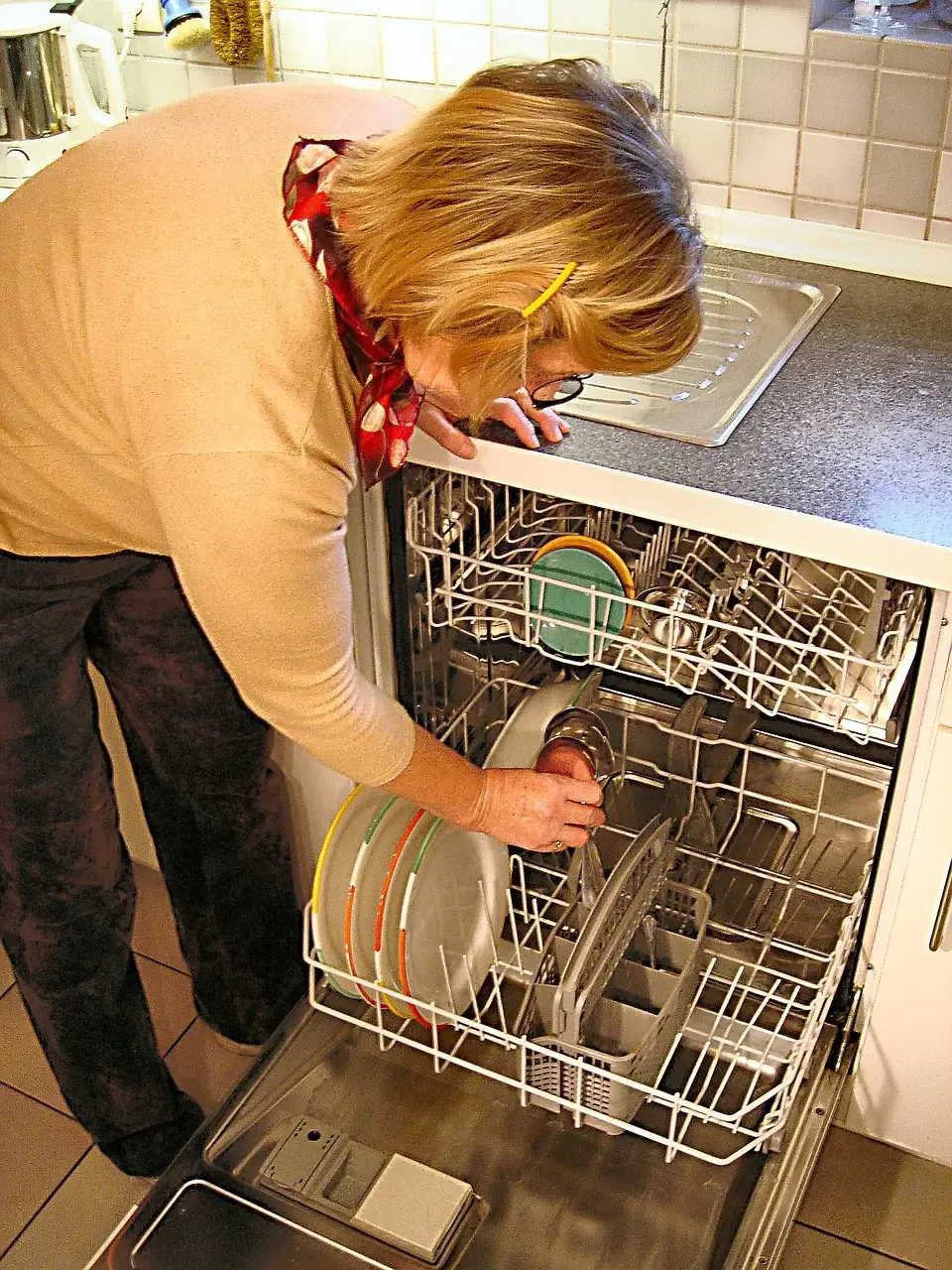
4. How to Load the Dishwasher (Image Credits: Pixabay)
There is, apparently, a right way and a wrong way to load a dishwasher. Everyone in a long marriage knows this, because their spouse has pointed it out. Plates facing inward, cups on the top rack, bowls at the right angle. The dishwasher still runs either way.
When a couple turns a routine disagreement about household tasks into a referendum on character, calling each other lazy or a perfectionist, the problem may have gone perpetual. They aren't really arguing over the dishes; they're arguing over deeper values about order and responsibilities in the home. Recognizing that distinction is usually enough to stop the argument before it starts.
5. Who Forgot to Do the Thing They Were Asked to Do

5. Who Forgot to Do the Thing They Were Asked to Do (Image Credits: Pexels)
Memory lapses are one of the most reliable triggers in long marriages. One partner asked the other to call the plumber, book the reservation, or pick up the dry cleaning. The other partner forgot. The argument begins less about the forgotten task and more about whether the forgetting was intentional.
From the outside, it may look like couples are fighting about small things. In reality, they are often struggling with the much larger question of whether they still feel understood and supported by the person they married. That's worth talking about honestly. Relitigating the dry cleaning is not.
6. Parenting Decisions Long After the Kids Have Left

6. Parenting Decisions Long After the Kids Have Left (Image Credits: Unsplash)
Couples spend years disagreeing on bedtimes, screen time, discipline, and allowances. Then the children grow up and leave, and the arguments continue anyway, just repackaged. Now it's about how much to help them financially, whether they call enough, or whose parenting style caused what problem.
Major threats identified in long-term marriages by couples married 40 years or more included death or severe illness of a child, chronic mental illness, in-law issues, and prolonged time apart. Child-related tension doesn't automatically dissolve when children leave the house. Still, arguing about a parenting call made fifteen years ago helps no one and changes nothing.
7. Whose Family Is More Demanding

7. Whose Family Is More Demanding (Image Credits: Pixabay)
Disagreements about in-laws, parenting styles, or family boundaries can cause tension and make partners feel unsupported. Research shows family-related conflicts can create stress as partners feel torn between loyalty to their family of origin and their relationship.
The deeper fear in these arguments is often about loyalty and belonging. One partner may feel they are not the priority, while the other feels genuinely torn between competing family relationships. Keeping score of whose mother called too many times this month doesn't resolve that underlying fear. Talking about the fear directly, at least occasionally, tends to do more good.
8. The Right Way to Navigate (and Why GPS Is or Isn't the Problem)

8. The Right Way to Navigate (and Why GPS Is or Isn't the Problem) (Image Credits: Unsplash)
Long before GPS, couples argued about directions. Now they argue about whether to trust the GPS, which GPS to use, or why the GPS was ignored in the first place and they are now forty minutes late. The destination is secondary. The argument is about being right.
Learning to fight fairly can actually deepen intimacy and connection. Disagreements can help clarify values and establish mutual respect. A navigation dispute, however, clarifies nothing. It just confirms that two people have different spatial instincts and different tolerances for being late, both of which were probably obvious on the first date.
9. How Much Time Is Spent on Phones or Screens

9. How Much Time Is Spent on Phones or Screens (Image Credits: Pexels)
Technology has introduced new sources of frustration in long marriages, with partners sometimes feeling ignored or disconnected when phones or social media dominate attention. This is a real concern worth addressing. The way it's often raised, however, usually isn't productive.
Snapping at a partner to put their phone down during dinner tends to produce defensiveness, not connection. Miscommunication is inevitable in a relationship, and when it goes unmanaged it can become a major source of tension. Tone of voice and communication style are common causes of conflict. When miscommunication happens, many couples feel unheard. A calm, specific conversation about feeling disconnected lands very differently than a repeated complaint about screen time.
10. How Often You See Each Other's Friends

10. How Often You See Each Other's Friends (Image Credits: Unsplash)
Couples in long marriages sometimes develop friction around social habits. One partner wants more couple time; the other values their independent friendships. Neither position is unreasonable, but when it becomes a recurring argument, both people often end up feeling guilty or resentful for simply being themselves.
One partner might be upset about how little time they spend together, but what they're really craving is more emotional connection or they may be afraid of being abandoned. The other partner hears a complaint about time together and gets defensive, but their deeper need could be for more independence or they may have a fear of being controlled. That's a conversation worth having. The surface argument about Friday night plans usually isn't.
11. Sleep Schedules and Bedtime Habits

11. Sleep Schedules and Bedtime Habits (Image Credits: Unsplash)
One partner is a night owl; the other is in bed by ten. One reads with the light on; the other needs complete darkness and silence. These mismatches are genuinely annoying on a nightly basis. They are also, in the grand scheme of a decades-long marriage, almost entirely manageable with small practical adjustments.
Instead of solving perpetual problems, what seems to be important is whether or not a couple can establish a dialogue about them. If they cannot establish such a dialogue, the conflict becomes gridlocked, and gridlocked conflict eventually leads to emotional disengagement. Fighting about who stayed up too late is rarely the path to that dialogue. A reading lamp and some earplugs usually are.
12. Rehashing Old Arguments That Were Never Really Resolved

12. Rehashing Old Arguments That Were Never Really Resolved (Image Credits: Unsplash)
Every couple has at least one recurring conflict, the one you should have just videotaped the first time you had it because you end up having the same fight over and over again. In long marriages, these can calcify into something almost ritualistic. Both people know their lines. Neither expects a different ending.
Research has suggested that withdrawal during conflict may lead to the deterioration of marriages over the long term, perhaps because problems are left unresolved and there is increased distance and alienation. Still, revisiting an argument that was never resolved isn't automatically the answer. Sometimes the more useful step is accepting that a particular difference won't be resolved, and choosing not to keep the argument alive simply out of habit.
13. Who Is Right About a Memory of a Shared Event

13. Who Is Right About a Memory of a Shared Event (Image Credits: Pixabay)
Two people can live through the exact same moment and remember it differently. In long marriages, this becomes a reliable source of low-grade conflict. One remembers they agreed to one thing; the other is certain it was something else entirely. Both are usually convinced they are right, because memory works that way.
Most of the time, arguments aren't really about the dirty dishes. They're about each partner's ability to respect each other by feeling heard, understood, and able to collaborate on compromise. That principle applies just as well here. The argument about who said what in 2009 is not really about 2009. Letting it go is, in most cases, the only sensible move.
14. Whose Turn It Is to Initiate (Anything)

14. Whose Turn It Is to Initiate (Anything) (Image Credits: Pexels)
Whether it's making dinner plans, calling family, initiating affection, or simply being the one to break a tense silence, long-married couples often develop unspoken ledgers about who initiates what, and who owes whom an effort. The ledger itself is usually invisible until someone gets frustrated.
Research has found that a significant proportion of women highlight emotional distance and loneliness as a significant hurdle in their marriage. That loneliness rarely resolves itself through keeping track of who reached out last. How a couple repairs after conflict is often more important than the conflict itself, and repair is about what both partners do to reconnect and cool off. Waiting for the other person to go first is a strategy that tends to extend the distance rather than close it.
15. Whether the Relationship Was Better Before

15. Whether the Relationship Was Better Before (Image Credits: Pexels)
This one surfaces in quieter moments, usually after a stretch of friction. One partner suggests, directly or indirectly, that things were easier early on. The other either agrees resentfully or disagrees defensively. The argument rarely goes anywhere useful.
Research shows that positive outcomes for couples in long-term marriages are the norm. Contrary to what many people think, marital quality does not inevitably decline. It tends to remain high or even improve over the decades. Nostalgia for an earlier version of a marriage is understandable, but it tends to obscure what's actually working in the present. When couples stick together through difficult times, remain faithful to one another, and actively work to resolve problems, positive long-term outcomes are common. The argument about the past is, by definition, one that can never be won.
Long marriages are not peaceful because couples stop disagreeing. They're peaceful because couples learn which disagreements are worth the cost, and which ones quietly cost far more than they're worth. What matters most is not the frequency of the fights, but how couples fight and resolve their disagreements. Most of the arguments on this list don't resolve anything. They just wear two people down gradually, one repeated round at a time.
The couples who seem to handle it best aren't the ones who never argue. They're the ones who've quietly decided, sometimes without even saying so out loud, that being close matters more than being right.