
There’s a certain kind of loneliness that doesn’t announce itself loudly. It shows up in the fact that it’s been four months since you called your closest friend. It appears in the group chat that nobody really replies to anymore. For Generation X, the cohort born between 1965 and 1980, this slow erosion of close friendships has become one of the defining and least talked-about social crises of midlife in the 2020s.
While cultural conversations about loneliness tend to focus on Gen Z and Millennials, Gen X is quietly weathering its own version of social disconnection. Gen X comes in at roughly three in five classified as lonely, and that loneliness tends to run quieter. No viral posts about it. No public health campaigns targeted at them. Just a slow drifting apart that many don’t even fully register until they need someone and realize the list has gotten very short.
A Generation That Grew Up Self-Reliant – and Paid for It

A Generation That Grew Up Self-Reliant – and Paid for It (Image Credits: Pexels)
Generation X became more self-reliant as they lived through values-related changes such as rising divorce rates and dual-working parents. That independence, often worn as a badge of honor, shaped how the generation related to others: cautiously, privately, without much expectation of emotional support from the outside world.
The early 1980s and 1990s, the formative years of Gen X members, were a period of considerable economic and social uncertainty, as reflected in economic recessions, higher divorce rates, and the spread of AIDS. From an early age, many boys were immersed in hegemonic masculinity norms that taught them to suppress signs of weakness or anxiety, making them less likely to reveal vulnerabilities to others. Those learned habits of silence don’t disappear with age. For many Gen Xers, they’ve just calcified.
The Numbers Are Harder to Ignore Than the Silence

The Numbers Are Harder to Ignore Than the Silence (Image Credits: Pexels)
AARP’s most recent study on loneliness shows that four in ten U.S. adults age 45 and older are lonely, a significant increase from 35% in both 2010 and 2018. That upward trend isn’t random noise. It reflects a structural shift in how middle-aged Americans are living, working, and socializing.
AARP has noted that midlife can be a particularly vulnerable period, with adults in their 40s and 50s facing unique pressures and transitions, such as work, caregiving responsibilities, or shifting social networks, that may heighten feelings of isolation. Research also shows that nearly half of people who are lonely report having fewer friends now than they did five years ago, compared to roughly three in ten adults age 45 and older overall.
The Sandwich Generation Squeeze Is Swallowing Friendships

The Sandwich Generation Squeeze Is Swallowing Friendships (Image Credits: Unsplash)
Research has found that in-person communication has declined over the past several years, and adults cite “no time” as the primary reason for the lack of depth in their friendships – an especially tough situation for anyone with minor children and aging parents. This is the daily reality for a large portion of Gen X, caught between two generations of dependents at once.
Generation X, born between the mid-1960s and early 1980s, is often described as being sandwiched between their aging parents’ and their children’s needs. According to the Pew Research Center, nearly half of adults in their 40s and 50s have a parent age 65 or older and are raising or financially supporting a grown child. This puts a tremendous amount of pressure on Gen Xers to manage the needs of both their children and their aging parents.
Men Are Losing Friends Faster Than They Realize

Men Are Losing Friends Faster Than They Realize (Image Credits: Unsplash)
The “Friendship Recession” has hit men hardest, with close friendships declining by half since 1990. Gen X men, now in their mid-40s to early 60s, sit squarely in the demographic most affected by this trend. Many have lifelong friends they simply no longer talk to with any regularity.
It’s less that friendships are severed, and more that the type of friendships Gen X men have aren’t conducive to the day-to-day connection that is needed to keep loneliness at bay. Men are also more likely than women to report having no close friends at all, at roughly 17% versus 13% for women. Research from AARP notes that men often lack structured ways to maintain friendships as they age, which implies that men’s networks may be more vulnerable to collapse without intentional maintenance.
Women in Gen X Are Struggling Too, Just Differently

Women in Gen X Are Struggling Too, Just Differently (Image Credits: Unsplash)
Gen X women feel the squeeze of caring for children and parents as well, and while women in this cohort also struggle with loneliness, their rate of isolation is lower. That is partially because women use technology for friendship differently than men do. Women in this generation tend to sustain emotional threads even when time is short, texting a friend while waiting at a doctor’s office, staying connected in small, consistent ways.
Women are more likely than men to say they’d be very likely to turn to a friend for emotional support. Men who have close friends don’t communicate with them as often as women do, with higher shares of women sending text messages, interacting on social media, and talking on the phone or video chatting with a close friend at least a few times a week. That gap in daily maintenance has real consequences for how connected people feel over time.
The Health Cost of Drifting Apart

The Health Cost of Drifting Apart (Image Credits: Unsplash)
A sense of isolation doesn’t just affect mood. Former U.S. Surgeon General Vivek Murthy wrote in a 2023 advisory naming loneliness a growing health epidemic that it can increase one’s risk of developing cardiovascular disease, dementia, stroke, depression, anxiety, or even premature death. These aren’t distant statistical abstractions for Gen X. They describe what unfolding social disconnection can look like at the population level over decades.
The stress of being part of the Sandwich Generation can lead to burnout, depression, isolation, and guilt, with many members of this cohort struggling to balance other relationships, their families, their job, and time for themselves. When every hour is already spoken for, friendship becomes the thing that quietly goes unprioritized, week after week, until it’s barely visible at all.
Technology Fills the Gap, But Only Partly

Technology Fills the Gap, But Only Partly (Image Credits: Pexels)
Nearly six in ten adults age 45 and older say they rely on technology to stay connected with friends and family. Among this group, people tend to have more close friends than those who do not rely on technology at all, and they are also more likely to have volunteered and to be part of a local community group. However, while technology clearly enhances connections for some, it can deepen isolation for those who lack existing in-person networks.
Technology can help fill some of the gaps in social lives, but rarely replaces real connection. Scrolling, streaming, or chatting online may ease boredom, yet these habits don’t typically build the true emotional bonds that protect health. For Gen X, a generation that came of age before social media, the tools exist but often feel like workarounds rather than the real thing they’re meant to approximate.
Community Participation Has Quietly Collapsed
Community Participation Has Quietly Collapsed (Image Credits: Unsplash)
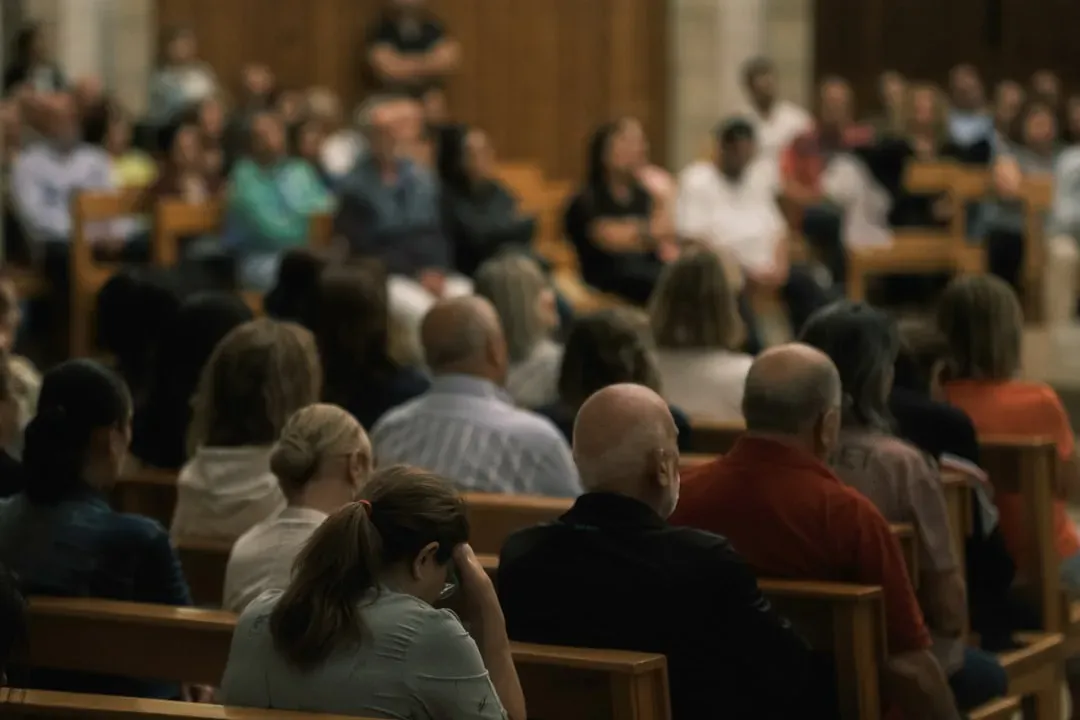
According to AARP’s December 2025 loneliness study, men are less likely than women to attend religious services at least once a month, to volunteer at least once a year, or to belong to a local community organization, club, or group. These are precisely the spaces where recurring, low-pressure contact with others historically built and sustained friendships. As participation in those structures has declined, so too has the scaffolding that once held social networks together almost automatically.
Among adults 45 and older, those who have lived at their current address for 20 or more years have the lowest rates of loneliness. By contrast, a much higher share of adults who have relocated in the past ten years are considered lonely. Midlife and older adults who volunteer, participate in clubs, and attend religious services are also less likely to be lonely than those who do not. Geographic mobility and institutional disengagement together quietly shrink the social world.
Small Habits That Quietly Keep Friendships Alive

Small Habits That Quietly Keep Friendships Alive (Image Credits: Unsplash)
Researchers and social scientists studying midlife connection point to something hopeful in the data: rebuilding doesn’t require grand gestures. Regular, intentional check-ins via text or other technology can help bridge the gap for adults struggling with loneliness when spending in-person time with friends isn’t possible. One group of friends interviewed for an AARP study embraced this with a ritual they called “Wednesday Waffle,” where each person took two minutes to record a casual video and share it with the group every Wednesday.
Cultivating friendships across multiple life domains, including neighborhood, hobbies, and family, builds resilience in a social network. Research from the World Values Survey found that happier participants consistently rated spending more time with friends highly. The data point to something straightforward: consistency matters far more than intensity, and even a modest habit of staying in touch does measurable work against the drift.
The Generational Reckoning Nobody Is Talking About

The Generational Reckoning Nobody Is Talking About (Image Credits: Pexels)
Gen X has always prided itself on getting on with things without making too much noise about it. That stoicism, combined with the real structural pressures of midlife, caregiving, and career demands, has created the conditions for a friendship drought that many members of this generation don’t even fully name as such. Research suggests that life stage pressures like work, marriage, and caregiving, as well as logistical barriers, contribute to reduced connection for this cohort.
Adults are adapting to protect the friendships that support health and well-being. In 2025, a remarkable 95% of adults say friends are essential, up from 90% in 2019. The awareness is there. What’s harder to find is the time, the energy, and sometimes the willingness to admit that the quiet drift has already gone further than anyone noticed. For Gen X, recognizing that truth may be the first step toward reversing it.