
Most people toss their loose change into a jar without a second glance. A dime is a dime. A penny is a penny. Except when it isn’t. Some of the most valuable U.S. coins are those created by mistake, known as mint errors or coin errors. These aren’t coins with scratches or worn faces from a lifetime of circulation. They’re something else entirely: genuine production anomalies born inside the mint itself.
Mint-made errors occur when coins are made incorrectly at the mint, including anything that happens to the coin up until the completion of the minting process. Mint error coins can be the result of deterioration of the minting equipment, accidents or malfunctions during the minting process, or interventions by mint personnel. What makes these coins special is that most errors are caught and destroyed before leaving the mint. The few that slip through become collector’s items. What follows is a look at the eight most significant and collectible types of minting mistakes.
1. The Doubled Die Error
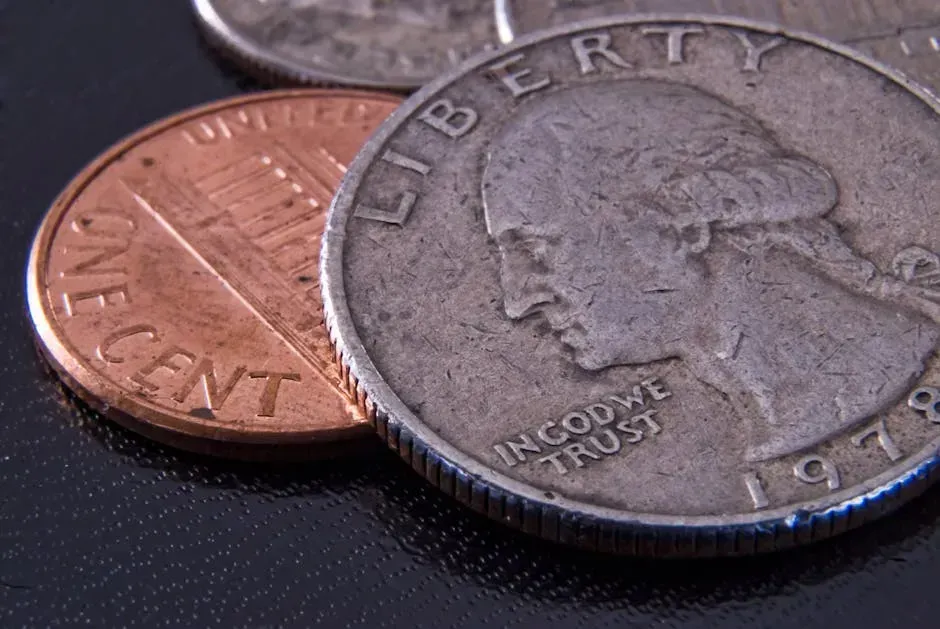
1. The Doubled Die Error (Image Credits: Pexels)
It is no secret that minting errors on coins long ago became a subject of interest and are highly valued by both professionals and beginners. Among all U.S. coins, one of the most famous and popular errors refers to double dies. Doubled dies are created when the hub that transfers the design of a coin onto the working die makes two impressions at two slightly different angles or positions on the die. The result is a coin where letters, numbers, and design elements appear to echo themselves, sometimes dramatically, sometimes barely at all.
The 1955 doubled die obverse Lincoln cent remains one of the most iconic coins of any kind in United States history. Today, it still ranks as perhaps the most well-known error among all American coins. Depending on its condition, a doubled die 1955 penny can sell for anywhere from $1,000 to $100,000 or more. At the extreme end, the rare 1958 doubled die penny sold to a collector for $1,136,250 in 2023 after 117 bids, and this coin has very pronounced doubling with only three examples known.
2. The Off-Center Strike
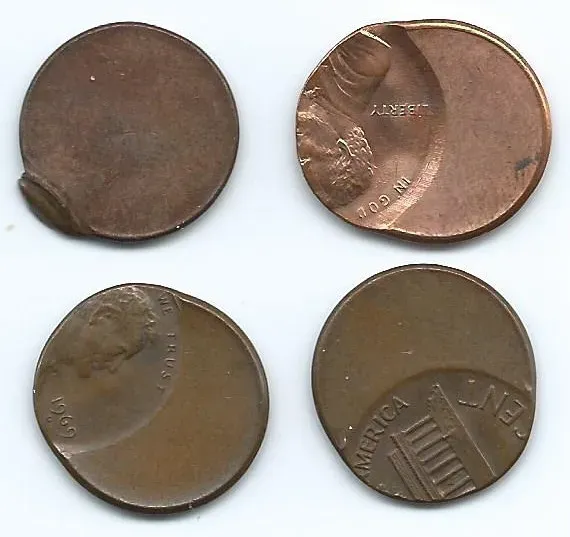
2. The Off-Center Strike (Image Credits: By Doug coins, <a href="https://commons.wikimedia.org/w/index.php?curid=36581992" target="_blank" rel="noopener">CC BY-SA 4.0</a>)
The press may have a problem where its two presses are misaligned. Coins are stamped on both sides simultaneously, and any lack of alignment can leave one side or both off-center on the planchet. The resulting coins are immediately recognizable: the design crowds into one area of the coin while the opposite side sits completely blank. The coin is no longer circular when that happens. The greater the amount of off-center strike, the scarcer and more valuable the coin becomes.
Not all off-center strikes are created equal, though. A coin that is 50% off-center with a full visible date is generally more valuable. An off-center strike occurs when the coin is not properly aligned, causing part of the design to be missing. The more off-center the strike, while still showing the date, the higher the value. Collectors prize the date for authenticity and attribution, so a dramatic off-center coin that somehow retained its full date can command serious attention at auction.
3. The Clipped Planchet Error
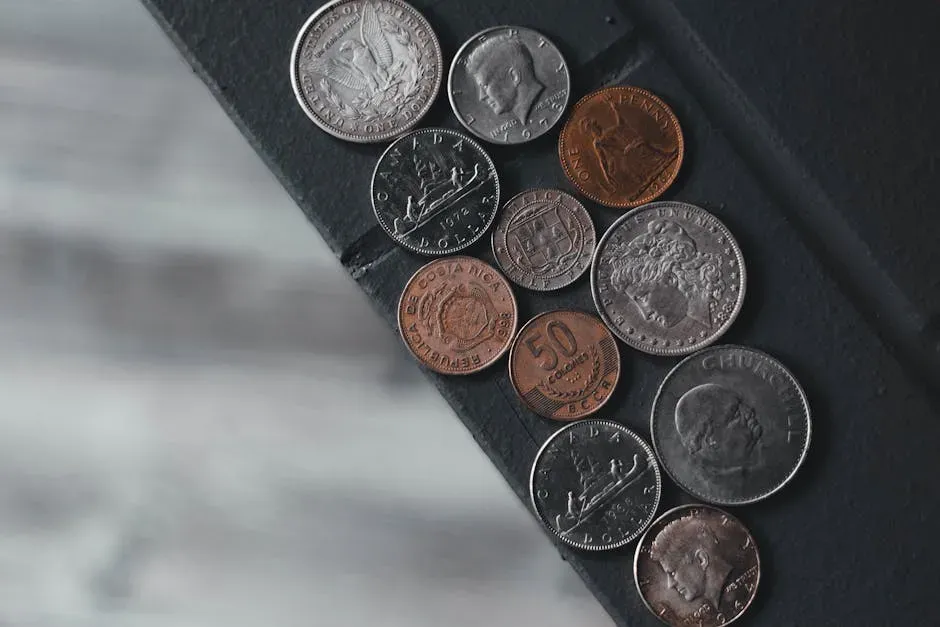
3. The Clipped Planchet Error (Image Credits: Pexels)
A commonly found error coin type is the clipped planchet. This is one of the most well-known and popular coin errors, and it is found on coins ranging from the colonial era of the 1700s to 21st-century proof coins. These are all created when either the planchet strip is not fed properly into a blanking press or there is a defect in the planchet strip itself, resulting in missing metal from a coin’s edge area. The finished coin looks as if someone took a bite out of it.
Collectors describe the degree of clipped planchet coins using percentages. A clipped planchet can be anywhere from 10 to 99% clipped. The percentage used to explain a clipped planchet’s error refers to how much of the coin has been cut off by the malfunctioning blank-making machine that caused its error. Most clipped planchets are worth more the larger and more visible they are, and also the higher the grade of the coin. A 75% clipped planchet Washington Quarter will be worth perhaps $200, versus a 5% clip on that same Washington Quarter garnering maybe $5.
4. The Wrong Planchet Error
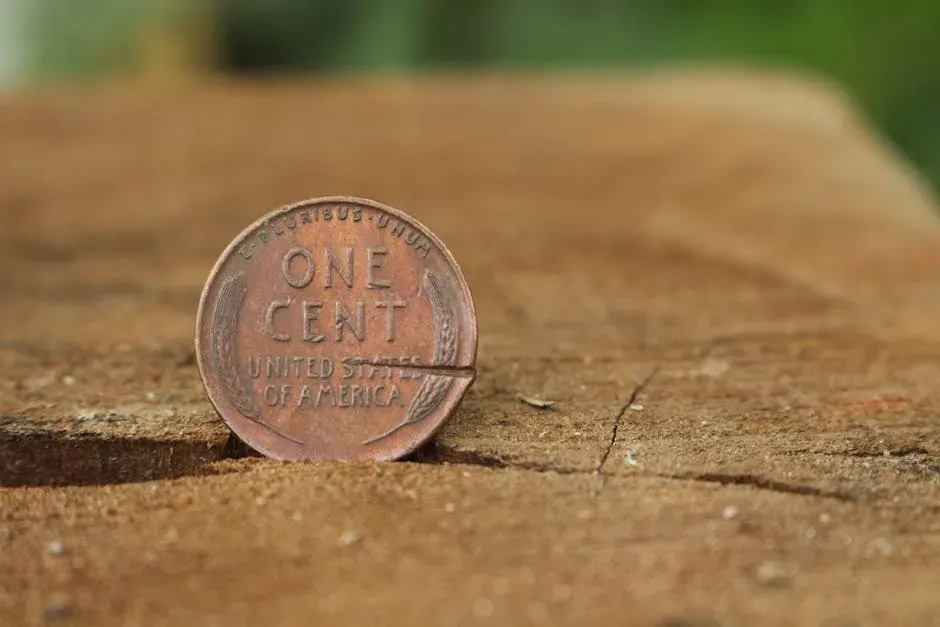
4. The Wrong Planchet Error (Image Credits: Pexels)
Wrong-planchet errors may also occur when the composition of the coin changes. Such situations generally arise when the mint has decided to change the alloy or plating of the coin in the new coinage year, but a few planchets from the previous year, and thus of the previous composition, have yet to be struck. Such coins are rare and often highly valued by collectors, as with the 1943 copper cents and 1944 steel cents.
The 1943 bronze cents are exceptionally valuable, easily crossing the $100,000 threshold. One example even sold in a private transaction for over $1 million. Wrong planchet or metal errors are considered the kings of errors, and include such exotic known pieces as a Walking Liberty Half struck on a dime planchet, a Sacagawea dollar struck on a cent planchet, and a Washington Quarter struck on a steel cent planchet. These coins often look physically wrong the moment you pick them up, since the weight and feel simply don’t match the design stamped on them.
5. The Mule Coin Error
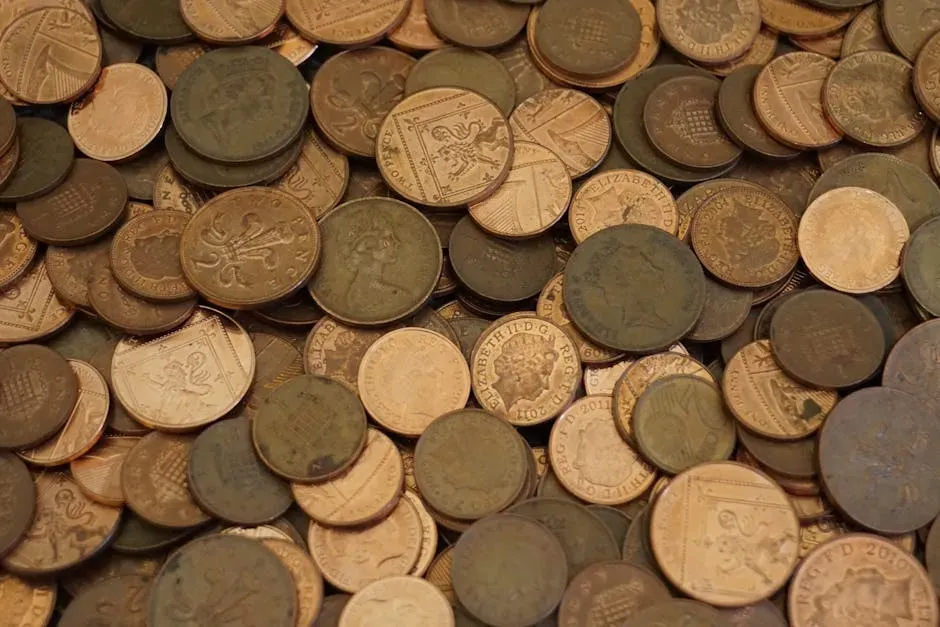
5. The Mule Coin Error (Image Credits: Pexels)
A mule is a coin struck between dies that were never intended to be used together, such as a coin with a nickel obverse and a dime reverse. Also included in this category are “mules” with the obverse of one design and the reverse of another. These errors are extremely rare and highly sought after by collectors. The mule sits at the top of most collectors’ wish lists precisely because it represents a failure of oversight so complete that two entirely incompatible die pairings made it through production together.
One of the most talked-about examples is the 2000-P Sacagawea dollar mule. This coin has the front of a Washington quarter and the back of a Sacagawea dollar. Around 18 of these mules are known today, and they keep collectors buzzing. The mule’s near-impossible rarity means verified examples reliably attract fierce bidding. In 2002, the mints changed their production methods which resulted in fewer errors released into circulation. As a result, prices for error coins dated after 2002 are much higher.
6. The Die Clash Error
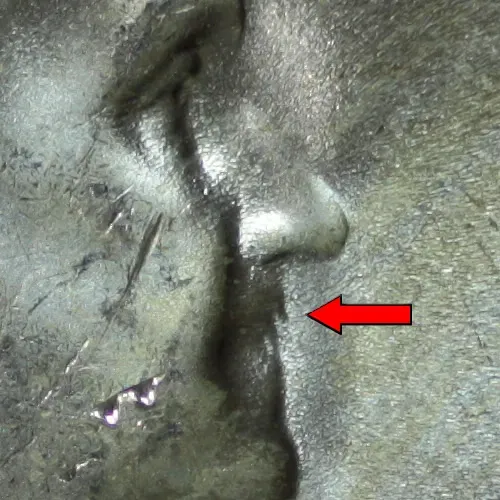
6. The Die Clash Error (Image Credits: By Bobby131313, <a href="https://commons.wikimedia.org/w/index.php?curid=14953351" target="_blank" rel="noopener">Public domain</a>)
A die clash occurs when the obverse and reverse dies are damaged upon striking each other without a planchet between them. Due to the tremendous pressure used, parts of the image of one die may be impressed on the other. Planchets subsequently struck by the clashed dies receive the distorted image. In other words, the front design bleeds onto the back, and the back design bleeds onto the front, creating a ghost-like overlap that was never supposed to exist.
A well-known example is the “Bugs Bunny” Franklin half dollar of 1955, where part of the eagle’s wing from the reverse gives Franklin the image of protruding teeth. A die clash error resulted in some Franklin halves exhibiting a “buck-tooth” appearance on the obverse of coins dated 1955 and 1956. The error can be a bit subtle to the naked eye, but it stands out in comparison to a normal Franklin half. Thanks to the relative ease of finding one, these coins tend to be reasonably priced around $25. More dramatic clash marks on scarcer series, however, can push values far higher.
7. The Brockage Error
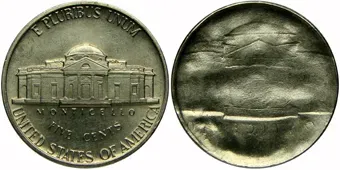
7. The Brockage Error (Image Credits: By Mudskippie, <a href="https://commons.wikimedia.org/w/index.php?curid=8528984" target="_blank" rel="noopener">Public domain</a>)
After a coin is struck by its dies at the mint, it is supposed to be ejected so that it doesn’t interfere as the dies strike the next planchets. If this doesn’t happen, a brockage error can occur. When a wayward coin comes between the die and a subsequent planchet, the coin that was supposed to have been ejected can instead transfer an inverse mirror version of its design to the planchet. The resulting coin wears its error like a signature: one normal side, one hauntingly reversed impression of the same design.
Not only will the side with the brockage be mirrored but it will also be incuse. The design elements that would normally rise above a coin’s fields, such as the letters and the bust, will instead appear sunken into the surface. Brockage errors are particularly neat coins and rather scarce. Even modern-day brockage pennies, nickels, dimes, and quarters are worth about $75 and up for full brockages. Older brockage errors or those on larger denominations are worth significantly more.
8. The Lamination Error
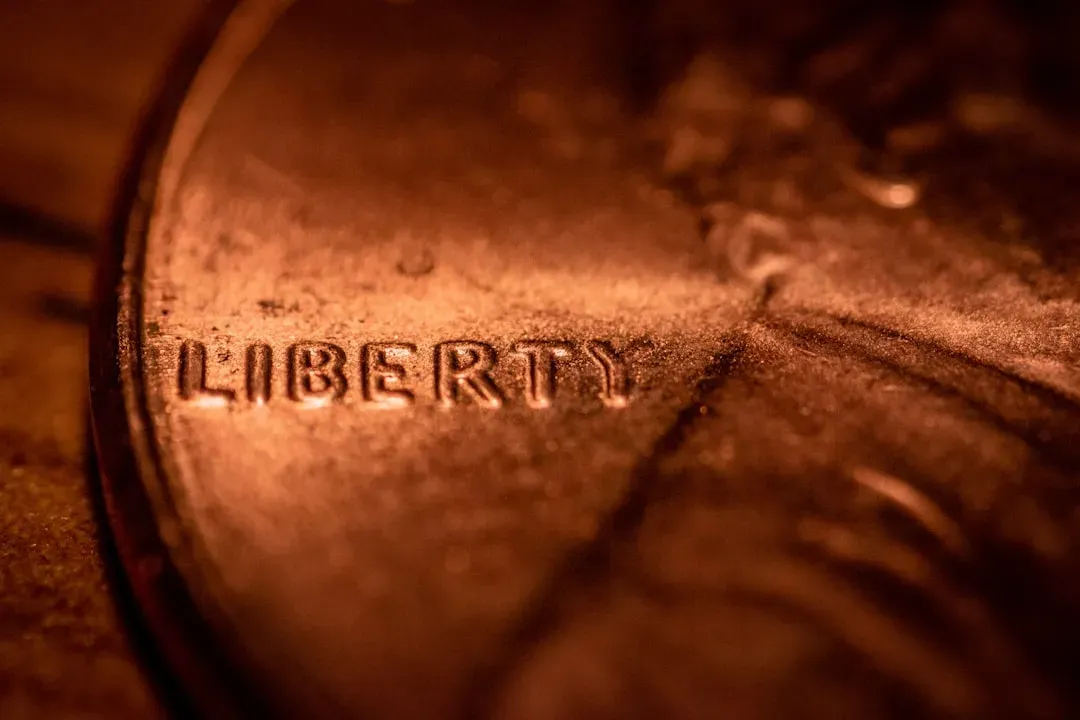
8. The Lamination Error (Image Credits: Unsplash)
Planchets that are missing some of their surface area due to dirt, grease, gas bubbles, or other maladies are called lamination errors. A lamination error may present a flake-like area of metal missing from the surface. Impure or compromised metals can cause lamination flaws, such as uneven surfaces, peeling, splitting, or discoloration. Some modern coins are made with clads, which are layers of different metals. The layers can separate, fold, or peel away from each other. When this happens on a clad coin, the copper core can be exposed in striking fashion.
Lamination errors are fascinating because they reveal the internal structure of the coin’s metal composition. They’re also surprisingly common on freshly minted coins – quality control catches most of them, but not all. A large, dramatic lamination peel with strong visual appeal can command serious attention from error specialists. While minor lamination errors may not be worth much at all, major laminations, especially those involving missing layers on clad coins, can be worth significant sums. Small lamination errors are worth $5 to $10, while major lamination errors are worth $25 to $50 or more.
The world of mint error collecting rewards patience, a good eye, and a willingness to look more carefully at the coins most people never look at twice. Whether it’s a ghost-like brockage impression or a penny struck on the wrong metal, each of these errors carries something a perfectly made coin never can: proof that even a multi-billion-dollar production system occasionally slips. That’s a story worth far more than face value.