
Human interaction runs on signals. A glance across a room, a pause before answering, a half-smile that doesn’t quite reach the eyes – we pick up on these things constantly, often without realizing it. The problem is that we also get them wrong, sometimes in ways that quietly damage relationships, create unnecessary awkwardness, or cause us to completely misread someone’s intentions.
Calling nonverbal communication a “language” wrongly implies a relatively invariant rulebook by which to decode specific cues and behaviors – a flawed assumption that has fueled a multimillion-dollar body-language industry in books, seminars, and videos. The reality is more nuanced, and more interesting. Here are nine social cues that people regularly get wrong, and what they’re more likely to actually signal.
1. Crossed Arms – Defensiveness or Just Comfort?

1. Crossed Arms – Defensiveness or Just Comfort? (Image Credits: Pexels)
The idea that crossing your arms means you're blocking someone out and sending a negative message is one of the most repeated claims in popular communication advice – and it isn't accurate. It's a simplistic misconception, similar to the myth that looking away means you're lying. The truth is far more varied. People cross their arms more frequently in public than in private, and in many cases it functions as a kind of self-hug – something comforting done while listening to a speaker or waiting for a presentation, with no intention of keeping anyone at a distance.
A 2008 study found that individuals who crossed their arms while working on difficult puzzles persisted nearly twice as long as those with an open posture – hardly the behavior of someone who's checked out. Research shows that crossed arms can feel distancing between strangers, but among friends or colleagues it often signals focus and engagement. In workplaces where serious discussions happen frequently – such as offices or hospitals – this posture is common and not seen as withdrawal. Context, as always, is doing the heavy lifting.
2. Avoiding Eye Contact – Deception or Simply Discomfort?

2. Avoiding Eye Contact – Deception or Simply Discomfort? (Image Credits: Pexels)
Perhaps the most culturally entrenched belief about deception is that liars avoid eye contact. The idea is so widespread it has become embedded in everyday assumptions about honesty. The evidence directly contradicts it. A survey of 50 expert deception researchers found that over 80 percent agreed on exactly one thing: gaze aversion is not generally diagnostic of deception – the single point of near-universal expert consensus in the entire field.
Research on eye contact patterns shows that the same gaze behavior – whether avoidance or direct staring – can reflect concentration, cultural norms, emotional regulation, or strategic impression management, none of which is exclusive to lying. Some studies have even found that liars maintain more eye contact than truth-tellers, apparently to appear credible. Avoiding someone's gaze is far more likely to reflect shyness, anxiety, or cultural background than dishonesty. Avoiding eye contact is considered a sign of respect in some cultures, so what might look like suspicious behavior is often simply a cultural difference.
3. Silence During a Conversation – Rudeness or Active Processing?
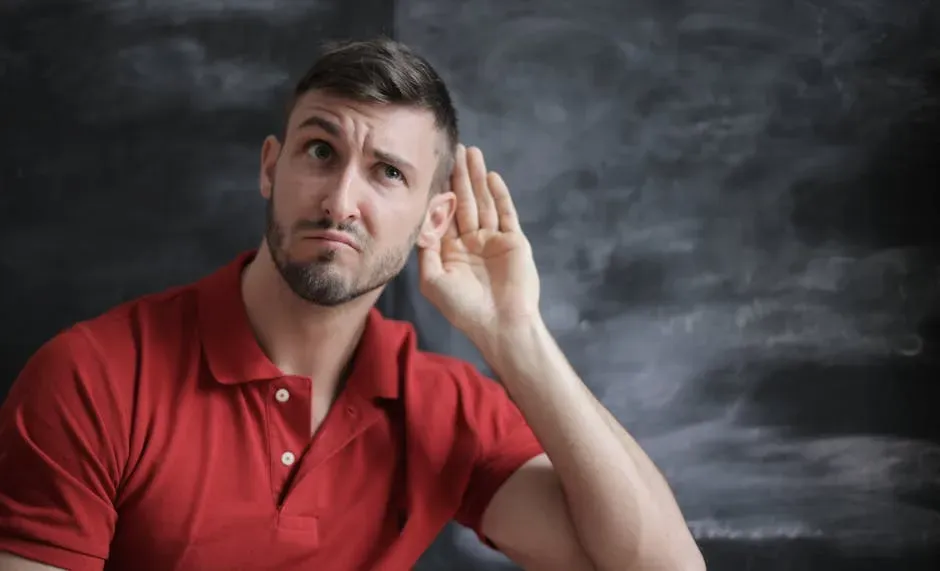
3. Silence During a Conversation – Rudeness or Active Processing? (Image Credits: Pexels)
When someone goes quiet after you've said something, the instinct is often to fill that silence – or to assume they're disengaged, bored, or upset. In reality, silence frequently signals the opposite. Nonverbal cues across multiple channels, including gaze, gesture, proximity, and touch, must be read together and not in isolation. A quiet moment doesn't exist in a vacuum; it often accompanies steady eye contact, a forward lean, or a thoughtful expression that together point to genuine reflection.
Body language is the use of physical behavior, expressions, and mannerisms to communicate nonverbally, often done instinctively rather than consciously. Whether we're aware of it or not, we're continuously giving and receiving wordless signals during any interaction. Silence is one of those signals, and it tends to mean that someone is carefully processing what they've heard rather than dismissing it. Rushing to fill the gap often interrupts the very reflection you prompted.
4. A Smile – Happiness, Politeness, or Something Else?

4. A Smile – Happiness, Politeness, or Something Else? (Image Credits: Pexels)
A smile seems like the clearest possible signal in any social exchange. Surely this one is easy to read. Yet smiles carry a surprisingly wide range of meanings that depend heavily on context, culture, and the relationship between the people involved. Nonverbal communication is inherently culture-bound: each society develops its own rules and expectations for how people should express emotions, demonstrate respect, establish authority, and navigate social interactions.
A smile, a nod, or a raised eyebrow may hold different meanings depending on cultural context, and relying on such cues without understanding their implications increases the risk of misinterpretation. In many professional settings, a smile is a courtesy signal – it communicates good faith, not necessarily warmth or agreement. In others, it can mask discomfort or nervousness. Reading a smile accurately means paying attention to what the rest of the face and body are doing at the same time.
5. Minimal Verbal Responses – Disinterest or Careful Listening?
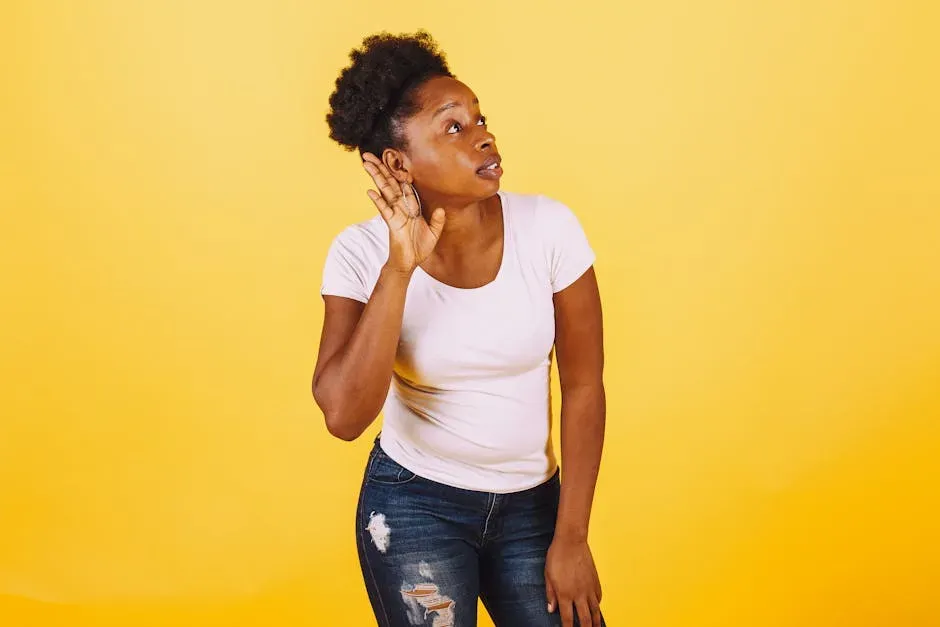
5. Minimal Verbal Responses – Disinterest or Careful Listening? (Image Credits: Pexels)
Short replies like "mm-hmm," "right," or "okay" often get flagged as signs that someone isn't really engaged. People worry the conversation is going nowhere, or that the other person is simply tolerating them. This is usually a misread. Tone of voice is an expressive aspect of both personal and professional communication, and the tone used can significantly impact how a message is received. Even brief verbal responses carry real relational meaning when delivered with the right tone.
Social cues are verbal or nonverbal signals expressed through the face, body, voice, and motion that guide conversations by influencing our impressions of and responses to others. These signals are important communicative tools because they convey important social and contextual information and facilitate social understanding. Someone who responds minimally but maintains eye contact and leans slightly forward is almost certainly listening. The brevity of their response often just means they don't want to interrupt the flow.
6. Nervous Behavior – Lying or Anxiety?

6. Nervous Behavior – Lying or Anxiety? (Image Credits: Unsplash)
Fidgeting, a shaky voice, difficulty maintaining eye contact – many people read these signals as signs that someone is being dishonest. It's a remarkably persistent assumption, even among professionals. Nonverbal cues are unreliable lie detectors partly because they're not deception-specific. Nervousness, anxiety, cognitive effort, and emotional arousal all produce similar physical signals whether a person is lying or simply stressed, embarrassed, recalling a painful memory, or processing a difficult question.
Perhaps the most significant finding in the research literature is that several signs of nervousness, including gaze aversion and fidgeting, are generally unrelated to deception. One reason is that truth-tellers can be just as nervous as liars. Someone sweating through a job interview, stumbling over words on a first date, or hesitating before answering an unexpected question is probably just nervous – not hiding something. Research shows that people on average detect deception at only slightly above chance level, meaning the average person relying on body language alone does barely better than a coin flip.
7. Looking Away While Thinking – Distraction or Concentration?

7. Looking Away While Thinking – Distraction or Concentration? (Image Credits: Unsplash)
When someone breaks eye contact during a conversation – particularly while trying to answer a question – it's easy to interpret as disengagement or evasiveness. Most of the time, it's neither. Before a word is spoken in any interaction, observers have already processed posture, muscle tension, spatial orientation, and gaze direction, and these cues feed directly into impressions of dominance, warmth, competence, and trustworthiness. A momentary gaze away from a conversation partner often accompanies a spike in mental effort – the brain is simply reaching for information.
The tendency for eyes to move upward or sideways can indicate someone is constructing a lie – but it can equally indicate they are thinking hard about a truthful answer to a complex question. The two look identical. Without other contextual signals to guide the interpretation, the difference is essentially invisible. Mistaking a moment of focused thinking for evasiveness is one of the most common – and unfair – social misreads people make.
8. Cultural Differences in Physical Distance – Aggression or Closeness?

8. Cultural Differences in Physical Distance – Aggression or Closeness? (Image Credits: Pexels)
Personal space is one of those social norms that feels deeply intuitive until you step outside your own cultural context. In many Western cultures, a firm handshake and sustained eye contact are seen as indicators of confidence and honesty. In contrast, in some Asian or Middle Eastern cultures, avoiding direct eye contact may signify respect or deference, and physical contact between unfamiliar individuals may be discouraged. Step into a social environment with different norms, and ordinary behavior can register as intrusive or cold – depending on which direction the gap runs.
When individuals from differing cultural backgrounds meet, their nonverbal behaviors may be misread, leading to confusion or negative judgments. These misinterpretations are not trivial – they can affect trust, credibility, and the willingness to collaborate. Someone standing closer than you're used to isn't necessarily aggressive; someone keeping their distance isn't necessarily unfriendly. Both are likely just following the social grammar they grew up with.
9. Nonverbal Cues During Emotional Conversations – Coldness or Overwhelm?

9. Nonverbal Cues During Emotional Conversations – Coldness or Overwhelm? (Image Credits: Pexels)
When someone goes emotionally flat during a difficult conversation – speaking in a monotone, keeping their face neutral, limiting their gestures – it can read as coldness or indifference. In many cases, it's the opposite. A study published in PLOS One explored the intense mental effort it takes to navigate nonverbal communication, reviewing firsthand accounts from hundreds of adults who described the experience of communicating in daily life. Many said interpreting facial expressions while simultaneously regulating their own body language felt like trying to decode a complex, unwritten language in real time.
Stress compromises the ability to communicate. When someone is stressed, they're more likely to misread others, send confusing nonverbal signals, and fall into patterns of behavior that don't reflect how they actually feel. A person who seems detached during an emotional exchange may simply be overwhelmed – holding themselves together rather than shutting the other person out. Research from the University of Amsterdam found that people with higher awareness of their own internal signals were significantly better at emotional attunement with others, suggesting that the path to reading these moments more accurately often starts inward, not outward.
Social cues are rarely self-explanatory. They shift with context, culture, personality, and the internal state of the person producing them. The most reliable approach isn't to decode individual signals in isolation but to slow down, gather more information, and resist the pull of a tidy interpretation. Research argues that there are no stable, distinct meanings linked to specific nonverbal patterns as often portrayed – which means the confidence we feel when "reading" someone is frequently misplaced. Staying curious about what a cue might mean, rather than certain about what it does mean, tends to get us closer to the truth.