
Most people assume that staying in an unhappy relationship is simply a failure of courage or self-awareness. The truth, as psychology has made increasingly clear, is far more layered than that. The forces keeping people in place are often invisible, deeply rooted, and operate below the level of conscious decision-making.
Leaving a relationship isn’t just an emotional act. It involves identity, finances, social networks, and the quiet terror of an unknown future. Understanding why people stay is not about excusing poor situations, but about taking the psychology seriously enough to see it clearly.
1. The Sunk Cost Fallacy: "I've Already Given So Much"

1. The Sunk Cost Fallacy: "I've Already Given So Much" (By Skedonk, <a href="https://commons.wikimedia.org/w/index.php?curid=47653918" target="_blank" rel="noopener">CC BY-SA 2.0</a>)
The sunk cost fallacy occurs when someone continues a behavior because they've already invested time, effort, or money into it, even when it's no longer worth it. In relationships, this translates into the deeply human feeling that walking away renders all prior sacrifices meaningless. Research on decision-making underlines that sunk costs are psychologically powerful, and this is especially prevalent in long-term relationships, where both partners may feel that ending things would render all prior investments worthless.
Research suggests that the average person contemplating divorce considers it for two to three years before taking action, and many stay unhappily married for five or more years before finally making a decision. Research indicates that people who remain in unsatisfying relationships out of obligation tend to experience lower levels of happiness, self-esteem, and life satisfaction, and prolonged dissatisfaction can lead to chronic stress and mental health issues such as anxiety and depression.
2. Fear of Being Alone

2. Fear of Being Alone (Image Credits: Pexels)
People who fear being lonely are much more likely to stay in a relationship that isn't working or that is actively making them unhappy, and this fear is strong enough to override other feelings they may have toward their partner. There's something almost neurological about it. The brain's threat-detection center fires too easily, and because anxiety drops when someone else is present, the nervous system learns that other people are the safety signal and aloneness is the threat.
Some studies show that the fear of being alone pushes people to prioritize relationship status over relationship quality, leading to unhealthy partnerships. To many people, being together and unhappy is much preferable to being alone and unhappy. That's not a character flaw. It's a survival instinct that has simply outlived its usefulness.
3. Protecting the Partner from Pain
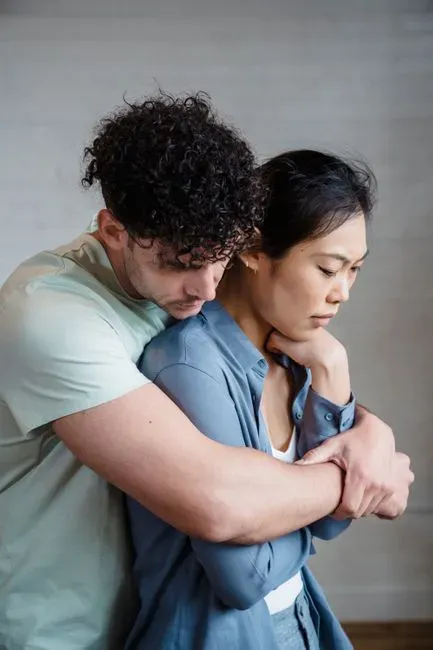
3. Protecting the Partner from Pain (Image Credits: Pexels)
One of the least-discussed reasons people stay is a genuinely unselfish one. Research published in the Journal of Personality and Social Psychology found that people are less likely to initiate a breakup when they believe their romantic partners are dependent on the relationship, and participants were motivated to remain in unsatisfying situations because they considered not only their own desires but also how much their partners wanted the relationship to continue.
Even people who are not that committed to their relationship do not want to hurt the other person, and the more dependent people believed their partner was on the relationship, the less likely they were to initiate a breakup. The study explored the possibility that people deciding whether to end a relationship consider not only their own desires but also how much they think their partner wants and needs the relationship to continue. Compassion, in other words, can become its own kind of trap.
4. Financial Dependence

4. Financial Dependence (Image Credits: Pexels)
Financial dependence is dangerous in relationships precisely because it prevents the dependent person from leaving, since without their partner, they have no source of income for basic needs and no savings or support system to fall back on. Many people in unhappy marriages stay because they are financially dependent and believe that if they divorce, they will be unable to support themselves.
The National Domestic Violence Hotline has reported that one of the top reasons women stay in abusive relationships is because they don't have the financial means to leave or support themselves, and they feel stuck and have to tolerate abuse, which can be detrimental to their lives and their children's lives. Financial inequality or dependence of one spouse on the other can create marital stress and is often a major reason for staying in an abusive relationship. The barrier is rarely about a lack of desire to leave. It's about the concrete impossibility of doing so safely.
5. Cognitive Inertia and the Brain's Default to Staying

5. Cognitive Inertia and the Brain's Default to Staying (Image Credits: Unsplash)
A 2023 study found that people stick with their choices not only after positive reinforcement but even after negative feedback, showing a pattern of cognitive inertia. The brain exerts less effort when staying put, and the mind defaults to the status quo because shifting course requires more cognitive and emotional labor than maintaining it.
When questions about leaving surface, it may be an indication that the brain is catastrophizing the future because the present state still feels familiar enough to safely navigate, even when it's a source of unhappiness. This inertia feels further magnified by the psychological tax of leaving, which can be logistical, emotional, financial, or existential. Staying isn't always a choice. Sometimes it's simply the path that requires the least from an already exhausted mind.
6. Staying for the Children

6. Staying for the Children (Image Credits: Unsplash)
The sunk cost fallacy in marriage becomes especially powerful when children are involved. Parents often believe staying together for the kids is the selfless choice, even when the home environment is tense or unhealthy, and this calculation weighs the investment of the family unit against an uncertain future rather than honestly assessing what environment actually serves everyone best.
The unhappiness and abuse that one partner may endure during the relationship is often also suffered by the children, and staying in an unhealthy relationship only reinforces to them that they too should endure and suffer when they're no longer happy. The instinct to protect children is natural and admirable. The difficult truth is that a tense, loveless household isn't always the protective environment parents imagine it to be.
7. Loss Aversion and Fear of the Unknown

7. Loss Aversion and Fear of the Unknown (Image Credits: Pexels)
One primary reason people struggle to break free from unhappy relationships is loss aversion, which refers to the tendency to fear losses more intensely than valuing equivalent gains. Psychologists Daniel Kahneman and Amos Tversky identified this as one of the most consistent patterns in human decision-making. It means people are more afraid of losing something, like years spent in a relationship, than they are excited about the possibility of gaining something better. On top of that, societal pressure plays a huge role, with thoughts like what will people think or will they see me as a failure pushing people to stay even when they're unhappy.
Researchers call this the sunk cost fallacy, noting that humans want to be seen as consistent, and changing course can feel like having to admit a mistake. At times, this fallacy warps moral decision-making as people suppress their core values to justify the course they've locked onto. Uncertainty is, for many people, simply worse than unhappiness. That trade-off, however irrational it looks from the outside, feels completely logical from within.
8. Attachment, Identity, and the Repetition Compulsion

8. Attachment, Identity, and the Repetition Compulsion (Image Credits: Pexels)
One of the most overlooked reasons people stay too long in unfulfilling relationships is the quiet pull of the repetition-compulsion cycle, which involves recreating unresolved emotional experiences with new partners. While it may look like self-sabotage on the surface, it's actually an unconscious attempt to resolve what once felt overwhelming. Being attached to someone who is suffering from depression, trauma, or instability is a seductive attachment, especially if there was once love and satisfaction in the relationship. The partner who once loved that person may feel they simply cannot abandon them.
People feel drawn to relationships that resemble early injuries because, on some level, they are trying to rewrite the original story. Someone who chooses to stay with partners who give intermittent validation may have felt unseen growing up, and their psyche might be trying to resolve that original pain. Identity also plays its part here. Beyond financial and practical concerns, marital status often becomes deeply woven into a person's identity, and fear of judgment about a so-called failed marriage keeps many people from acting on what they already know.
None of these reasons make someone weak. Most of them make someone human. The gap between knowing a relationship has run its course and actually leaving it can span years, precisely because the forces holding people in place are not simple or petty. They are psychological, financial, emotional, and social all at once. Recognizing them is rarely the same as resolving them, but it is, without question, where clarity begins.