
Every parent makes choices from a place of genuine care. The late nights, the worrying, the constant effort to give children more comfort and opportunity than they had – none of that comes from selfishness. It comes from love, plain and obvious love. The trouble is that love, applied without reflection, can quietly deliver lessons no parent ever intended to teach.
Research in developmental psychology has spent decades untangling the gap between parental intention and actual child outcome. What emerges is a picture that’s worth sitting with: the soft, everyday habits that feel like good parenting are sometimes the very ones slowly reshaping children in ways parents wouldn’t choose. The eleven habits below aren’t signs of bad parenting. They’re signs of deeply human ones.
1. Rescuing Children From Failure Before They Feel It

1. Rescuing Children From Failure Before They Feel It (Image Credits: Unsplash)
Stepping in the moment a child starts to struggle is one of the most instinctive things a parent can do. It feels protective, even generous. Often, the parental instinct is to protect children from failure or to rescue them when things go wrong, but this can prevent them from learning the valuable lessons that coping with failure has to teach and undermine their resilience.
Protecting children from low-level challenge experiences is more likely to increase their vulnerability than promote resilience, and when adults remove failure so children don’t have to experience it, they become more vulnerable to future experiences of failure. The unintended lesson delivered is that difficulty is a sign something has gone wrong, rather than a signal that something worthwhile is being attempted.
2. Praising Intelligence Instead of Effort

2. Praising Intelligence Instead of Effort (Image Credits: Unsplash)
Telling a child they’re smart feels like encouragement. It’s meant to build confidence. Psychologist Carol Dweck and her colleagues have conducted important research demonstrating significant negative effects of praising children’s abilities rather than their effort, and these studies also showed important positive effects when children were taught that effort, not innate ability, was the key to success.
When children have a fixed mindset, every challenge presented to them feels as if it were a test of whether they are smart or not smart, talented or not talented, and a fixed mindset creates a feeling of anxiety and urgency, and an inclination to avoid rather than seek risks and challenges. Ironically, the parent who constantly tells their child how brilliant they are may be quietly teaching them to fear the very tasks that would grow them most.
3. Solving Problems Before Children Can Attempt Them

3. Solving Problems Before Children Can Attempt Them (Image Credits: Pexels)
Jumping in to fix a puzzle, mediate a friendship dispute, or smooth over a sibling conflict before a child has tried to handle it independently is a deeply caring impulse. The message that lands, though, is a quieter and more damaging one: that the child isn’t capable of figuring things out on their own. Challenging experiences are the only way children develop certain coping and problem-solving skills, and if we shield children from adversity, key brain connections cannot develop.
Research shows that children need opportunities to learn from their own experiences during childhood, as in doing so they develop confidence and independence, preparing them for the challenges of adulthood. Children who are consistently rescued from problems don’t just miss the solution – they miss the proof that they could have found it themselves.
4. Never Enforcing Boundaries Out of a Desire to Be Kind

4. Never Enforcing Boundaries Out of a Desire to Be Kind (Image Credits: Pexels)
Some parents loosen or abandon limits because enforcing them feels harsh and the short-term distress in a child’s face is genuinely painful to witness. While permissive parenting may seem wholesome and loving on the surface, it often results in a lack of guidance and accountability. A child allowed to stay up indefinitely, eat whatever they want, or opt out of responsibilities may feel respected in the moment but is missing something more essential.
Without clear boundaries or guidance, children of permissive parents often struggle to differentiate between right and wrong, and this lack of structure forces them to learn many lessons the hard way, with unnecessary risks and mistakes becoming the norm. The loving act of not enforcing a limit teaches children that the world will reorganize itself around their preferences, which it generally won’t.
5. Hovering Over Every Social Interaction

5. Hovering Over Every Social Interaction (Image Credits: Unsplash)
Parents who monitor every playground conversation or coach their child through every peer interaction are genuinely trying to help. They want their child to be liked, to navigate friendships successfully, to avoid being hurt. Research indicates that roughly three in five children raised in an overprotective environment tend to have difficulty facing challenges, taking risks, and developing the social skills needed to succeed in life.
Parental overprotection is defined as a behavior in which parents excessively monitor and restrict their child’s activities and daily lives, encouraging dependence on parents and interfering with the child’s autonomy and emotional independence. Children who’ve never been allowed to navigate social friction independently often arrive at adolescence genuinely unsure how to read a room, repair a friendship, or tolerate being disliked.
6. Using Emotional Distress as a Parenting Tool

6. Using Emotional Distress as a Parenting Tool (Image Credits: Pexels)
Phrases like “that really hurt Mummy’s feelings” or “I’m so disappointed in you” are used with the intent of teaching empathy. The problem is they place the child in the role of managing the parent’s emotional state, which is a weight children aren’t equipped to carry. Children learn, often very early, that keeping the peace protects the connection and that being easy to manage keeps the love intact, so they comply and try to give the parent what they need.
The child who pushes back and expresses frustration openly is often the one who feels most emotionally safe. Children raised on guilt-based correction don’t learn to behave thoughtfully because they’ve developed a moral compass – they learn to behave because they fear emotional withdrawal. Those are very different foundations.
7. Doing Homework and Assignments for Them

7. Doing Homework and Assignments for Them (Image Credits: Pexels)
Sitting down to help a child with a project and then gradually doing most of it yourself is one of the most common parenting habits there is. The parent genuinely wants the child to succeed, to avoid frustration, to hand in something they’ll be proud of. One of the greatest gifts failure brings is that children learn natural consequences to their decisions, a very simple concept: “when I do X, Y happens.”
When a parent eliminates that cause-and-effect loop, the homework grade no longer reflects the child’s work or their effort. Allowing children to experience natural outcomes teaches them the power of their own decisions, and when parents derail this process by protecting children from failure, they also stand in the way of those natural consequences. A child who receives good grades for work their parent did has learned that results are something that happen to you, not something you create.
8. Always Validating Feelings Without Any Guidance

8. Always Validating Feelings Without Any Guidance (Image Credits: Pexels)
Emotional validation is genuinely important. Children need to feel heard, and dismissing their emotions causes real harm. The issue arises when validation becomes the entire response and no guidance follows. The impulse to over-explain or over-correct often comes from a place of love, but when every emotion or behavior is met with immediate input, a child never gets the space to process their emotions.
Warmth and nurturing without boundaries, guidance, and consistent outcomes for unwanted behavior may mean children don’t develop the critical emotional and behavioral skills that promote the maturity, independence, and responsible behavior that leads to productive and fulfilling adulthood. Feelings deserve acknowledgment. They don’t always deserve to determine the outcome.
9. Giving Trophies and Rewards for Ordinary Effort

9. Giving Trophies and Rewards for Ordinary Effort (Image Credits: Unsplash)
Participation trophies and rewards for simply showing up were born from a genuine desire to make children feel valued. The research has caught up with this practice, and the findings aren’t kind to the habit. Giving out trophies to everyone is a temporary feel-good moment, but it doesn’t change a single thing about the reality that failure is bound to happen. Children who receive rewards for ordinary effort slowly recalibrate their expectations about what earns recognition.
Although praising kids for their abilities can make them feel good in the moment, a 2010 study by Claudia Mueller and Carol Dweck found that when children were praised for their efforts, they were more likely to complete challenging tasks than their peers who were praised for their intelligence. A child who’s always given a medal simply for participating hasn’t learned that real achievement requires something extra. They’ve learned the medal is guaranteed.
10. Avoiding All Conflict to Keep the Peace

10. Avoiding All Conflict to Keep the Peace (Image Credits: Unsplash)
Parents who reflexively smooth over every disagreement, whether between siblings, between parent and child, or between the child and a friend, are usually doing so to reduce stress and preserve harmony at home. Too many adults have been traumatized or shamed by failures of their own and hope to shield their children from hurt, yet if failure is framed as a normal part of growth and development and as an opportunity for learning and self-awareness, its negative effects are reduced.
The same applies to conflict. A child who grows up in a home where every disagreement is immediately neutralized by a parent never learns to sit with discomfort, argue in good faith, or repair a relationship after tension. Children who reach late adolescence without having learned to fail may be devastated when they reach early adulthood and encounter an inevitably increased level of competition, as they have not developed the skills to accept, reframe, and move on from setbacks.
11. Prioritizing Happiness Over Capability
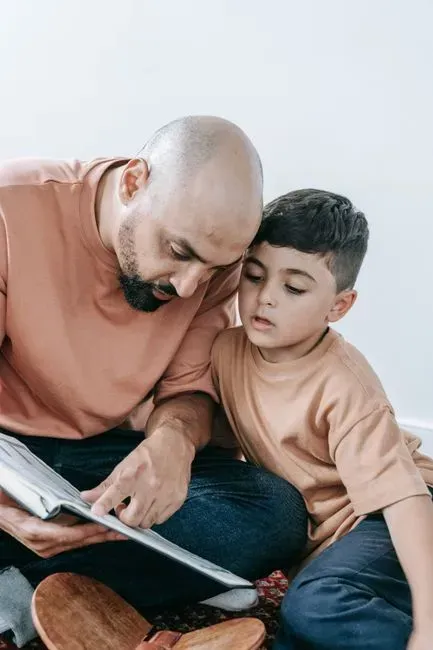
11. Prioritizing Happiness Over Capability (Image Credits: Pexels)
The phrase “I just want them to be happy” is one of the most common things parents say. It’s also one of the most quietly limiting goals you can set for a child. Happiness pursued directly, as the primary aim of childhood, tends to crowd out the experiences that make a person genuinely capable. Indulgent parenting during adolescence could be developmentally inappropriate and could be associated with adolescent psychological well-being problems.
Children need love and compassion first and foremost, but they also need the benefit of experience, the wisdom of their parents’ years, and a solid and reliable structure within which they can learn, grow, and make mistakes. Children allowed to opt out of discomfort at every turn tend to build their identities around being comfortable rather than around being competent. Capability, not comfort, is what eventually produces a life that actually feels good to live.
None of these habits come from cruelty or indifference. They come from parents who care deeply, sometimes too deeply to let their children feel the friction that growth requires. The distinction between loving a child and unintentionally limiting them is rarely obvious in the moment. It usually only becomes visible years later, in how a young person handles a job they hate, a friendship that ruptures, or a goal that doesn’t come easily. The most durable gift a parent can offer isn’t a smoother path – it’s a child who knows how to walk a rough one.