
There’s a certain nostalgia attached to 90s parenting. Kids ran free until the streetlights came on, dinner meant finishing every bite on your plate, and a sharp “because I said so” was considered a perfectly valid reason. It felt functional. It felt normal. Most of us turned out fine – or so we tell ourselves.
As research in child psychology, nutrition, and emotional development has advanced, we’ve come to understand that some of these methods do more harm than good. The shift hasn’t been loud or dramatic. It’s been gradual, quiet, and grounded in data. These are the ten rules that 90s parents swore by – and that modern child psychologists have largely moved on from.
1. Spanking as a Standard Disciplinary Tool

1. Spanking as a Standard Disciplinary Tool (Image Credits: Pexels)
Spanking and physical punishment were widely accepted disciplinary tools in the era, often recommended by parenting books and reinforced by school policies. The approach was rooted in obedience-based models that prioritized immediate compliance over emotional understanding. It was framed as tough love – something done for the child's own good.
Studies consistently show that spanking increases aggression and anxiety rather than teaching self-control. Modern parenting frameworks now strongly discourage physical punishment, favoring positive discipline techniques such as natural consequences, boundary-setting, and emotional coaching. The long-term emotional costs of physical discipline are now well-documented, and very few credible child development researchers still argue in its favor.
2. Letting Kids "Cry It Out" Every Single Night

2. Letting Kids "Cry It Out" Every Single Night (Image Credits: Pexels)
Structured sleep-training approaches like the cry-it-out method gained wider acceptance during and after the Industrial Revolution, when changing work patterns increased the emphasis on infant routines that aligned with fixed labor schedules. By the 90s, it had become a near-universal recommendation – let the baby cry, they'll learn to self-soothe, end of story.
Developmental psychologists raise concerns based on attachment theory and infant signaling: crying is a primary communication tool for infants and plays a role in forming secure caregiver attachment. Research has shown that when infants are left to cry without comfort, their cortisol levels increase significantly. Studies have shown that while babies subjected to the method eventually stopped crying, their cortisol levels remained elevated – indicating that even though the outward signs of distress subsided, the internal stress response persisted. The evidence is still contested, but the blanket confidence once placed in the method has genuinely eroded.
3. Telling Kids to "Stop Crying" and Toughen Up

3. Telling Kids to "Stop Crying" and Toughen Up (Image Credits: Pexels)
Emotional stoicism was practically a virtue in 90s households. Boys especially were told that crying was weak, and that hard feelings should be pushed down and gotten over quickly. The logic was that sheltering children from their own emotions prepared them for a difficult world.
With the primary focus on compliance, children's emotional expression is often discouraged, leading them to become withdrawn and hesitant to share their feelings. Basic research in developmental psychology has shown a positive correlation between sensitive response and the child's development. Sensitive response leads to better emotion regulation, better social skills, and fewer behavioral problems. Teaching children to suppress rather than name their emotions doesn't build resilience – it just delays the damage.
4. Praising Kids for Being "So Smart"

4. Praising Kids for Being "So Smart" (Image Credits: Unsplash)
The 90s self-esteem movement encouraged parents to tell their children how brilliant and special they were at every opportunity. It felt encouraging. It felt like building confidence. The movement handed out verbal trophies – and sometimes real ones – to children for everything they did, hyperbolically praising their intelligence and abilities.
Columbia University researchers Claudia Mueller and Carol Dweck found that children who were praised for their intelligence, as compared to their effort, became overly focused on results. Following a failure, these same children persisted less, showed less enjoyment, attributed their failure to a lack of ability, and performed poorly in future achievement efforts. Stanford's Professor Carol Dweck now famously insists: praise the process, not the person. It's a small linguistic shift with measurable consequences.
5. Strict Authoritarian Discipline With No Room for Discussion

5. Strict Authoritarian Discipline With No Room for Discussion (Image Credits: Pexels)
Historically, authoritarian parenting was more prevalent, particularly in the post-World War 2 era, where discipline and structure were highly emphasized, and children were often expected to be obedient and unobtrusive. That culture carried straight into the 90s. Parents gave orders; children followed them. Questioning a rule was itself punishable.
The prevailing belief that parental strictness is optimal for children is not uniformly supported by recent research. Contrary to the traditional notion that strictness is necessary to ensure children's conformity to social norms, contemporary studies question its necessity. Authoritarian parenting is linked to a higher incidence of externalizing problems, as children who rarely experience agency may act out in response to external pressures. Structure without warmth, it turns out, tends to backfire.
6. Forcing Children to Finish Everything on Their Plate

6. Forcing Children to Finish Everything on Their Plate (Image Credits: Unsplash)
"You're not leaving this table until that plate is clean." It was a dinnertime battleground in countless 90s households. The rule had good intentions behind it – waste nothing, be grateful, follow through. Some parents even tied finishing dinner to dessert as an explicit reward system.
Child psychologists have grown increasingly concerned about this practice because it teaches children to override internal hunger and fullness cues in favor of external demands. Research on intuitive eating and early childhood development suggests that forcing children to eat past satiety can disrupt their natural appetite regulation, potentially contributing to disordered eating patterns later in life. We now know that a child's temperament, family dynamics, and cultural context all play a role in shaping what works best. Mealtime should ideally build a healthy relationship with food, not a power struggle over it.
7. Leaving Young Children Unsupervised for Long Stretches
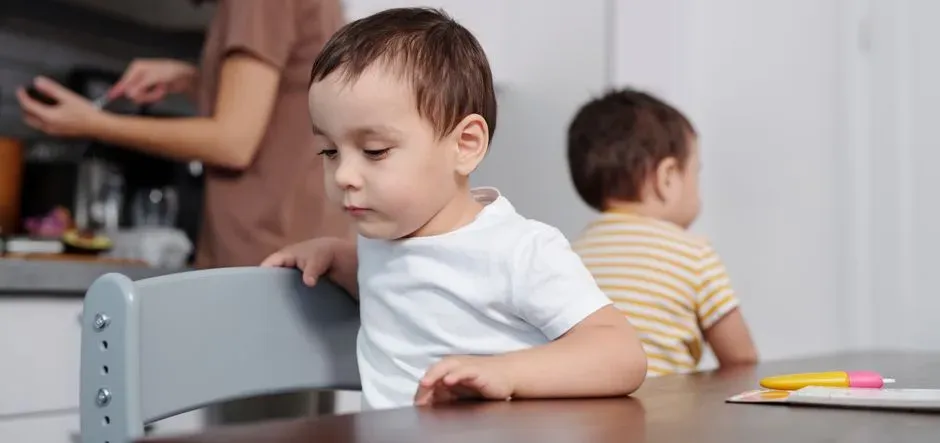
7. Leaving Young Children Unsupervised for Long Stretches (Image Credits: Pexels)
The 90s latchkey kid experience was practically a rite of passage. Children came home from school alone, let themselves in, and spent hours without an adult present. Independence was valued, parental hovering was seen as unnecessary, and most kids genuinely enjoyed the freedom.
Research later showed that prolonged unsupervised time increased risks of accidents, emotional distress, and exposure to unsafe situations. Fire-related incidents, household injuries, and anxiety disorders were more frequent among unsupervised children. Developmental experts now stress that children lack the cognitive maturity to handle emergencies alone. Modern guidelines emphasize age-appropriate supervision, structured after-school programs, and adult presence to ensure both physical safety and emotional reassurance during critical developmental years.
8. Using Inflated, Generic Praise Like "Good Job!" for Everything

8. Using Inflated, Generic Praise Like "Good Job!" for Everything (Image Credits: Pexels)
Closely related to the intelligence-praise problem is the epidemic of empty, reflexive praise that defined 90s parenting. Every drawing, every mediocre school project, every minor task was met with "Amazing! Wonderful! You're the best!" It was meant to be encouraging. Instead, it became background noise.
Generic praise like "good job!" lacks specificity – it doesn't tell children what precisely they did well, and without that information, they can't know exactly what they should do in the future to get the same outcome. It also focuses on the outcome rather than the process. Research has found that inflated praise, although well-intended, may cause children with low self-esteem to avoid crucial learning experiences. Rave reviews for a mundane accomplishment can convey an unintended message: now that you've excelled, we're going to hold you to a very high standard. Since youngsters with low self-esteem are driven by a desire to avoid failure, this can prompt them to avoid challenges entirely.
9. Dismissing Children's Anxiety as "Just a Phase"

9. Dismissing Children's Anxiety as "Just a Phase" (Image Credits: Pexels)
Childhood anxiety in the 90s was rarely treated as something requiring attention. If a child was withdrawn, overly fearful, or struggling socially, adults tended to reassure them with a pat on the back and a firm "you'll be fine." The assumption was that children were naturally resilient and would simply outgrow their worries.
That hands-off approach sat poorly with what researchers were simultaneously learning about early brain development. Parenting styles significantly influence various dimensions of child development, encompassing emotional, cognitive, and social outcomes. Untreated childhood anxiety doesn't simply evaporate with age – it often solidifies into more entrenched patterns. Advances in psychology, neuroscience, and child safety have since revealed long-term consequences of several once-common approaches. Today, parenting guidance emphasizes emotional security, developmental science, and physical safety.
10. Following One-Size-Fits-All Parenting Formulas

10. Following One-Size-Fits-All Parenting Formulas (Image Credits: Pexels)
Perhaps the most pervasive trend of the 90s was the belief that there was a single "right" way to raise children. Parenting manuals and expert advice often presented a one-size-fits-all formula, ignoring the fact that every child is different. If the formula worked for your neighbor's kid, the assumption was that it should work for yours too.
We now know that a child's temperament, family dynamics, and cultural context all play a role in shaping what works best. Research has linked authoritative parenting – warm, responsive, and structured – to higher academic achievement, psychological well-being, executive functioning, increased motivation, better social skills, and fewer behavioral problems. The single-formula approach also ignored something fundamental: modern parenting increasingly reflects research-based methods guided by brain development studies, attachment theory research, and evidence-based disciplinary strategies that may conflict with conventional practices handed down through generations.
None of this is meant as an indictment of 90s parents, most of whom were doing their genuine best with the information they had. With every passing generation, parenting changes. Methods of raising children shift with our growing knowledge of child development, changing societal standards, and new research. What matters now is that the science exists, it's accessible, and there's no longer a good reason to quietly keep following rules that don't serve children well.