
Most parenting conversations eventually circle back to the same advice: praise your child, tell them they’re smart, remind them they’re special. It’s well-meaning, and it’s not entirely wrong. Still, a growing body of child development research suggests that praise alone does very little to build the kind of deep, durable confidence that actually holds up when life gets hard.
What separates genuinely confident kids from those who simply perform well when someone is watching turns out to be a set of quieter, more deliberate habits that their parents practice every day. None of them involve applause.
1. They Let Their Kids Struggle Without Rushing to Rescue Them

1. They Let Their Kids Struggle Without Rushing to Rescue Them (Image Credits: Unsplash)
Research consistently shows that children who experience lower levels of autonomy develop higher anxiety and reduced confidence. It's a counterintuitive finding for many parents, but it makes sense once you sit with it. Every time a parent swoops in to fix a problem a child could reasonably handle on their own, they send a quiet message: you can't do this yourself.
When given autonomy to work through challenges, children gain confidence in their problem-solving skills, and parents promote a growth mindset over perfectionism by discussing failures as learning opportunities. By stepping back and letting them face natural consequences, parents give children something more powerful than protection – they give them courage. The discomfort of watching a child struggle is real, but so are the long-term gains.
2. They Model How to Handle Mistakes Without Shame

2. They Model How to Handle Mistakes Without Shame (Image Credits: Pexels)
Children learn far more from what we model than from what we say. When parents show grace toward their own mistakes, kids learn that imperfection is normal and growth is possible. This is one of those habits that feels almost too simple, yet it's remarkably rare in practice. Many parents present themselves as calm and competent at all times, accidentally teaching children that adults don't mess up.
When parents make mistakes or lose their temper and apologize genuinely, discussing what could be done differently next time, this demonstrates that everyone struggles with emotions sometimes and that mistakes are opportunities for learning and growth. Kids who grow up watching adults recover from setbacks develop a realistic, steady relationship with failure – one that doesn't unravel their sense of self when things go wrong.
3. They Set Clear Boundaries Without Relying on Fear
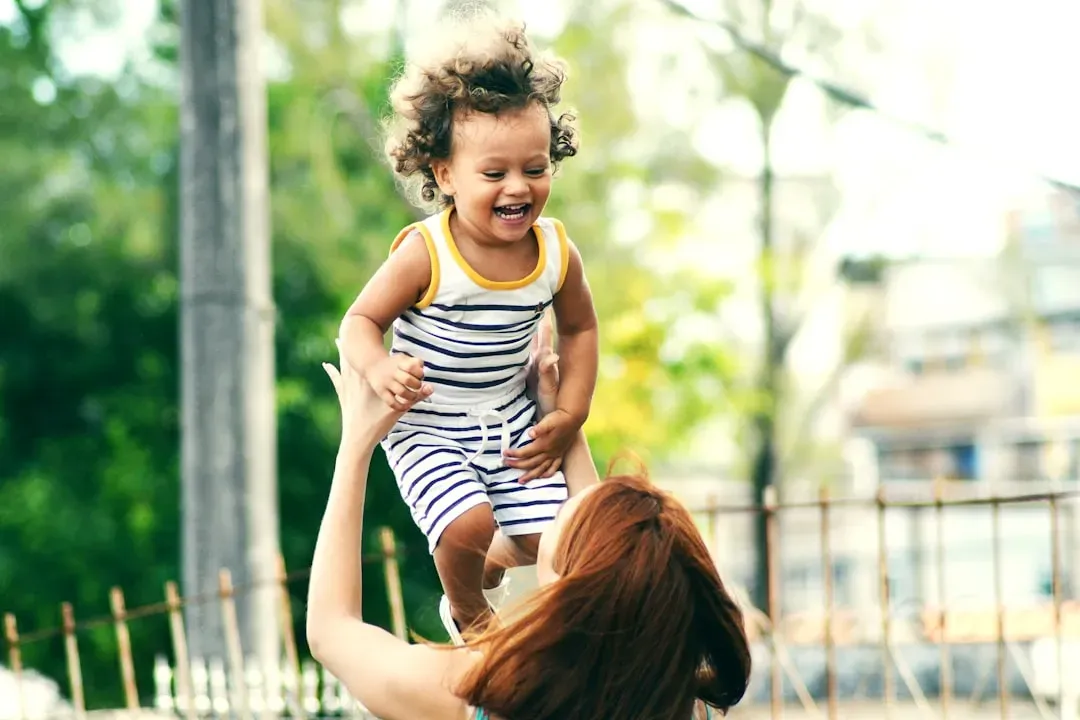
3. They Set Clear Boundaries Without Relying on Fear (Image Credits: Unsplash)
Research across multiple studies and cultural contexts demonstrates that authoritative parenting supports children in developing emotional competence, social skills, academic motivation, and psychological well-being, and the balance of structure and warmth appears to create optimal conditions for children to develop both self-regulation and self-confidence. The word "boundaries" can sound restrictive, but in developmental terms, clear expectations are actually a form of safety.
Children benefit when parents establish healthy boundaries and teach them to learn from mistakes rather than simply avoid punishment, maintaining clear parent-child roles while still considering the child's feelings and viewpoint. This combination fosters both the security that comes from consistent expectations and the confidence that develops when children know their perspectives matter. A child who understands what's expected of them, and why, has far less cognitive noise to deal with when navigating the world.
4. They Teach Kids to Name What They're Feeling

4. They Teach Kids to Name What They're Feeling (Image Credits: Unsplash)
One of the greatest gifts positive parenting offers children is the development of emotional intelligence, the ability to recognize, understand, and manage emotions effectively, and this skill set serves them throughout their lives in relationships, academic pursuits, and career success. Confidence isn't just about believing you can climb a rope in gym class. It's about trusting yourself when you're anxious, frustrated, or overwhelmed, and still being able to move forward.
Helping children identify and name their emotions beyond basic categories like "happy," "sad," or "angry," and introducing words like "frustrated," "disappointed," "anxious," "excited," or "proud," means that when children can accurately identify their emotions, they're better equipped to manage them appropriately. This kind of vocabulary building starts early and pays off in ways that are hard to measure but easy to notice when you meet a genuinely self-possessed teenager.
5. They Give Children Real Choices and Respect the Outcomes

5. They Give Children Real Choices and Respect the Outcomes (Image Credits: Unsplash)
Giving children space to make choices, solve problems, and follow through on tasks helps build independence and teaches them to trust their judgment. This goes beyond letting a child pick between two shirt colors. It means offering age-appropriate decisions, accepting the outcome without commentary, and resisting the urge to quietly override what a child chose just because it wasn't your preference.
Some empirical studies have shown that authoritative parenting facilitates children's perceptions of behavioral autonomy, so that children believe they can make and stick to their own decisions, have a better sense of control and accomplishment over themselves, and reinforce their positive behaviors. That internal sense of agency, the quiet knowledge that your choices actually matter, is one of the core ingredients of lasting confidence. It can't be handed to a child through praise. It has to be practiced.
6. They Focus on Effort and Process, Not Just Results

6. They Focus on Effort and Process, Not Just Results (Image Credits: Unsplash)
Positive parenting builds genuine confidence by focusing on effort, growth, and character development rather than just outcomes or achievements, and this approach helps children develop intrinsic motivation and resilience in the face of challenges. This isn't about pretending outcomes don't matter. It's about making sure a child understands the connection between how they work and what they're capable of becoming.
Recognizing and celebrating children's strengths, efforts, and progress rather than fixating solely on mistakes or shortcomings doesn't mean ignoring problems, but rather addressing challenges from a growth-oriented perspective that builds confidence and resilience. When children feel valued for who they are and encouraged in their efforts to improve, they develop a stronger sense of self-worth and motivation to continue growing. The child who learns that persistence is the variable they control is far better equipped for adult life than one who was simply told, again and again, that they were great.
None of these habits are flashy. They don't produce immediate visible results the way a trophy or a gold star might. Confidence shapes how children approach learning, relationships, and challenges, and when kids believe in their abilities, they're more likely to engage socially, persevere in tough situations, and build meaningful connections. That kind of confidence is built slowly, through a thousand small moments where a parent chose trust over rescue, structure over chaos, and honesty over performance. The quiet habits tend to be the ones that last.