
For years, the running joke was that boomers just didn’t get it. They stayed too long at jobs they hated, followed rules nobody explained, and treated the office like a second home. Younger workers rolled their eyes and built entirely different rulebooks around flexibility, boundaries, and self worth outside of a paycheck.
Yet something interesting has happened in the last couple of years. Quit rates have dropped to some of the lowest levels in a decade, promotion timelines are stretching out, and companies are quietly rewarding the exact behaviors boomers practiced without thinking twice. It’s worth looking at what actually worked in that older model, separate from the parts that clearly did not.
Loyalty Was a Two-Way Street

Loyalty Was a Two-Way Street (Image Credits: Pexels)
The boomer generation entered a labor market where staying put actually paid off. Boomers entered a system that worked, one where loyalty was rewarded with stability, pensions and upward mobility. That wasn’t blind devotion. It was a functioning exchange where showing up consistently bought something real in return.
Today’s data suggests that arrangement has faded, then partially crept back. Boomers today are 59% more likely than other generations to believe hierarchies are important at work, and 45% more likely to say loyalty should be rewarded with job security, fair pay, and recognition. The instinct wasn’t naive. It reflected a workplace where sticking around genuinely counted for something.
Showing Up in Person Still Builds Trust

Showing Up in Person Still Builds Trust (Image Credits: Pexels)
Long before Slack threads and asynchronous updates, boomers built their careers on face time, literally. A notable aspect of their work ethic is the emphasis on face-to-face communication and personal relationships in the workplace, prioritizing direct interaction over digital mediums to foster trust and cooperation. That wasn’t about resisting technology so much as recognizing that trust builds faster in a room than in a chat window.
Plenty of hybrid offices are now relearning this the hard way. Teams that never meet in person often struggle with the small misunderstandings that a five minute hallway conversation would have solved. The instinct to occasionally just talk to someone, rather than type at them, has aged better than expected.
Climbing the Ladder Took Patience

Climbing the Ladder Took Patience (Image Credits: Pexels)
Boomers generally accepted that advancement took years, not months. That patience lines up surprisingly well with what current workplace research shows about how promotions actually happen. Research reveals that promotion potential decreases significantly after 10 years at a company, with the most likely time to receive a promotion being the third year, after which promotion rates drop off substantially.
That third year window is easy to miss if someone is already planning their exit at the eighteen month mark. Boomers, whether by necessity or temperament, tended to stay long enough to actually hit that window. It’s a small detail, but it explains a lot about why patience sometimes outperforms hustle.
Staying Long Enough to Build Institutional Knowledge

Staying Long Enough to Build Institutional Knowledge (Image Credits: Unsplash)
Tenure numbers tell a clear story about who sticks around and who doesn’t. Baby Boomers maintain the longest tenure at 8.4 years, consistent since 2002, continuing to impact the workforce by staying on jobs longer than previous generations. That kind of longevity means someone actually remembers why a process exists, not just that it exists.
Companies losing that layer of institutional memory are feeling it now. The report finds that boomers are stabilizing organizational forces and the workers most likely to champion institutional knowledge. When that generation retires in large numbers, a lot of unwritten context leaves with them.
Work Ended When You Left the Building

Work Ended When You Left the Building (Image Credits: Pexels)
It sounds counterintuitive given how long boomers worked, but there was a boundary that’s since dissolved. Nobody was pinging them on a phone at nine at night about a project update. Boomers and Gen Xers grew up getting their news twice a day, which meant they could protect their peace.
That constraint, which felt limiting at the time, turned out to be a form of protection. Once the workday ended, it actually ended. Modern workers with smartphones in every pocket sometimes envy that simplicity more than they’d admit.
A Job Was Something You Committed To, Not Just Tried On

A Job Was Something You Committed To, Not Just Tried On (Image Credits: Pexels)
Job hopping has cooled off considerably compared to a few years ago, and the numbers back that up. The percentage of workers voluntarily leaving their jobs has hovered around 2% since early 2025, the lowest levels since early 2016 outside of the initial pandemic period. That’s a meaningful shift back toward something boomers never really abandoned in the first place.
The trend even has a name now. The era of the job hopper has definitively ended, replaced by the age of the job hugger. It turns out committing to a role long enough to actually master it wasn’t old fashioned so much as it was simply out of style for a while.
Skills Were Built on the Job, Not Assumed at Hiring
Skills Were Built on the Job, Not Assumed at Hiring (Image Credits: Pexels)
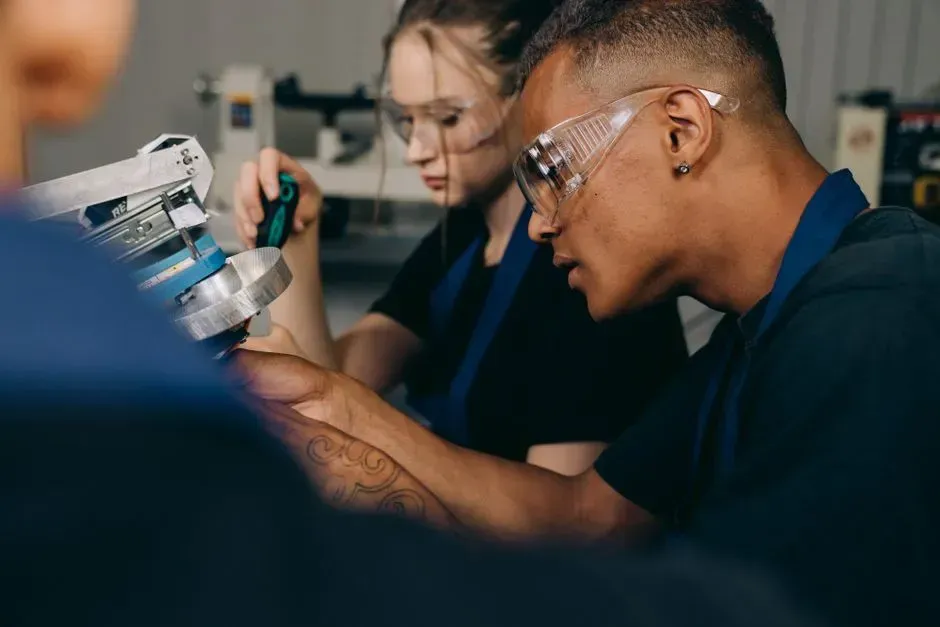
Boomers largely came up through internal training, apprenticeships, and on the job learning rather than arriving fully formed. Employers invested in that process because they expected the person to stay long enough to justify it. Research shows Baby Boomers place particular value on hard work as a defining professional priority, and that value extended to earning skills over time rather than expecting instant expertise.
That model required patience on both sides. A company had to be willing to train someone for a role they might not fully grow into for years. Workers had to accept that competence was earned slowly, not downloaded overnight, which is a very different mindset than today’s expectation of hitting the ground running.
Structure Gave People a Clear Sense of Where They Stood

Structure Gave People a Clear Sense of Where They Stood (Image Credits: Pexels)
Rigid hierarchies get criticized often, and fairly so in many cases. Still, there was a clarity to knowing exactly who to report to and what the next step up actually looked like. Boomers remain far more likely than other generations to believe hierarchies are important at work.
Flatter, less defined org charts sound appealing until someone realizes nobody can tell them how they actually get promoted. A little structure, even the frustrating kind, at least gave people a map. Plenty of younger workers navigating vague, matrixed reporting lines today would probably take that map if offered.
Retirement Was Meant to Be a Real Finish Line

Retirement Was Meant to Be a Real Finish Line (Image Credits: Unsplash)
The old system wasn’t perfect, but it was built around an actual endpoint. Pensions promised a defined benefit that didn’t depend on market timing or personal investment savvy. That promise is fading fast, and boomers themselves are feeling the gap.
Many boomers hesitate to retire fully due to financial concerns, with almost half planning to keep working in 2025. The generation that built its identity around eventually stopping is now discovering that the stopping part isn’t guaranteed anymore. That’s less a criticism of what boomers got right and more a warning about what got lost along the way for everyone who came after them.
None of this means the boomer approach to work should be copied wholesale. Plenty of it came from a labor market that simply doesn’t exist anymore, and plenty of it excluded people who didn’t fit the mold. But somewhere between constant job switching and staying in one cubicle for forty years, there’s a version of loyalty, patience, and presence worth borrowing back.