
A meaningful shift happened in the federal tax code when Congress passed the One Big Beautiful Bill Act in July 2025. For millions of older Americans already navigating fixed incomes and rising costs, the timing could not be more relevant. The law created a new annual tax deduction of up to $6,000 for taxpayers age 65 and older. That’s real money – and it stacks on top of deductions that already existed.
The catch, of course, is that not every senior automatically gets it. There are age requirements, income thresholds, filing rules, and a few common misunderstandings that can cost you the full benefit if you’re not paying attention. Here’s a clear look at the five ways you can actually qualify.
1. Turn 65 by December 31 of the Tax Year

1. Turn 65 by December 31 of the Tax Year (Image Credits: Unsplash)
Under the law, you qualify if you have attained age 65 before the close of the taxable year. The IRS also says you are treated as 65 on the day before your 65th birthday. For tax year 2026, that generally means you qualify if you were born on or before January 1, 1962. This is a hard cutoff, so the month and day of your birthday actually matter here.
If you turn 65 on January 1, 2027, you are considered 65 on December 31, 2026. Many people born on New Year's Day wait an extra year to claim senior benefits, costing themselves thousands in lost deductions. Worth double-checking before you file.
2. Keep Your Modified Adjusted Gross Income Below the Phase-Out Threshold

2. Keep Your Modified Adjusted Gross Income Below the Phase-Out Threshold (Image Credits: Pexels)
The deduction phases out for taxpayers with modified adjusted gross income over $75,000, or $150,000 for joint filers. This isn't your taxable income after deductions – it's calculated before most write-offs are applied, which catches some retirees off guard. Items like tax-exempt municipal bond interest can count toward MAGI even if they don't show up in your final taxable figure.
Because income limits apply, tax planning strategies such as managing IRA withdrawals or capital gains could help maximize eligibility. If you're close to that threshold, a Qualified Charitable Distribution is one option worth knowing about. If you are over 70½ and want to lower your MAGI to stay under the phase-out limits, a QCD can help. By sending your RMD directly to a charity, the income never hits your tax return, preserving your eligibility for the full $6,000 senior deduction.
3. File Under an Eligible Filing Status

3. File Under an Eligible Filing Status (Image Credits: Unsplash)
To be eligible for the new senior deduction, you need to have turned 65 on or before December 31, 2025, and file as an individual, head of household, surviving spouse, or a married couple filing jointly. The deduction is not available to married couples filing separately. That last point trips up more than a few filers who assume their status doesn't matter here.
The IRS says married taxpayers must file jointly to claim the enhanced deduction for seniors. If only one spouse has reached age 65, the maximum enhanced deduction is generally $6,000, not $12,000. Both spouses must individually meet the age requirement before the combined $12,000 becomes available.
4. Claim It Regardless of Whether You Itemize or Take the Standard Deduction
4. Claim It Regardless of Whether You Itemize or Take the Standard Deduction (Image Credits: Pexels)
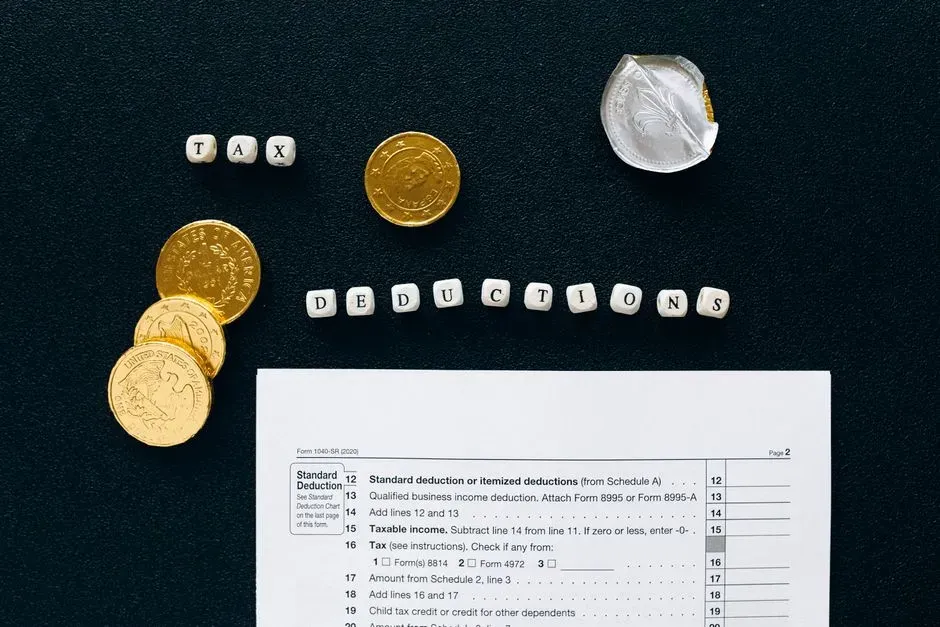
One of the most genuinely useful features of this deduction is its flexibility. The senior deduction is an exemption for filers 65 and older introduced in the One Big Beautiful Bill Act. It allows seniors to claim an additional $6,000, whether they itemize or take the standard deduction. That's a departure from how many deductions work, and it means you don't have to choose between your itemized write-offs and this benefit.
The new provision allows eligible taxpayers who are 65 or older to deduct up to $6,000 from their taxable income each year. A deduction reduces the amount of income that is subject to federal income tax, which can lower a person's overall tax bill. This deduction is in addition to the standard deduction and is separate from other age-related tax benefits that already exist in the tax code. So it stacks, not substitutes.
5. Have a Valid Social Security Number on File
5. Have a Valid Social Security Number on File (DonkeyHotey, Flickr, <a href="https://creativecommons.org/licenses/by/2.0/" target="_blank" rel="noopener">CC BY 2.0</a>)
The IRS says the deduction is claimed on Schedule 1-A. If married, the return generally must be filed jointly to claim it, and the person claiming it must have a valid Social Security number. This is a basic eligibility condition, but it's worth confirming, especially for seniors who may have recently updated their immigration or residency status.
When you prepare your return, you'll indicate your date of birth. If you are 65 or older, the IRS will automatically calculate your eligibility. A good tax-prep software program will flag your eligibility automatically and apply the deduction for you. Still, it's worth reviewing the adjustments worksheet before submitting, just to confirm everything was applied correctly.
The broader picture here is fairly significant. A single senior aged 65 or over can take the standard deduction, which increased to $15,750 this year; the existing senior deduction of $2,000; and the new senior deduction of $6,000 for a total deduction of $23,750. For married couples where both qualify, that number is $46,700. The window for this benefit is open through the 2028 tax year, so there's still time to plan around it. Meeting even just a few of these five conditions can put a notable amount of tax savings back in reach.