
Nearly nine in ten Americans say they keep some kind of budget, yet the number of people living paycheck to paycheck keeps climbing anyway. That gap is worth sitting with for a moment. It suggests the problem was never a lack of effort or awareness. It points instead to something quieter: most budgets simply are not built to survive real life.
What follows is not a pitch for one magic system. It is a closer look at why certain budgeting approaches hold up under pressure while others crumble by the second week, and what that difference actually comes down to.
Why So Many Budgets Quietly Fall Apart

Why So Many Budgets Quietly Fall Apart (Image Credits: Unsplash)
Most budgets do not fail because someone lacks discipline. They fail because they were designed for a version of life that does not match how income and expenses actually move. Living paycheck to paycheck has risen steadily, from 50% in the first year Debt.com began tracking it to a new high of 69% today. That kind of financial pressure makes rigid, overly detailed budgets feel almost impossible to sustain.
More than 86% of people have a budget, and 83% of them say that increasing costs are the biggest challenge they face when trying to stick to it. A spreadsheet with forty categories might look impressive on the day it is built. Three weeks later, when a grocery bill jumps or a car repair shows up out of nowhere, that same spreadsheet often gets abandoned rather than adjusted.
The Real Reason Simplicity Wins

The Real Reason Simplicity Wins (Image Credits: Pexels)
There is a pattern in the research that keeps repeating itself. People do not quit budgets because they misunderstand money. They quit because the system asks too much of them on an ordinary Tuesday.
Financial habits that survive tend to share one trait: they require fewer decisions, not more. A method that only needs a glance once a week beats one that demands constant micromanagement, simply because it fits into a normal, busy life instead of competing with it.
Zero Based Budgeting: Give Every Dollar a Job
Zero Based Budgeting: Give Every Dollar a Job (Image Credits: Pexels)
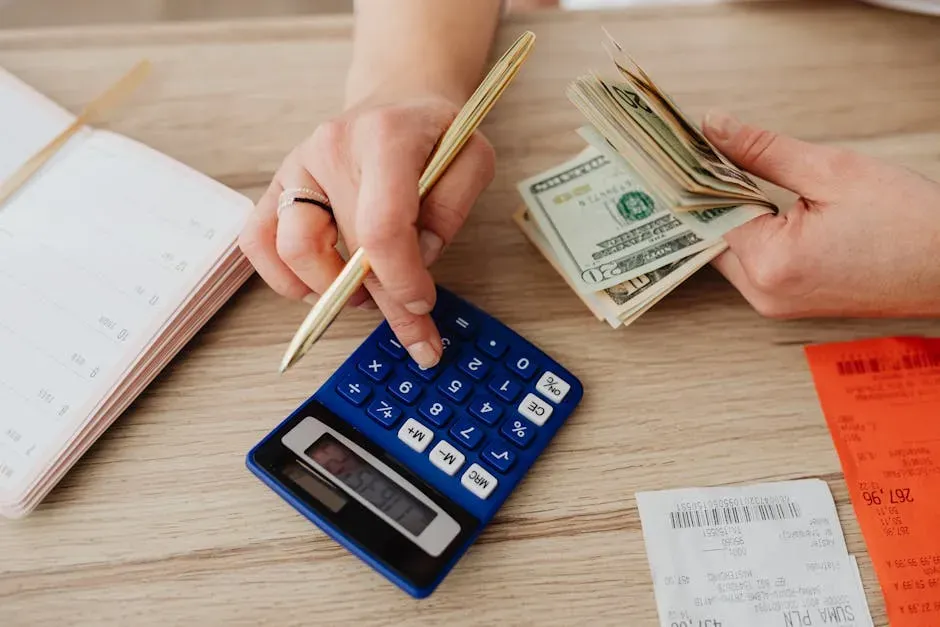
Zero based budgeting assigns every single dollar of income a purpose before the month even begins, so income minus all planned spending and saving equals zero. Rather than using a zero based budget, where you assign a purpose to every dollar of income, the 50/30/20 rule allows you to fudge it. That contrast is the whole point. Zero based budgeting trades flexibility for precision.
This method tends to work best for people who like structure and have relatively predictable income, since irregular paychecks make the exact math harder to plan around. It also demands regular upkeep, because a single unplanned purchase throws off the whole equation until it gets rebalanced. For someone who finds satisfaction in detail, that tradeoff feels worth it. For someone who does not, it can become the very reason the whole system gets dropped.
The 50/30/20 Rule: A Framework, Not a Cage
The 50/30/20 Rule: A Framework, Not a Cage (Image Credits: Pexels)
With the 50/30/20 budget method, the idea is to divide monthly income into three categories, spending 50% on needs, 30% on wants, and 20% on savings. Its appeal is obvious. There are only three buckets to track, not forty.
The percentages are not gospel, though, and treating them as rigid rules is where many people get stuck. In high cost areas, housing alone can eat past that fifty percent mark before anything else is even considered, which means the ratios often need honest adjustment rather than blind obedience. Used as a rough compass instead of a strict rulebook, it becomes far easier to stick with over months and years rather than days.
Paying Yourself First: Taking Willpower Out of the Equation

Paying Yourself First: Taking Willpower Out of the Equation (Image Credits: Pexels)
Some of the most durable budgeting habits skip willpower altogether by automating the decision. One straightforward approach is budgeting a small amount from each paycheck to automatically go into a high-yield savings account, with the rest flowing into checking, a setup often called split-direct deposit. The money never sits in a checking account long enough to be spent on impulse.
This approach matters more than it might seem, given the broader savings picture. The personal savings rate was 3.9% in May 2025, which is about one third as much as it was fifty years earlier. When saving depends on remembering to transfer leftover money at the end of the month, there is usually very little left to transfer. Automating that first step removes the decision entirely, which is often the difference between a habit that lasts and one that quietly dies after a strong first month.
The Envelope System, Reinvented for a Cashless World

The Envelope System, Reinvented for a Cashless World (Image Credits: Pexels)
The classic envelope system, physically dividing cash into labeled envelopes for groceries, gas, and entertainment, sounds old fashioned in an era of tap to pay. Its logic still holds, though, and it has simply moved into apps that create digital spending buckets tied to a debit card or account. Once an envelope is empty, spending in that category stops, full stop, no exceptions.
Interestingly, a version of this instinct shows up even among people who never touch cash. About one in five Americans say they move money between accounts as a way to discourage themselves from overspending, a behavior far more common among younger adults, with 32% of Gen Z and 29% of Millennials using this strategy compared to just 6% of Baby Boomers. That generational split hints at something real. Making overspending slightly less convenient, rather than relying purely on self control, tends to hold up better over time.
Why Reviewing Beats Perfecting

Why Reviewing Beats Perfecting (Image Credits: Pexels)
Building a budget is the easy part. Actually revisiting it is where most plans quietly break down. Bankrate's Money and Mental Health Survey found that less than one third, 29 percent, of Americans reviewed their budget during a recent 30-day period.
That single habit, checking in regularly rather than setting a plan once and forgetting it, correlates strongly with financial confidence. Nearly four in ten post-graduates and people with a four-year college degree said they reviewed their budget in the 30 days prior to the survey. A budgeting method does not need to be flawless to work. It needs to be looked at often enough that small problems get caught before they turn into large ones.
Matching the Method to Your Income and Personality
Matching the Method to Your Income and Personality (Image Credits: Pexels)
There is no universal winner among these approaches, and pretending otherwise sets people up to fail. Roughly 39% of women prefer using pen and paper for budgeting, while 36% of men favor spreadsheets, with both groups showing similar app usage around 17 to 18%. None of those tools is objectively superior. They simply match different habits of mind.
Age and income stability matter just as much. While most people ages 18 to 29 and those 59 and older stay on budget, a significant share of 45 to 59 year olds exceed their budget, and many people 59 and older do not use a budget at all. Someone with a steady salary can lean on precise, category-heavy systems. Someone with freelance or seasonal income usually needs something looser, built around percentages of whatever comes in rather than fixed dollar amounts.
The Method That Actually Sticks

The Method That Actually Sticks (Image Credits: Unsplash)
After looking at zero based plans, percentage rules, envelopes, and automated transfers side by side, a pattern emerges that has little to do with which method is technically the most efficient. More than 86% of people who budget regularly say it has helped them either avoid debt or pay it off, and nearly 95% now say budgeting matters more than ever. The specific system mattered far less than the fact that people kept showing up to it.
is rarely the most sophisticated one on paper. It is the one that survives a bad week, a surprise expense, or a month where nothing goes according to plan. Simplicity, automation, and a habit of checking in regularly tend to outlast any spreadsheet built for a version of life that never quite shows up.