
Every workplace has its own unwritten rules for digital communication, and Slack has quietly become the place where those rules get tested daily. Younger employees, many of whom grew up texting before they learned cursive, tend to notice habits that older colleagues barely register as habits at all. What feels like normal office etiquette to one generation can read as confusing, inefficient, or oddly formal to another.
Nearly 68.9% of Gen Z prefers instant messaging over email for workplace communication, a preference that signals speed and directness over anything else. That expectation shapes how they judge the way coworkers use tools like Slack. Below are six habits that, fairly or not, tend to make Gen Z teammates quietly assume you've never really gotten the hang of the platform.
1. Leading With a Bare "Hey" and Leaving Everyone Hanging

1. Leading With a Bare "Hey" and Leaving Everyone Hanging (Image Credits: Unsplash)
It starts innocently enough. Someone sends a single word, just "hey" or "hi," then goes quiet while the recipient waits to find out what's actually going on. One of the most common complaints about Slack use involves messages that only contain a greeting, since these waste time and put the burden of responding on the other person.
The recipient has no idea if this is urgent, casual, or the start of bad news, so they sit there refreshing their screen instead of working. The sender ends up waiting for a reply, then the recipient waits again while the sender finally gets around to typing the actual question, when a simple combined message would have solved it instantly. For a generation raised on texting, where context usually comes in the same breath as the greeting, this two step dance feels needlessly slow.
2. Turning One Update Into Five Separate Notifications
2. Turning One Update Into Five Separate Notifications (Image Credits: Unsplash)
Some people type the way they think, sending a burst of short fragments instead of one complete thought. This habit, hitting enter after every few words instead of writing a full message and sending it once, has been described as one of the most irritating things a coworker can do, since the receiver gets hit with a string of notification sounds that becomes maddening after just a handful of pings.
Gen Z employees, who often manage several chat threads at once across different apps, notice this fragmentation quickly because it clutters their notification feed for no real reason. It also makes conversations harder to scan later, since the thought is scattered across five bubbles instead of sitting in one clean paragraph. A quick pause before hitting send usually solves the whole problem.
3. Calling or Booking a Meeting When a Message Would Do

3. Calling or Booking a Meeting When a Message Would Do (Image Credits: Unsplash)
Picking up the phone or firing off a calendar invite for something that could have been answered in two sentences is a classic generational friction point. Research from Robert Walters found that Gen Z and millennial workers are considerably more likely than older colleagues to view calls and meetings as unproductive, with a majority saying instant messaging or email is simply the better way to get things done.
Younger employees tend to get annoyed by phone calls that could have been handled as an email, or better yet, as a quick Slack message. It isn't that they dislike talking to people. It's that defaulting to a call for a question with a one line answer feels like it's burning fifteen minutes that neither person actually had to spend.
4. Formatting Slack Messages Like Formal Email
4. Formatting Slack Messages Like Formal Email (Image Credits: Pexels)
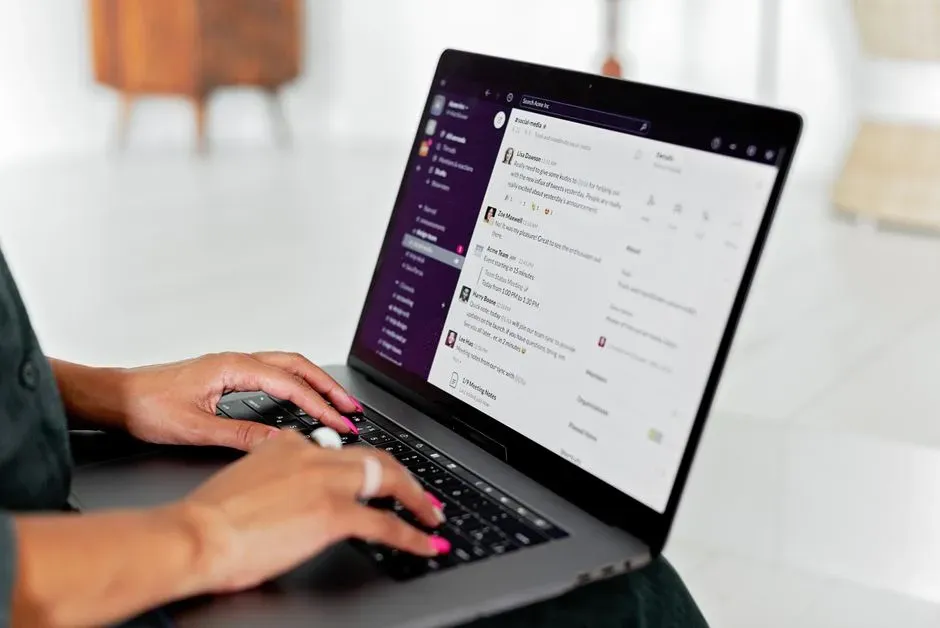
Opening a Slack direct message with "Dear team," including a full signature block, and closing with "Best regards" is a habit that instantly signals someone treats chat tools as a lightly disguised inbox. Slack was built to move past the slower conventions of email, so carrying those same habits directly into chat tends to defeat the entire point of the tool.
This matters more than it might seem, since younger workers already have complicated feelings about email itself. One recent report found that email is still the top communication tool for a large share of Gen Z workers, yet more than half of them say email leaves them feeling stressed, largely because of overflowing inboxes. Watching that same formality creep into a supposedly casual chat platform only adds friction where there doesn't need to be any.
5. Ignoring Threads and Burying the Channel in Replies
5. Ignoring Threads and Burying the Channel in Replies (Image Credits: Unsplash)
Threads exist for a reason, yet plenty of people skip them entirely and reply directly in the main channel instead. Slack's own guidance notes that using threads properly, along with emoji reactions and smarter messaging habits, can cut team notifications by a significant margin.
When someone ignores that structure, a simple back and forth conversation ends up scattered across dozens of unthreaded messages, forcing everyone else in the channel to scroll past it just to find the actual update they needed. It also makes it nearly impossible to reference the conversation later without digging through unrelated chatter. Gen Z employees, who often juggle multiple busy channels at once, tend to notice this disorganization almost immediately because it directly slows down their own workflow.
6. Blasting @here or @channel for Things That Aren't Urgent

6. Blasting @here or @channel for Things That Aren't Urgent (Image Credits: Pexels)
Tagging an entire channel for something that only concerns two people is one of the fastest ways to annoy a room full of coworkers. Not every response needs to go out to the whole channel, since directly mentioning the people involved already ensures they see it, without pulling in everyone else unnecessarily.
There's a related version of this problem too, where someone plays go between instead of just posting the question where the right people can see it. This habit of relaying messages back and forth between separate private conversations, rather than defaulting to an open discussion, tends to waste time for everyone stuck in the middle. Both patterns point to the same underlying issue: not quite understanding which messages belong in public view and which ones don't.
Slack habits are rarely about competence. They're mostly about pace and context, two things that shift a little with every generation that enters the workforce. Paying attention to how these small choices land on the other end of the screen tends to smooth out more friction than most people expect.