
Every generation seems to invent new ways to talk that make the previous one wince, and this cycle is playing out again in offices, family group chats, and text threads across the country. What one generation sees as efficient or low-key polite, another reads as cold, dismissive, or downright disrespectful. The gap between Gen Z's default communication style and what Boomers consider basic manners has become a genuine source of friction, one that shows up in workplaces, family dinners, and every text exchange in between.
1. Leaving voicemails unanswered on purpose
1. Leaving voicemails unanswered on purpose (Image Credits: Unsplash)
For many Gen Z workers and young adults, voicemail has quietly become obsolete. A 2024 survey highlighted that a large share of younger respondents said they rarely, if ever, check their voicemail inbox, often letting messages pile up unheard for weeks or months. To them, a text or a missed call notification conveys the same information without the hassle of dialing in, listening, and typing out a number.
Boomers, who grew up treating a voicemail as a courtesy left by the caller and a responsibility for the receiver, often find this baffling. Not returning a voicemail can feel like a direct snub, as if the message was heard and ignored rather than simply never opened. The disconnect isn’t about rudeness so much as two entirely different mental models for what a phone call is supposed to accomplish.
2. Texting instead of calling for anything important

2. Texting instead of calling for anything important (Image Credits: Unsplash)
Gen Z overwhelmingly prefers text over voice calls, even for conversations that older generations would consider call-worthy, like scheduling a doctor’s appointment or discussing a family matter. Pew Research and various communication studies have consistently shown that younger adults view unscheduled phone calls as intrusive, something that demands immediate attention without warning. Texting, by contrast, lets the recipient respond on their own time, which Gen Z sees as more respectful, not less.
Boomers tend to read this differently. A phone call has traditionally signaled that something matters enough to warrant a real-time conversation, and skipping straight to text can come across as avoidant or overly casual for serious topics. The friction here isn’t really about technology, it’s about what each generation associates with sincerity and effort in communication.
3. Leaving messages on read without responding right away
3. Leaving messages on read without responding right away (Image Credits: Pexels)
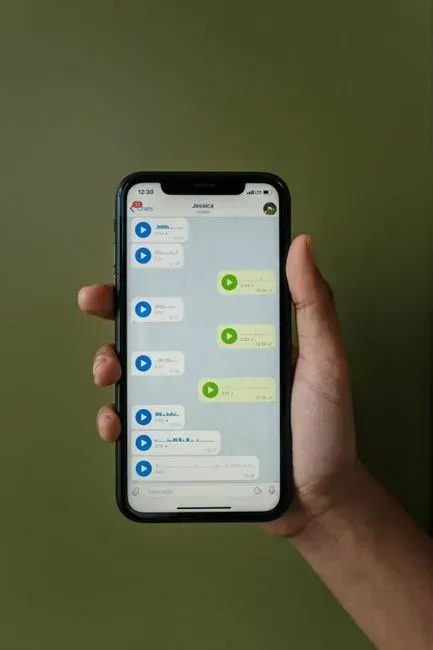
Read receipts have turned “seen” into a small social event, and Gen Z has largely normalized leaving a message on read for hours or even days without it meaning anything personal. For many young people, responding immediately to every text isn’t sustainable, especially when juggling multiple group chats, work notifications, and social apps at once. Silence, in this context, is often just a sign of being busy, not a sign of being ignored.
Older generations, particularly those who came of age when a phone call had to be answered live or not at all, tend to interpret a read-but-unanswered message as a deliberate snub. There’s an assumption that if you’ve seen something, you owe an immediate reply, a norm that simply doesn’t map onto how younger people manage constant digital input. The mismatch creates a lot of unnecessary hurt feelings on both sides.
4. Using abbreviations and internet slang in professional emails

4. Using abbreviations and internet slang in professional emails (Image Credits: Unsplash)
Terms like “lol,” “tbh,” or even lowercase-only writing have crept into workplace emails and Slack messages from younger employees, something that would have been unthinkable in office correspondence a couple of decades ago. Gen Z workers often see formal email conventions, like lengthy greetings and sign-offs, as unnecessarily stiff for internal communication. Several workplace culture reports from 2024 and 2025 have noted rising friction between generations specifically around tone and formality in written communication at work.
For Boomers, professional writing has long been a marker of respect and seriousness, with proper grammar and formal structure signaling that the sender takes the recipient and the task seriously. Casual shorthand in a work email can feel like the sender didn’t bother to put in effort, even if that’s not the intention at all. It’s less about the actual words used and more about what those words are assumed to represent.
5. Setting firm boundaries around after-hours work messages

5. Setting firm boundaries around after-hours work messages (Image Credits: Pexels)
Gen Z has been widely credited with pushing back against the always-on work culture that dominated previous decades, often declining to answer emails or Slack messages outside of scheduled hours. Multiple workplace studies from recent years point to younger employees prioritizing mental health and boundaries over the traditional expectation of constant availability. This isn’t laziness, according to most research on the topic, it’s a deliberate stance on sustainable work habits.
Boomers, many of whom built careers around the idea that answering a late-night email showed dedication, sometimes view this boundary-setting as a lack of commitment or gratitude. The generational disagreement here often boils down to differing definitions of professionalism itself, one rooted in visible availability, the other in protecting personal time as a form of long-term productivity.
6. Ghosting instead of formally ending conversations

6. Ghosting instead of formally ending conversations (Image Credits: Gallery Image)
Ghosting, or simply stopping communication without explanation, has become a normalized way for Gen Z to end everything from casual dating situations to group chats and even some professional interactions. Dating app data and behavioral surveys have repeatedly shown that younger users are far more likely to disappear from a conversation rather than deliver a formal goodbye or explanation. It’s often framed as self-protective, a way to avoid confrontation or awkward exchanges that don’t feel necessary.
Older generations tend to see this very differently, viewing an abrupt silence as a breach of basic courtesy that leaves the other person confused or hanging. A formal closure, even an uncomfortable one, has traditionally been considered the respectful way to end things. The Gen Z approach flips that logic, treating disengagement itself as the kinder, lower-friction option.
7. Using emojis instead of full sentences

7. Using emojis instead of full sentences (Image Credits: Unsplash)
A single emoji, or even a short string of them, often serves as a complete response for Gen Z texters, replacing what older generations would consider a proper reply. Linguistic researchers have noted that emojis function almost like a modern shorthand grammar for younger digital natives, conveying tone and reaction efficiently without needing accompanying text. A thumbs-up or a laughing emoji can mean acknowledgment, agreement, or amusement depending entirely on context.
Boomers frequently interpret an emoji-only response as dismissive or lazy, especially in a conversation that seems to warrant a more substantial reply. There’s an underlying expectation from older generations that a real answer requires actual words, and a symbol alone can feel like a shortcut that skips the effort of genuine engagement. What reads as efficient to one generation reads as curt to another.
8. Correcting people publicly on social media
8. Correcting people publicly on social media (Image Credits: Pixabay)
Gen Z has grown up in an environment where public correction, whether factual, social, or political, happens openly in comment sections and reply threads rather than through private conversation. This habit stems partly from a broader cultural shift toward transparency and accountability that took hold across social platforms over the past several years. What might have once been handled with a quiet word is now often addressed in a public reply for everyone to see.
For Boomers, who generally learned that correcting someone should happen privately to avoid embarrassment, this public approach can feel needlessly confrontational or humiliating. The idea of airing a disagreement in front of an audience, even a small one, runs counter to older norms around saving face and handling conflict discreetly. Gen Z, meanwhile, often views the public format as a way to hold people accountable rather than to shame them.
9. Skipping traditional greetings in messages
9. Skipping traditional greetings in messages (Image Credits: Unsplash)
Diving straight into the point of a message, without a “Hi, how are you?” opener, has become standard practice among younger texters and even email senders. This habit is largely about efficiency, since Gen Z communicators often view small talk as filler that delays getting to the actual purpose of the message. In fast-moving group chats and workplace tools, skipping the greeting simply speeds things along.
Boomers, however, were raised with greetings as a foundational element of polite communication, something that signals warmth before business begins. Receiving a message that jumps straight to a request or a piece of information, without any pleasantries, can register as cold or even demanding. It’s a small habit, but it often sets the tone for how the rest of the interaction is perceived.
10. Preferring async communication over live meetings

10. Preferring async communication over live meetings (Image Credits: Unsplash)
Younger employees have pushed hard for asynchronous communication, recording a quick video or sending a written update instead of scheduling a live call or meeting. Workplace surveys from the past couple of years show that Gen Z employees frequently rank unnecessary meetings among their biggest workplace frustrations, preferring tools that let them respond on their own schedule. This shift has actually influenced company policy at a number of firms experimenting with meeting-light cultures.
Boomers, who built their careers around face-to-face or live-voice interaction as the gold standard for serious business, sometimes see a reluctance to hop on a call as evasive or even unprofessional. There’s a long-standing belief that real discussion requires real-time back-and-forth, and async updates can feel like a way of avoiding accountability rather than simply working efficiently.
11. Using video messages instead of writing things out

11. Using video messages instead of writing things out (Image Credits: Pexels)
Sending a quick selfie video to explain something, rather than typing it all out, has become a common Gen Z habit, especially on platforms like Snapchat, Instagram, and even Slack in some workplaces. This is often faster for the sender and can convey tone more clearly than plain text ever could. It also fits naturally into how younger generations already communicate visually across nearly every platform they use daily.
For Boomers, receiving a video instead of a written message can feel oddly informal or even self-indulgent, particularly in professional or semi-formal contexts. There’s an expectation that important information should be documented in writing, something that can be referenced later, rather than delivered as a fleeting clip. The habit isn’t inherently disrespectful, but it clashes with older assumptions about what counts as a proper, retrievable message.
12. Blunt, low-context phrasing in feedback or requests
12. Blunt, low-context phrasing in feedback or requests (Image Credits: Pexels)
Gen Z communication style tends to favor directness, saying exactly what’s meant without extensive cushioning or diplomatic phrasing that softens the message. This preference has been linked in workplace culture research to a broader generational value placed on honesty and efficiency over social performance. A message like “this doesn’t work, can you redo it” is meant as practical, not personal.
Boomers, trained in a communication culture that valued indirectness and diplomatic softening, especially in feedback situations, often find this bluntness jarring or even harsh. The absence of hedging language, like “maybe,” “just a thought,” or extended compliments before criticism, can read as a lack of tact. Both sides typically mean well, but the delivery styles clash in ways that create real tension in mixed-generation workplaces.
13. Replying with just "k" or a single word

13. Replying with just "k" or a single word (Image Credits: Pexels)
A one-word reply, especially something as minimal as “k” or “sure,” is a completely normal and often perfectly friendly response within Gen Z texting culture. It signals acknowledgment without needing to pad the message with additional pleasantries, and it’s typically not meant to convey any negative emotion at all. In fast-paced group chats, minimal replies keep conversations moving without unnecessary clutter.
Boomers, though, often read a single-word reply as cold, curt, or even passive-aggressive, especially compared to the fuller sentences they were taught constitute a proper response. A one-word text can feel like a conversation-ender delivered with irritation, even when no irritation exists. This is one of the clearest examples of how identical words can carry completely different emotional weight depending on generational context.
Most of these habits aren’t really about rudeness at all, they’re about two different generations optimizing communication for entirely different priorities. Gen Z tends to value speed, efficiency, and personal boundaries, while Boomers often prioritize warmth, formality, and clear closure in every interaction. Neither approach is inherently wrong, but understanding the reasoning behind each one goes a long way toward reducing the friction that shows up daily in texts, emails, and family group chats.