
Most people check the housing market the way they check the weather: a quick glance, a vague impression, then back to daily life. That casual approach used to be fine, because for years the market moved in one obvious direction, prices up, rates up, inventory down. Underneath that surface story, though, several structural shifts have been building quietly since 2024, and they are starting to change how homes get bought, sold, insured, and passed down.
None of these changes made front-page headlines on their own. Taken together, they explain why 2026 feels different from the frozen, frantic market of just a few years ago, even if the difference is hard to name at first glance.
1. The Mortgage Rate Lock-In Effect Is Finally Cracking
1. The Mortgage Rate Lock-In Effect Is Finally Cracking (Image Credits: Pexels)
For three straight years, the single biggest force shaping the housing market was invisible to most buyers: millions of homeowners sitting on mortgage rates under three percent simply refused to sell. When rates surged in 2022, homeowners who locked in 3% mortgages found themselves in a trap, not a bad one, but one that made moving feel completely irrational, since selling meant taking on a mortgage at more than double the rate. That single calculation, repeated across the country, kept resale inventory unusually thin.
That math is finally shifting. For the first time, there are now more homeowners with mortgage rates above 6% than those with rates below 3%, a shift that marks a quiet but meaningful turning point for housing supply. As of the end of 2025, 21.2% of outstanding mortgages carry rates above 6%, the highest share since 2015, and nearly three times higher than the pandemic-era low. It sounds like a technical footnote, but it means the pool of people who feel "locked in" is shrinking for the first time since rates spiked.
2. Listings Are Quietly Piling Up Again
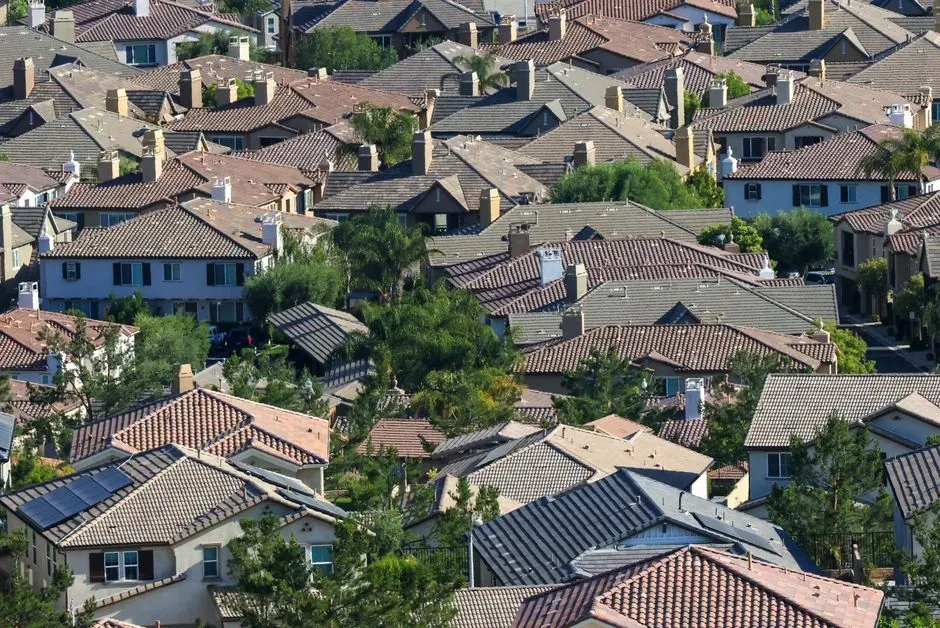
2. Listings Are Quietly Piling Up Again (Image Credits: Pexels)
Open houses used to feel like a competitive sport, with lines out the door and offers due within hours. Inventory is up by roughly 20% compared to last year, according to housing economists tracking the 2026 market. That is a meaningful change in tone even if most homeowners scrolling listing photos have not clocked exactly why things feel calmer.
The rebuilding is coming from more than one direction at once. Supply is finally beginning to change in 2026 from three directions at once, as new construction completions catch up with long-delayed projects, while the lock-in effect slowly weakens as life events like job relocations, growing families, and downsizing eventually override even the most compelling mortgage rate math. While inventory is not quite back to pre-pandemic norms, there are definitely more choices for buyers, meaning less pressure to make snap decisions and a smaller chance of getting caught in bidding wars.
3. Insurance Costs Are Now a Bigger Threat Than Interest Rates

3. Insurance Costs Are Now a Bigger Threat Than Interest Rates (Image Credits: Unsplash)
Homeowners spent years fixated on mortgage rates as the villain of affordability. A quieter, arguably more persistent cost has been climbing in the background: the homeowners insurance bill. US home insurance premiums are set to rise for a fifth straight year in 2026, with the average annual premium projected to increase 4% to about $3,057, following several years of steep growth in rates. Since 2021, premiums have climbed 46%, roughly three times as much as inflation.
This is not evenly distributed, and that is part of why so few people talk about it as a national trend rather than a local nuisance. About 71% of homeowners said the cost of their homeowners insurance has increased over the past few years, with 42% saying costs have gone up "a lot," according to a survey by the Pew Research Center. Through its effect on the homeowners insurance sector, climate change could pose a massive threat to affordability, since as premiums increase in response to rising risk in some regions, homebuyers may struggle to take out an affordable mortgage in the first place.
4. Baby Boomers Have Quietly Taken Over the Buyer Pool

4. Baby Boomers Have Quietly Taken Over the Buyer Pool (Image Credits: Pexels)
Ask most people who is buying homes right now, and they will probably guess millennials chasing starter homes. The data tells a different story. Adults ages 61 to 79 accounted for 42% of all homebuyers and 55% of all sellers over the past year, a generation that overtook millennials and now maintains a firm grip on the market by relying on massive housing wealth accrued over decades.
The flip side of that dominance is a first-time buyer market that has quietly hit a historic low. The share of first-time buyers among all homebuyers plummeted to 21% over the last year, the lowest level since NAR began tracking the metric in 1981. The median existing-home sales price hit a record high of $408,800 in March, helping the typical U.S. homeowner accumulate $128,100 in housing wealth over the last six years, wealth that older baby boomers who stay in their homes for a median of 15 years have been able to capitalize on.
5. Regional Markets Are Pulling Apart, Not Moving Together
5. Regional Markets Are Pulling Apart, Not Moving Together (Image Credits: Pexels)
For decades, "the housing market" was treated as a single national story. That framing is quietly breaking down. Perhaps the most compelling story of 2026 is the growing divergence between regional housing markets, a pattern that is reshaping how economists and appraisers read local conditions. Some Sun Belt metros that boomed during the pandemic are now cooling, while other regions with tighter construction pipelines are holding firm or even gaining ground.
That split matters more than a single national average ever could for someone deciding whether now is a good time to sell. The market is not reverting to its old baseline; it is establishing a new one, which for valuation professionals means fewer comps than historical averages, longer marketing times in many segments, and greater reliance on active listings and price trends to interpret market direction. A homeowner in one metro area could be watching bidding wars while a homeowner two states over watches their listing sit for months, and both would be accurately describing "the market."
6. The True Cost of Owning a Home Has Quietly Expanded Beyond the Mortgage

6. The True Cost of Owning a Home Has Quietly Expanded Beyond the Mortgage (Image Credits: Pexels)
A mortgage payment used to be shorthand for the cost of owning a home. That shorthand no longer captures reality for a growing share of homeowners. An analysis by Realtor.com found that nationwide, taxes and insurance make up more than half of the monthly mortgage payment for 9% of single-family mortgages, more than double the 4% share seen at the end of 2014.
That squeeze compounds quietly, month after month, without a single dramatic headline attached to it. Owning a home in 2026 means juggling more than just mortgage payments, since between property taxes, maintenance costs and rising insurance premiums, the total cost of homeownership is higher, and more unpredictable, than many buyers expect. For homeowners who locked in a low rate years ago and assumed their monthly costs were essentially frozen, this is often the first real surprise of 2026.
The six shifts above rarely make it into a single headline, largely because none of them is dramatic enough on its own. Rates easing a little, inventory climbing gradually, insurance bills creeping upward, buyer demographics quietly changing hands, regional markets drifting apart, and total ownership costs expanding past the mortgage payment itself. Individually, each looks like a footnote. Together, they describe a housing market in the middle of a genuine transition, one that is reshaping who buys, who sells, and what homeownership actually costs, well before most people notice the ground has moved beneath them.