
Becoming a parent while still in school, whether that means an MBA cohort or a community college classroom, changes almost everything about how a person manages their time, money, and energy. Some campuses treat this as a minor inconvenience to work around. Others have built entire systems, from childcare centers to peer networks, specifically because they've noticed how many of their students are raising kids while chasing a degree.
What follows is a look at nine schools that have earned a reputation, through rankings, campus programs, or documented support services, for genuinely welcoming students who are also parents. The list spans business schools, universities, and community colleges, because the need for support looks different depending on where you sit.
Brigham Young University Marriott School of Business

Brigham Young University Marriott School of Business (Image Credits: Pixabay)
BYU’s Marriott School has built its identity around family life in a way few business schools attempt. The Princeton Review’s entry on student life at BYU notes that students and their families receive “excellent support” thanks to organizations like the MBA Spouse Association, which offers a network of support and a variety of activities for MBA students and their families. That infrastructure did not appear overnight; it reflects years of the school treating spouses and children as part of the community rather than an afterthought.
The recognition has followed. Bard College and Brigham Young University’s Marriott School ranked 1st as the Best Schools for Nonprofits and Human Resources respectively in the most recent Princeton Review MBA rankings. That kind of consistency across nearly two decades of surveys suggests the family-friendly culture isn’t a marketing line, it’s baked into how the program actually runs day to day.
Babson College

Babson College (Image Credits: Pexels)
Babson doesn’t just tolerate families on campus, it actively builds programming around them. The school notes that a student’s significant other and family are an important part of the graduate experience, which is why it maintains an active group of current graduate students and their partners that offers social, cultural, and educational support to enrich lives and help families transition to their time at Babson. That kind of explicit commitment matters for anyone weighing whether a demanding MBA program will leave room for a newborn or toddler at home.
Current students back this up in their own words. One family described the Babson Partners’ Club as a great support in their arrival in Boston, adding that it helped them meet other families, make friends, and be part of activities in the city and surroundings. The club structure gives new parents an immediate social foothold, which can make the difference between feeling isolated and feeling like part of a community from day one.
Harvard Business School

Harvard Business School (Image Credits: Pexels)
Harvard Business School has invested in the practical logistics that new parents actually need. Soldiers Field Park Children’s Center is located on-campus and provides care for children two months to five years old. Having infant care available directly on campus removes one of the biggest barriers parents face when trying to attend classes, study groups, and networking events on a normal MBA schedule.
Beyond childcare, the school has built in support for breastfeeding parents and a dedicated community group. There are two breastfeeding support rooms for mothers to use, as well as The Crimson Parents student club, which hosts events. A current student in the program, married with a son, described the club as a resource that’s especially useful for families where a partner stays home during the week with a young child, which reflects how the support extends beyond the student themselves to the whole household.
American University

American University (Image Credits: Unsplash)
American University’s approach to parent support centers on flexibility and physical infrastructure that’s easy to overlook until you need it. There is an on-campus Children’s Center for student parents to utilize for childcare, conveniently located near the library, along with an online MBA option for added scheduling flexibility. Locating childcare near the library isn’t a small detail; it’s the kind of planning that acknowledges parents will be running between classes, feedings, and study sessions in the same afternoon.
The school also backs this up with dedicated facilities and peer groups. There are 10 lactation rooms on campus available for breastfeeding mothers, along with organizations such as the GSA Partner and Family Group and the GSA Parent Group to help student parents connect. Ten lactation rooms is a notably high number for a single campus, and it signals that the university expects a meaningful share of its graduate population to be nursing parents rather than treating it as a rare exception.
Hudson County Community College

Hudson County Community College (Image Credits: By Theornamentalist, <a href="https://commons.wikimedia.org/w/index.php?curid=10864849" target="_blank" rel="noopener">CC BY-SA 3.0</a>)
Hudson County Community College, located just across the Hudson River from Manhattan, has quietly built one of the more comprehensive student-parent support systems among two-year schools. The college has steadily added programs to support the parents among its 20,000 students, setting aside family-friendly spaces in libraries and lounges and holding events for parents with kids, including movie nights, barbecues, trick-or-treating, and a holiday tree-lighting ceremony. These aren’t abstract policies; they’re recurring, visible events that give parents a reason to bring their kids to campus rather than leaving them at home.
The practical support goes further than social events. There’s a food pantry with meals prepared by students in the college’s culinary program, student-parents get to register first for courses, college staff help with applications to public benefit programs, and lactation rooms are planned. Priority registration alone can be a quiet game-changer, since it lets parents build class schedules around childcare availability instead of scrambling for whatever slots are left over.
Misericordia University
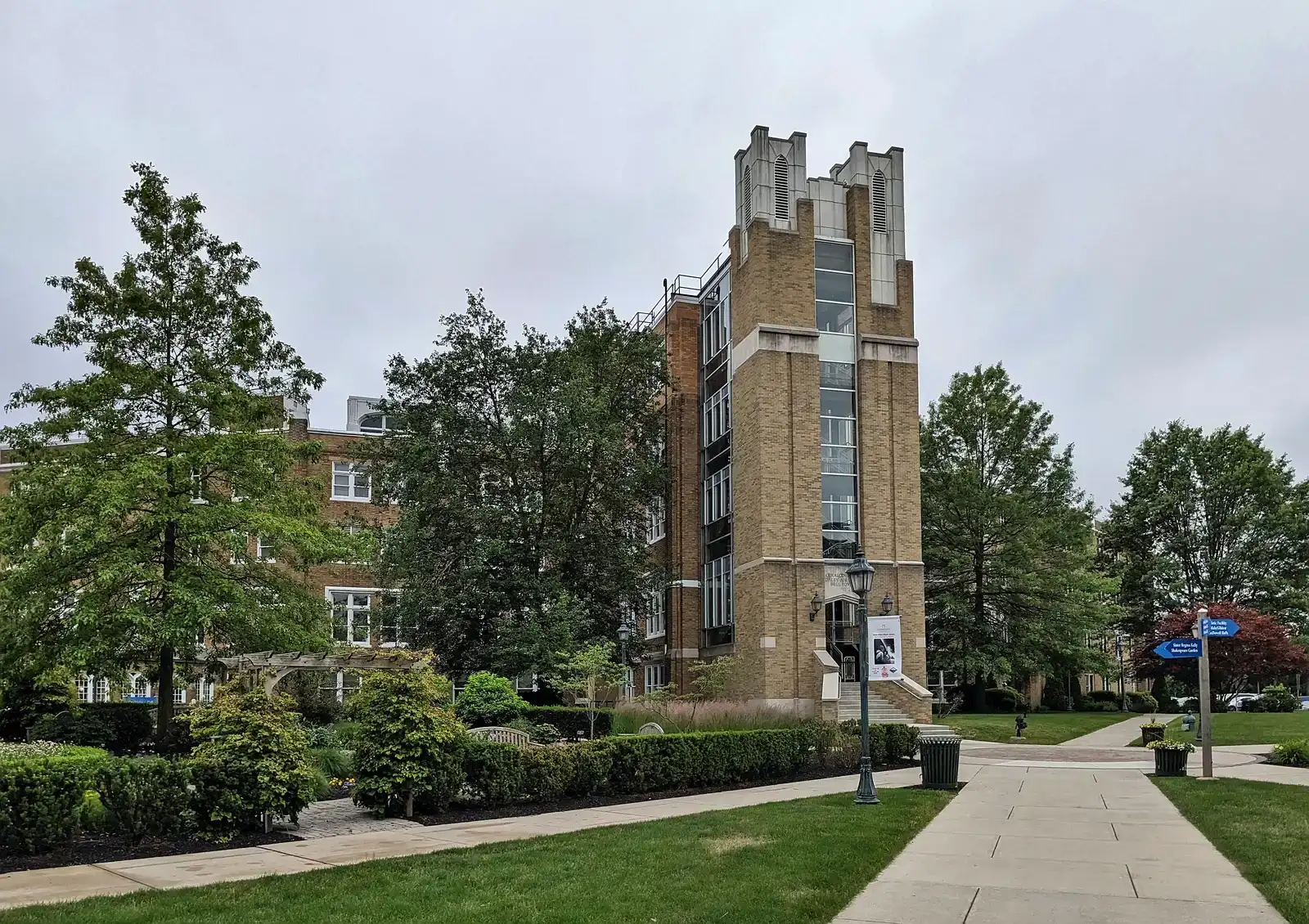
Misericordia University (Image Credits: By DutchTreat, <a href="https://commons.wikimedia.org/w/index.php?curid=141548392" target="_blank" rel="noopener">CC BY-SA 4.0</a>)
Misericordia University, located in Dallas, Pennsylvania, runs one of the more unusual and generous programs on this list. The university provides free housing for up to four years for up to 18 single mothers, who also get academic support and tutoring, priority for on-campus jobs and access to a children’s library and sports facilities. A four-year housing commitment is rare even among schools that advertise themselves as parent-friendly, and it effectively removes one of the largest financial pressures a single parent pursuing a degree can face.
The program’s design suggests the university thought through more than just shelter. Pairing housing with academic tutoring and job priority means students aren’t just given a place to live, they’re given a structured path toward finishing their degree while raising a child, which is often the harder part of the equation.
Wilson College

Wilson College (Image Credits: Pexels)
Wilson College, also in Pennsylvania, takes a similarly targeted approach through its Single Parent Scholar Program. Up to 12 single parents annually are awarded grants for on-campus housing and for child care, and their children can eat in the campus dining hall for free. Covering both housing and childcare in one package addresses two of the biggest recurring costs that push single parents out of school before they finish.
The free dining hall access for children is a small but telling detail. It’s the kind of benefit that doesn’t show up in a tuition brochure but makes an enormous difference to a parent juggling grocery budgets, class schedules, and a child’s meals on the same day.
St. Catherine University

St. Catherine University (Image Credits: Pixabay)
St. Catherine University in Minnesota focuses its parent support on the two things that most directly affect whether a parent can attend class consistently. The university subsidizes child care for eligible student-parents and has child-friendly study rooms. Subsidized childcare is one of the most requested but least common supports across higher education, given how expensive infant and toddler care has become nationally.
The addition of child-friendly study rooms is a smaller gesture but a meaningful one. It acknowledges that parents sometimes need to study with a child nearby, whether because childcare fell through for the day or because bringing a child to campus is simply easier than arranging a sitter.
Madison College

Madison College (Image Credits: Unsplash)
Madison College in Wisconsin has taken a notably data-driven approach to supporting student parents, treating it as a measurable priority rather than a goodwill gesture. In 2021, the college refurbished a former truck-rental facility next to its main Truax Madison campus and opened a new childcare center for children six weeks to five years old. Converting an industrial building into a childcare center is a practical, if unglamorous, solution that expanded capacity relatively quickly compared to building from scratch.
The center has had a direct effect on students who might not have otherwise finished a program. One student described learning about the college’s daycare center and student-parent supports as the deciding factor that let her commit fully to her studies, and she went on to earn two associate degrees in information technology within a few years of enrolling.
Across all nine schools, the common thread isn’t a single policy or perk but a willingness to treat parenting and studying as two things that can coexist with the right structure in place. Childcare centers, lactation rooms, priority registration, and even something as simple as a free meal for a child all point to the same idea: schools that plan for parents tend to keep them enrolled.