
Food fights rarely stay in the kitchen. Somewhere between a recipe card and a national flag, certain dishes stop being just dinner and start being identity, history, and occasionally diplomatic ammunition. Governments have filed trademark applications, chefs have staged record breaking cook offs, and international bodies have been asked to settle arguments that started at a family dinner table generations ago. Here are five dishes where the question "who made this first" has turned into something much bigger than a recipe.
Hummus: Israel and Lebanon's chickpea standoff
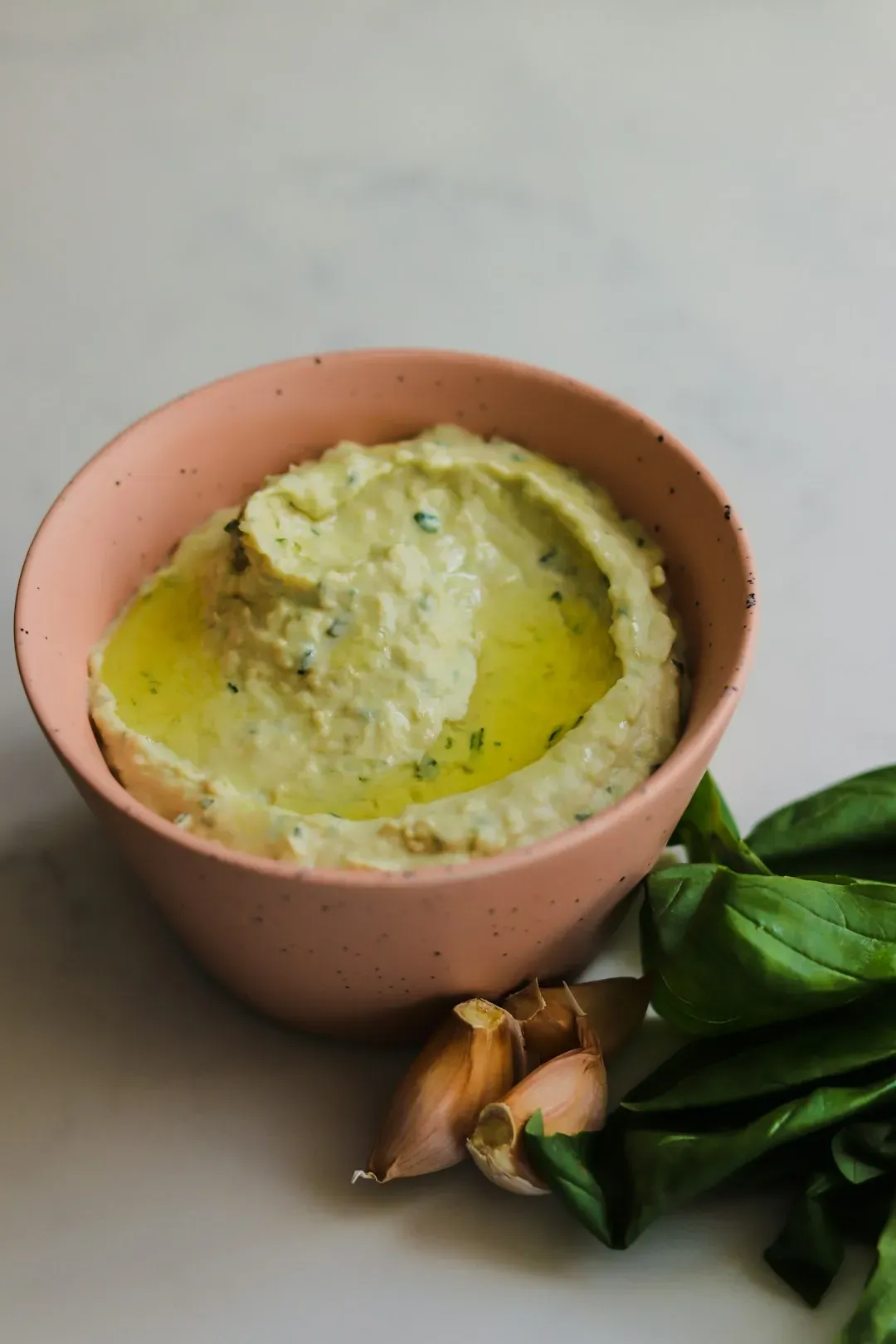
Hummus: Israel and Lebanon's chickpea standoff (Image Credits: Unsplash)
Hummus looks like the last thing anyone would fight over, a smooth chickpea and tahini dip eaten across the entire Middle East. Yet Lebanon and Israel have spent years trying to claim it as their own, sometimes literally by the ton. In May 2010, Lebanon set a world record with 22,994 pounds of hummus, also breaking the falafel world record with 11,381 pounds. That record followed an earlier Israeli attempt by a restaurateur from an Arab town near Jerusalem who wanted to prove the dish belonged to everyone.
Behind the dueling vats sits a real economic and political grievance. The president of the Association of Lebanese Industrialists argued Lebanon was losing tens of millions of dollars a year because Israel was marketing dishes like hummus and tabbouleh to the American market, and threatened an international lawsuit over food copyright. Lebanon even tried to get hummus registered as a protected Lebanese product with the European Union, a request that was ultimately turned down because ownership could not be proven for a dish tied to an entire region. As one researcher put it plainly, no one is really sure about the origins of hummus, since chickpeas were cultivated in the Middle East roughly six thousand years ago and have been widely available there ever since.
Pavlova: Australia and New Zealand's meringue rivalry
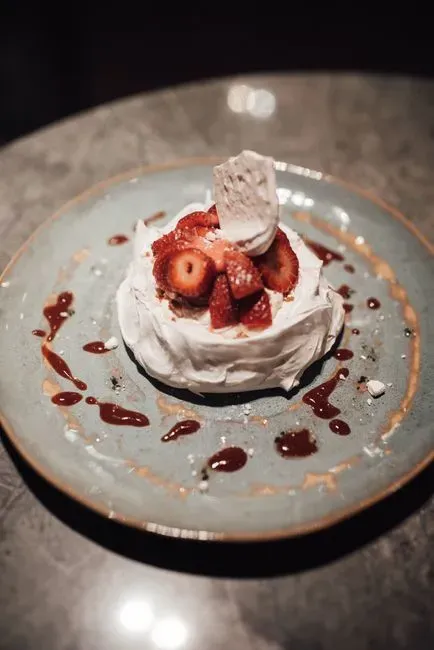
Pavlova: Australia and New Zealand's meringue rivalry (Image Credits: Pexels)
Few culinary rivalries are as good natured, or as stubborn, as the one between Australia and New Zealand over the pavlova. New Zealanders claim that in 1926 a Wellington hotel chef created the pavlova in honor of the visiting ballerina, while Australians credit a Perth chef named Bert Sachse, though his recipe is believed to date from around 1935. Both sides have their own 1926 recipe to point to, which only keeps the argument alive rather than settling it.
The rivalry has even generated its own academic showdown. A historian from Australia and a historian from New Zealand spent years locked in a food feud over the airy cream and fruit topped meringue dessert, each determined to prove the other wrong. Their joint research produced an inconvenient answer for both countries. The study traced the modern pavlova's roots back to the Austro-Hungarian Spanische Windtorte, which later traveled to the United States through German speaking immigrants who introduced meringue, cream, and fruit desserts called Schaumtorte. Neither Wellington nor Perth gets to claim the original idea, even if both keep the argument going every summer.
Baklava: Turkey and Greece take it to UNESCO
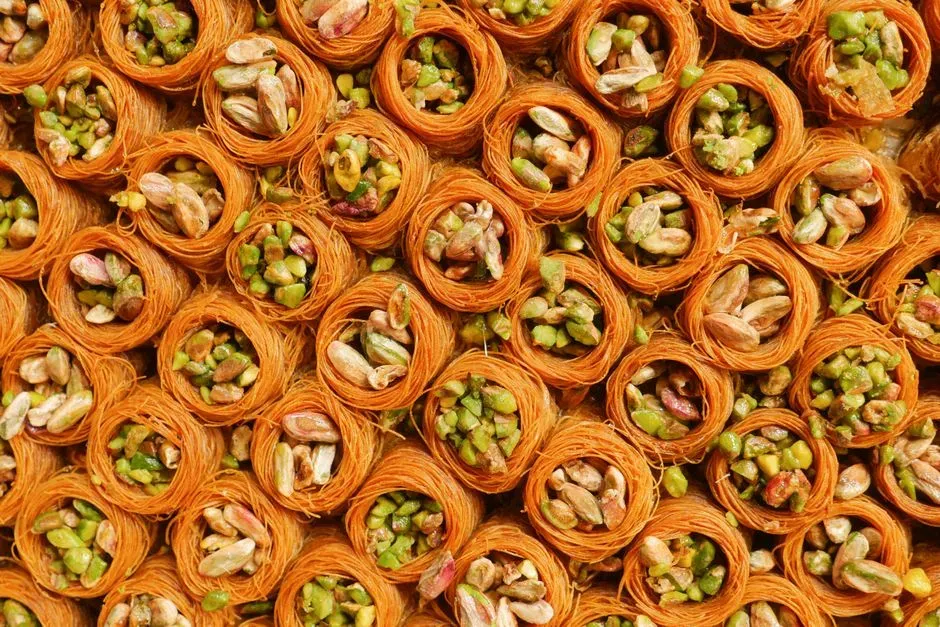
Baklava: Turkey and Greece take it to UNESCO (Image Credits: Pexels)
The baklava dispute between Turkey and Greece has recently escalated from kitchen bragging rights to a formal international case. Ankara has formally petitioned UNESCO to recognize the layered pastry as part of Turkey's national cultural heritage, with the application set to be evaluated at UNESCO's Intergovernmental Committee session in Xiamen, China. Turkey enters the process with some confidence, having already secured European Union recognition a decade earlier. Turkey is bolstered by a 2013 diplomatic win, when Gaziantep Baklava became the first Turkish product to secure the European Union's Protected Geographical Indication status.
Greece is not backing down quietly, and the claim has widened beyond just two countries. Turkey and Azerbaijan have submitted a joint application to UNESCO covering both the names baklava and pakhlava, while Armenians also believe the dessert belongs to them. The Greek position rests on a different historical thread entirely. The Greek side claims that similar desserts made of thin pastry, nuts, and honey were prepared as far back as the Byzantine Empire, though historians note the first written mention of the dessert dates only to the fifteenth century, with the pastry making technique itself tracing back to the Assyrians and ancient Mesopotamia. It is a dispute where nearly every claimant has a partial point, which is exactly why it has lasted this long.
Kimchi: South Korea and China's fermented cabbage clash
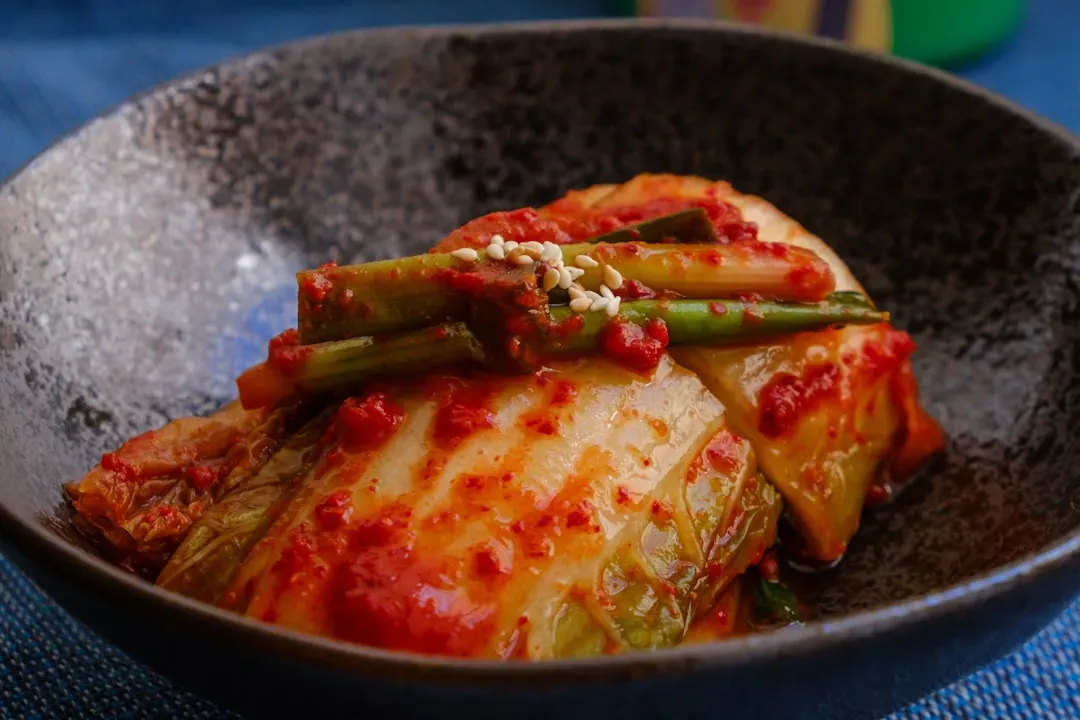
Kimchi: South Korea and China's fermented cabbage clash (Image Credits: Unsplash)
Kimchi has become one of the more politically charged food fights in Asia, mixing culture, trade, and even artificial intelligence into the argument. The tension traces back partly to a 2020 move when a Chinese pickled vegetable dish received international standards recognition. Pao cai received a certification from the ISO in 2020, and China's state run Global Times reported it as an international standard for the kimchi industry led by China, a framing that provoked immediate backlash in South Korea.
The dispute resurfaced in an unexpected way in 2025, when a Chinese AI chatbot gave contradictory answers depending on the language used. The Chinese AI model DeepSeek provided different answers to sensitive questions depending on the language, defining kimchi's origin as Korea when asked in Korean but claiming it was Chinese when asked in Chinese, according to South Korea's spy agency. Meanwhile the trade relationship remains deeply tangled with the cultural argument. In 2024, South Korea produced 530,000 metric tons of kimchi and imported 310,000 metric tons from abroad, with 99.98 percent of that coming from China, a reminder that even as the two countries argue over cultural ownership, their kimchi supply chains are deeply intertwined.
Borscht: Ukraine and Russia's beet soup battle
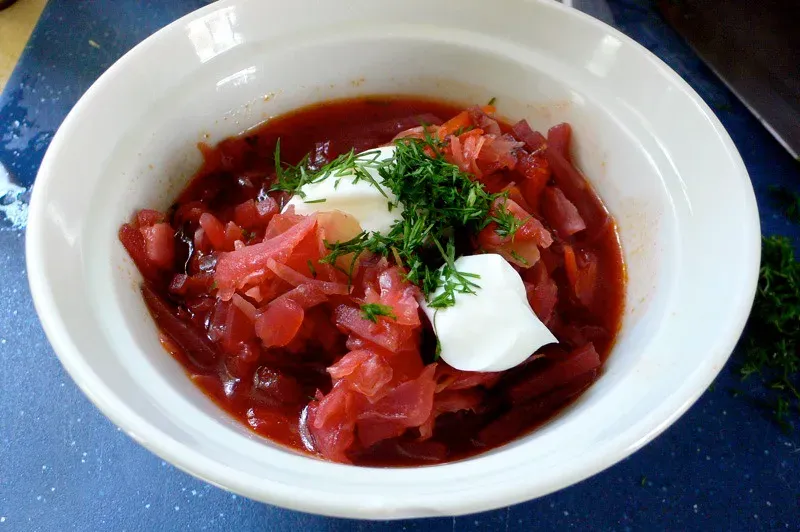
Borscht: Ukraine and Russia's beet soup battle (Kelly Sue, Flickr, <a href="https://creativecommons.org/licenses/by-sa/2.0/" target="_blank" rel="noopener">CC BY-SA 2.0</a>)
No dish on this list has become quite as politically loaded as borscht, the beet based soup claimed by both Ukraine and Russia. The modern phase of the dispute started years before the current war, when a diplomatic tweet lit the fuse. The current iteration of the borscht battles properly began in 2019, when the Russian foreign ministry tweeted that the soup was one of Russia's most famous and beloved dishes. That single post pushed a Ukrainian chef to launch a campaign for international recognition of the dish as distinctly Ukrainian.
The campaign eventually succeeded, and the timing made it about far more than food. On July 1, 2022, Ukraine's version of borscht was added to the United Nations list of Cultural Heritage, with the application fast tracked because of the ongoing war's impact on the tradition. Russia rejected the ruling outright. When UNESCO made its announcement, the Russian Foreign Ministry was quick to respond, noting that borsch originated among Russian residents of Kyiv, citing an obscure sixteenth century document. Ukraine's culture minister called it a victory in the war for borscht, a phrase that captured just how far a bowl of soup had traveled from the stove to the headlines.
What connects all five of these arguments is not really about who is right. Chickpeas, meringue, phyllo dough, fermented cabbage, and beets have all moved across borders for centuries, shaped by trade routes, empires, and migration long before modern nation states existed to claim them. The dishes survive the arguments just fine. It is usually the people eating them who decide the fight is worth having in the first place.