
I started my first full-time job three years ago, fresh out of college and completely unprepared for the culture shock waiting for me. Nobody warned me that the biggest adjustment wouldn't be the work itself, but the daily habits of coworkers who came up in a completely different professional world. Some of these things I've grown to appreciate. Others still leave me staring at my screen wondering what year it is.
Answering every email within the hour, even at 9pm
Answering every email within the hour, even at 9pm (Image Credits: Pexels)
My manager, who’s been in the workforce since the late 1980s, responds to emails almost instantly, no matter the time. If I send something at 8:45pm, I’ll have a reply before I finish brushing my teeth. It’s not that she’s anxious about it either. She genuinely seems to see availability as part of being good at her job.
For a lot of boomers, the line between work hours and personal hours was never firmly drawn the way younger generations now expect it to be. Research from Pew and various workplace surveys has consistently shown that younger workers place a much higher value on boundaries and separation between job and personal life. I’ve started muting notifications after six, and I still feel a flicker of guilt every time I do it.
Printing out documents that already exist digitally
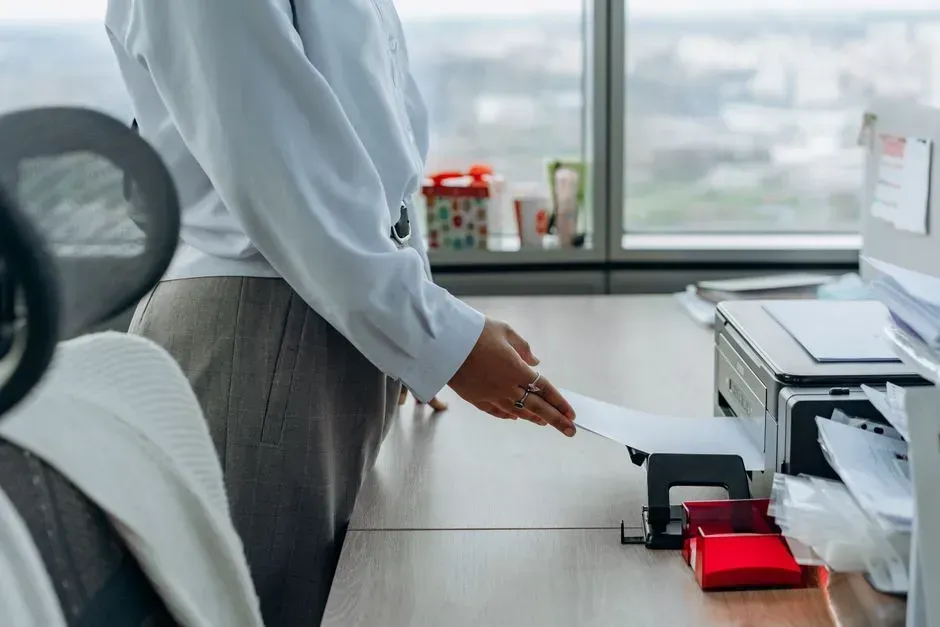
Printing out documents that already exist digitally (Image Credits: Pexels)
There’s a printer near my desk that gets more use from the older half of our office than anyone else. Contracts, spreadsheets, even meeting agendas that were emailed five minutes earlier end up as paper in someone’s hand. I used to think this was just personal preference, but a few coworkers have told me they simply retain information better when they can physically mark it up.
I get the logic, even if it’s not mine. Studies on reading comprehension have actually shown some support for the idea that people process and remember printed text slightly differently than screen text. Still, watching a stack of paper grow next to the recycling bin every week feels like a small, quiet waste I can’t quite make peace with.
Scheduling a call instead of sending a two-line message
Scheduling a call instead of sending a two-line message (Image Credits: Unsplash)
If something can be answered in a single sentence, my instinct is to type it and move on. Several of my older coworkers, though, will book a fifteen-minute call for the exact same question. It’s not laziness. It seems to come from a genuine belief that talking things through avoids misunderstandings that text can create.
There’s actually some legitimate backing for this instinct. Communication research has long pointed out that tone and intent get lost easily in written messages, which is part of why misread emails have caused so many workplace conflicts over the decades. I still find the extra fifteen minutes a little painful, but I’ve stopped assuming it’s pointless.
Keeping a physical rolodex or handwritten contact list

Keeping a physical rolodex or handwritten contact list (Image Credits: Pexels)
One of our longtest-tenured account managers keeps a small paper address book in her top drawer, right next to her company laptop. Phone numbers, birthdays, little notes about clients, all handwritten. When I asked why not just use the CRM, she said the system has changed four times in her career and her notebook never has.
That answer actually stuck with me more than I expected. Enterprise software turnover is a real thing, and plenty of companies have gone through multiple CRM migrations in just the past few years as platforms get acquired or phased out. Her notebook has genuinely outlasted every tool the company has paid for.
Showing up in person for things that could easily be virtual
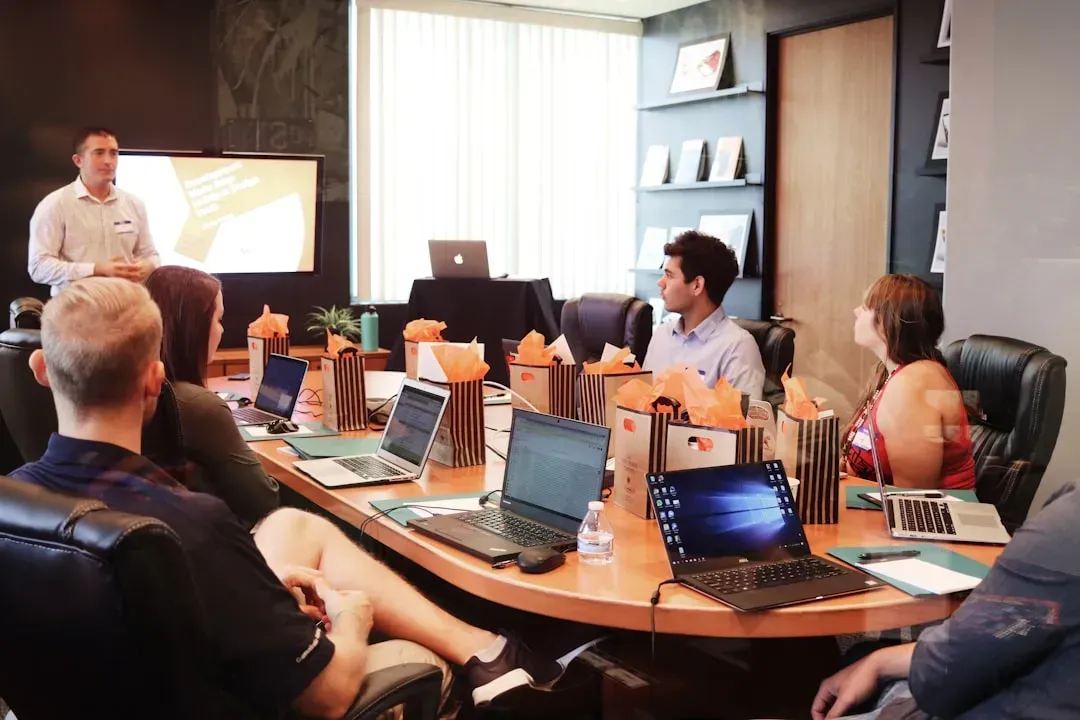
Showing up in person for things that could easily be virtual (Image Credits: Unsplash)
Video calls have been standard practice for years now, especially since 2020 accelerated remote and hybrid work across nearly every industry. Yet I still have coworkers who will drive across town for a meeting that could have been a fifteen-minute Zoom call. When I’ve asked about it, the answer is almost always some version of wanting to read the room in person.
There’s some truth buried in that instinct too. Nonverbal cues do get lost on video, and several workplace communication studies have noted that in-person meetings tend to build trust faster than remote ones. I just can’t get past the math of an hour of driving for a conversation that would’ve taken fifteen minutes on a screen.
Treating loyalty to one company as a virtue in itself

Treating loyalty to one company as a virtue in itself (Image Credits: Pexels)
I’ve met people at my job who have worked here for over twenty years and speak about that tenure with real pride. To me, staying anywhere that long without significant upward movement sounds more like a red flag than an achievement. But for a lot of boomers, long tenure was the expected shape of a career, and job-hopping was viewed with suspicion.
Bureau of Labor Statistics data has repeatedly shown that median employee tenure has been gradually declining across younger age groups compared to prior generations, reflecting a real generational shift in how people relate to their employers. Gen Z workers, by contrast, have shown a much stronger tendency to move employers in search of better pay, growth, or flexibility. Neither approach is wrong exactly, but the gap in mindset is wide enough that it comes up in almost every conversation about career planning.
Avoiding personal topics at work almost entirely

Avoiding personal topics at work almost entirely (Image Credits: Pexels)
Some of my older coworkers keep an almost impenetrable wall between their personal lives and the office. I’ve worked alongside one man for two years and still don’t know if he’s married, has kids, or what he does on weekends. It’s not coldness, it’s just a professional norm many of them grew up with, where oversharing was seen as unprofessional.
Gen Z workers tend to lean the opposite direction, often bringing more of their personal identity and struggles into workplace conversations, partly because mental health openness has become far more normalized in recent years. Surveys on workplace mental health have shown younger employees are significantly more likely to disclose stress or personal challenges to managers and coworkers than older generations were at the same career stage. The contrast shows up constantly in small ways, like who shares vacation photos and who doesn’t.
Sticking to strict 9-to-5 hours no matter the workload

Sticking to strict 9-to-5 hours no matter the workload (Image Credits: Pexels)
Ironically, the same coworkers who answer emails at night are often the first ones out the door at exactly five o’clock, workload be damned. There’s a rigid respect for the traditional workday structure, even in a job that doesn’t always fit neatly into eight-hour blocks. If the work isn’t done, it waits until tomorrow, full stop.
This actually contrasts with a lot of assumptions people make about boomers being workaholics. Labor data on standard schedules shows that traditional nine-to-five structures were the dominant model for most of the careers older workers built, and many still treat that boundary as sacred even as flexible and asynchronous schedules become more common among younger employees. It’s one of the more consistent habits I’ve noticed, and honestly one of the easier ones to respect.