
Five years after the pandemic pushed millions of people out of offices and into home workspaces, the arrangement has settled into something less dramatic but arguably more interesting. Remote work never fully disappeared, and neither did the questions it raised about who does what at home when both partners are suddenly sharing the same square footage all day. The numbers tell a more nuanced story than either the "remote work fixed everything" or "remote work changed nothing" narratives suggest.
The pandemic-era shift that stuck around

The pandemic-era shift that stuck around (Image Credits: Pexels)
Remote work is smaller than it was in 2020, but it never returned to pre-pandemic levels. Remote work may no longer dominate the U.S. labor force as it did during the height of the pandemic, but it still represents a substantial share of employment today, with approximately 34.3 million employed people teleworking or working at home for pay in April 2025 and a telework rate of 21.6 percent. That is a meaningful chunk of the workforce still logging in from kitchen tables and spare bedrooms.
What is notable is how stable that rate has been. The telework rate has consistently ranged between 17.9 percent and 23.8 percent between October 2022 and April 2025. This suggests remote work has become a fixture rather than a temporary accommodation, which matters for household planning since couples are no longer treating it as a short-term blip.
Women are far more likely to be the ones at home
Women are far more likely to be the ones at home (Image Credits: Unsplash)
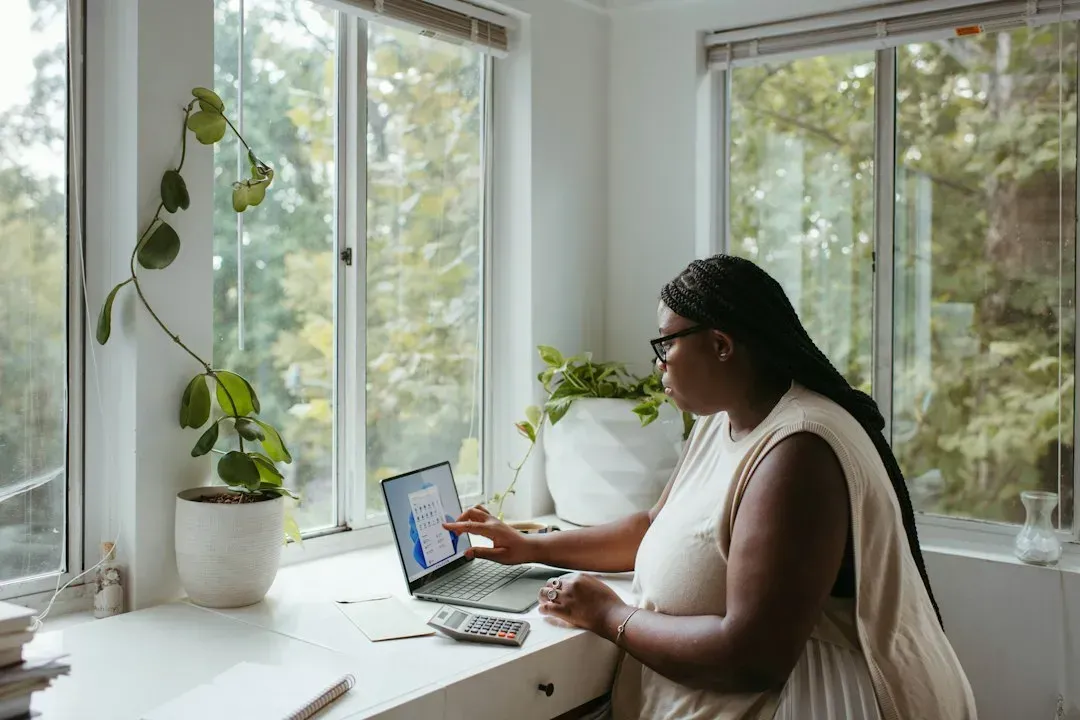
One of the clearest patterns to emerge is who is actually working remotely. Women continue to outpace men in remote work participation, with nearly 25 percent of employed women working from home in April 2025 compared to about 19 percent of employed men. That gap has real consequences for who ends up managing the laundry, the school pickups, and the dishes.
The disparity is even starker among parents. Among teleworkers, mothers are far more likely to work remotely than fathers, with the largest gender differences among parents with a child under 5. When one partner is physically present in the house more often, that person tends to absorb more of the domestic load almost by default, whether or not that was ever explicitly agreed upon.
The BLS data on remote versus office arrangements

The BLS data on remote versus office arrangements (Image Credits: Unsplash)
Bureau of Labor Statistics researchers have been tracking exactly how couples pair up their work locations. The percentage-point difference in remote workers by sex widened from 3.8 in October 2022 to 5.1 in September 2025, when 15.5 percent of women and 10.4 percent of men worked remotely. That widening gap is not trivial. It signals that remote work is becoming more feminized over time, not less.
Looking at couples as units rather than individuals adds more texture. Just over half of couples without children and just under half of parents (53.4 percent versus 49.0 percent) have both members working onsite, while the second most prevalent arrangement is man onsite and woman nonemployed, and the third is man onsite and woman remote. Full dual-remote households, the kind people often picture when they think of “remote work couples,” are actually less common than these mixed arrangements.
What time-tracking data reveals about chores
What time-tracking data reveals about chores (Image Credits: Pexels)
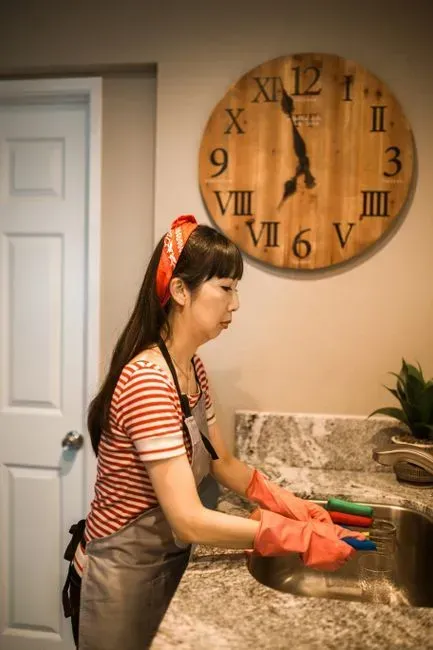
A detailed 2024 study using time-tracking software offers one of the more granular looks at how work location shapes household labor. Twenty-one couples from Europe and North America tracked the time they spent on household chores, with each partner using a separate workspace so they could not see the other’s logged time, keeping the study fair and accurate. The setup was designed specifically to avoid the guesswork and self-flattery that often creeps into surveys about who does more around the house.
The results, broken down by work model, showed a striking reversal depending on who was in the office. Among couples who work onsite, men actually have a larger role in chores than women, taking on 58 percent of domestic labor compared to the 42 percent handled by their partners. That finding runs counter to a lot of assumptions about traditional gender roles, though the picture shifts again once remote work enters the equation, as the same study found a much wider gap in the opposite direction for remote workers.
Meal prep has become the new battleground

Meal prep has become the new battleground (Image Credits: Unsplash)
Not all chores are created equal, and some eat up far more time than others. Meal preparation was the most tracked household activity, taking up 25.8 percent of total logged household chores. When one partner is home all day, cooking often becomes their default responsibility simply because they are already in the house at 5 p.m. when dinner needs to start.
This creates a subtle but persistent dynamic. The person working from the kitchen table is, quite literally, closer to the kitchen. Over months and years, proximity tends to calcify into expectation, and what started as a convenient stopgap during a busy week can quietly become the permanent arrangement, even when both partners technically work the same number of hours.
Fathers working remotely changes their spouses' careers

Fathers working remotely changes their spouses' careers (Image Credits: Unsplash)
One of the more encouraging findings from recent economic research involves what happens when men, specifically, gain access to remote work. A study using Census data found that when fathers’ work-from-home exposure increased, their wives saw measurable career gains. Increases in men’s WFH exposure led to sizable improvements in their wives’ labor-market outcomes, with annual employment rising by roughly 2.5 percentage points, earnings increasing by about 5 percent, and weekly hours worked rising by roughly half an hour.
The mechanism behind this is fairly intuitive once you see the data. Evidence from time-use diaries and childcare questionnaires suggests these effects are driven by intra-household reallocation of child-caring time, with women less likely to engage in primary childcare activities while men working at home partially compensate by covering more for their spouse. In other words, when dad is home more, he tends to pick up some of the caregiving slack, freeing his partner to invest more in her own job.
Fathers' flexibility is linked to mothers staying employed

Fathers' flexibility is linked to mothers staying employed (Image Credits: Pexels)
Separate research from the Bureau of Labor Statistics reinforces this connection at a broader scale. Fathers’ remote or hybrid work arrangements are strongly positively associated with mothers’ employment status. This is not a small correlation buried in a footnote. It appears consistently enough that researchers now treat flexible work as a genuine lever for keeping mothers attached to the workforce.
The same analysis found that flexibility tends to cluster within households rather than being randomly distributed. Among dual-earner couples, there is a strong positive correlation between partners’ work-from-home intensities. Couples where one partner has remote flexibility are more likely to have a partner with similar flexibility, which suggests that job flexibility itself has become something couples factor into decisions about whose career to prioritize.
The return-to-office push is not affecting men and women equally

The return-to-office push is not affecting men and women equally (Image Credits: Pexels)
As companies have called workers back to physical offices over the past two years, that recall has landed very differently depending on gender. Fresh data from the U.S. Bureau of Labor Statistics reveal that the share of men who spent some time working at home decreased from 34 percent in 2023 to 29 percent in 2024, while the share of women who did so remained the same at 36 percent. Men are heading back to cubicles at a noticeably faster clip than women.
This has knock-on effects for household dynamics that go beyond who empties the dishwasher. The domestic load still skews female despite modest progress since 2020, and remote work remains the most practical way to integrate school pick-ups, therapist appointments and elder-care errands into a salaried day. As men return to offices in greater numbers, some couples may find themselves sliding back toward more traditional divisions of labor simply because one partner is physically unavailable during the day again.
Kids change the math, but maybe not the ratio

Kids change the math, but maybe not the ratio (Image Credits: Pexels)
Parenthood is often assumed to be the great equalizer, or great divider, depending on your view, when it comes to household labor. The time-tracking study found that when it comes to couples with children, women are responsible for 57 percent of domestic labor, while men take on 43 percent. That is a meaningful gap, though it is worth noting how it compares to couples without kids.
Interestingly, the presence of children did not radically reshape the overall split. While the study showed differences in the type of labor performed among couples with children, it seems that kids don’t affect the general division of housework. The type of work shifts, more laundry, more meal planning, more logistics, but the underlying imbalance in who carries it tends to persist whether or not there are kids in the house.
Why unequal splits still get labeled "fair"

Why unequal splits still get labeled "fair" (Image Credits: Pexels)
Perhaps the most counterintuitive research on this topic concerns not what couples do, but what they believe is fair. A 2025 survey experiment involving over 1,500 adults examined how people justify unequal housework arrangements. Although the ratio of women’s to men’s housework hours has declined, women still spend more time doing housework than men. Yet perceptions of fairness have not caught up with that reality in a straightforward way.
The researchers found that people use income and hours worked as mental shortcuts to justify imbalance. Respondents engage in trade-off calculations that legitimize unequal divisions of housework, and spouses’ earnings and work time were contributions that, for respondents, justified doing fewer housework chores for both men and women. This helps explain why a remote-working partner who earns less, or works fewer hours on paper, often ends up absorbing more chores without anyone framing it as unfair, even when the total workload, paid plus unpaid, ends up wildly lopsided.
Where things stand heading into 2026

Where things stand heading into 2026 (Image Credits: Pexels)
Remote work has not delivered the clean, equal household it was once hoped to produce, nor has it entirely failed to move the needle. The data paints a picture of incremental, uneven progress: fathers working from home do more caregiving than fathers who commute, mothers' careers benefit when their partners gain flexibility, and yet women remain both the more frequent remote workers and the ones carrying a larger share of domestic labor. The return-to-office trend, still playing out unevenly across genders, may end up being the next real test of whether these changes were structural or simply circumstantial.