
Walk into most therapy offices and you’ll still find couples who arrive after years of quiet resentment, unresolved arguments, and one partner already halfway out the door. But a different kind of client is showing up more often lately: couples who feel fine, or mostly fine, and want to keep it that way. They’re not there to fix a broken relationship. They’re there to keep a good one from breaking in the first place.
This shift has a name in the field, preventative or proactive couples therapy, and it’s gaining ground for reasons that go beyond a passing trend. Curiosity about why healthy couples would pay for therapy they don’t technically need turns out to have some interesting answers, rooted in both psychology and plain practicality.
The old model waited for a crisis, and that timing backfired

The old model waited for a crisis, and that timing backfired (Image Credits: Pexels)
For decades, couples therapy carried an unspoken rule: you showed up once things got bad enough. Research shows couples wait an average of six years before seeking help, often arriving when issues are already deeply entrenched. By the time many pairs sat down with a therapist, patterns of contempt, avoidance, or exhaustion had already calcified.
That delay matters more than people realize. It’s worth noting that the exact “six years” figure has been questioned by some researchers as more folklore than hard data, though the underlying pattern, that couples tend to wait far too long, remains widely accepted among clinicians. Waiting until a relationship feels like an emergency narrows the options available and raises the emotional stakes of every session.
Therapy is no longer viewed as a last resort

Therapy is no longer viewed as a last resort (Image Credits: Unsplash)
The cultural picture of couples therapy has changed noticeably in the past couple of years. Couples therapy is no longer seen as a last-ditch effort to save a failing relationship, and couples increasingly seek support earlier, more proactively, and with a desire not just to fix but to grow, reconnect, and thrive.
This isn’t just a feel-good observation from therapists trying to fill their calendars. In the past, couples waited until they were at a breaking point, but this is a healthy change, since early therapy can help couples learn better ways to handle stress, conflict, and communication before more significant problems show up. The stigma that once clung to marriage counseling has softened considerably, especially among younger couples.
Premarital counseling offers some of the clearest evidence

Premarital counseling offers some of the clearest evidence (Image Credits: Pexels)
If there’s one corner of preventative therapy with solid research behind it, it’s premarital counseling. Research by Scott Stanley and Howard Markman showed that couples who completed premarital education programs had a 31% lower risk of divorce or separation compared to couples who did not participate, in a study that followed couples over several years and controlled for factors like age at marriage and education level.
A separate meta-analysis backs this up with a broader sample. A meta-analysis of 20 studies involving over 10,000 couples found that premarital counseling reduces divorce risk by 31%, and some individual programs have reported even larger effects. That’s a meaningful number for something couples often approach as an afterthought squeezed between cake tastings and seating charts.
The research isn't uniformly rosy, and that's worth knowing

The research isn't uniformly rosy, and that's worth knowing (Image Credits: Pexels)
It would be misleading to present preventative therapy as a guaranteed fix, because the data has real limits. The research offers a nuanced picture: premarital counseling does appear to reduce divorce risk, but the effects are modest and depend heavily on the type of program and how couples engage with it.
Program quality varies a lot, and that variation shows up in the results. Program quality varies enormously, and a weekend workshop led by a trained therapist using an evidence-based curriculum differs substantially from a brief, generic seminar, so when researchers group all programs together, the positive effects get diluted. Anyone considering this route should know that not all counseling is created equal, and the therapist’s training matters as much as the decision to go at all.
Couples are treating it like insurance rather than repair work

Couples are treating it like insurance rather than repair work (Image Credits: Pexels)
One framing that keeps coming up among therapists who specialize in this area is the insurance metaphor, and it’s a useful one. Preventative couples therapy can be likened to an insurance for the relationship, since actively working to strengthen the couple’s relationship provides protection against strains you may go through as a couple, and by prioritizing the relationship early on, you decrease the risk of relationship problems arising.
No relationship coasts through life untouched by hardship. Many couples go through strains together, since a partner is with us when life happens, and strains can range from financial problems, loved ones who are unwell, to major life changes leading to crises. Couples who’ve already built shared language and conflict habits tend to weather those strains with less collateral damage.
Younger generations are driving a visible shift in numbers

Younger generations are driving a visible shift in numbers (Image Credits: Unsplash)
The generational data here is striking, even if it’s still fresh enough to watch develop. With 39% of Gen Z couples now seeking premarital counseling, the highest rate of any generation, and couples therapy appointments up 50% year-over-year, the trend is clear that investing in a relationship before and after the wedding is becoming the norm rather than the exception.
That’s a meaningful departure from how previous generations approached relationship maintenance. It suggests younger couples are treating emotional infrastructure the way they treat financial planning or health checkups, something you attend to before there’s a problem, not after one forces your hand.
What actually happens in a preventative therapy session

What actually happens in a preventative therapy session (Image Credits: Pexels)
People picturing couples therapy often imagine confrontation, two people airing old grievances while a referee keeps the peace. Most people picture couples therapy as a dramatic showdown, two people unloading years of grievances while a therapist referees, but that image, largely shaped by TV and film, misses what couples therapy is and how it actually looks in practice.
Preventative sessions tend to look calmer and more forward-looking than that image suggests. They typically involve structured conversations about values, expectations, and communication styles, often before those topics have had a chance to become sore spots. The goal isn’t crisis management, it’s building a shared vocabulary before you need one urgently.
It's not only for couples heading toward marriage

It's not only for couples heading toward marriage (Image Credits: Unsplash)
While premarital counseling gets much of the research attention, preventative therapy isn’t limited to engaged couples. Whether you’re dating, engaged, married, or somewhere in between, couples therapy can help at nearly any stage of a relationship, not just the ones approaching a wedding date.
Long-term couples, including those who’ve been together for a decade or more, are increasingly using these sessions as tune-ups rather than emergency repairs. Life transitions like a new baby, a job change, or an empty nest often prompt couples to seek a session or two, not because something’s wrong, but because the relationship is entering unfamiliar territory and they want a head start.
Prevention programs show durable, though not permanent, effects

Prevention programs show durable, though not permanent, effects (Image Credits: Unsplash)
One encouraging thread running through decades of research involves how long the benefits of prevention programs actually last. Research is generally supportive of the effectiveness of these programs in helping partners learn useful skills that translate into improved relationships for at least three to eight years following the program.
That’s a meaningful window, though it also implies these skills need occasional reinforcement rather than a single dose. Couples who treat one round of preventative counseling as a permanent fix may find themselves needing a refresher later, which is fine, since that’s closer to how most maintenance-based interventions work anyway.
Telehealth has made proactive counseling easier to access

Telehealth has made proactive counseling easier to access (Image Credits: Pexels)
Part of what’s fueling this shift toward earlier intervention is simply access. Online therapy directly addresses several major barriers to in-person treatment, eliminating geographic limitations, reducing scheduling challenges, lowering costs by approximately 30-50%, and providing greater privacy for couples who feel stigma around seeking help.
That matters especially for couples who might have skipped preventative sessions entirely if it meant driving across town for an hour-long appointment. A 2024 study in the Journal of Marital and Family Therapy found the Gottman Seven Principles program is equally effective in-person and online, which removes one of the more common excuses for putting things off.
The takeaway for couples weighing whether to start early
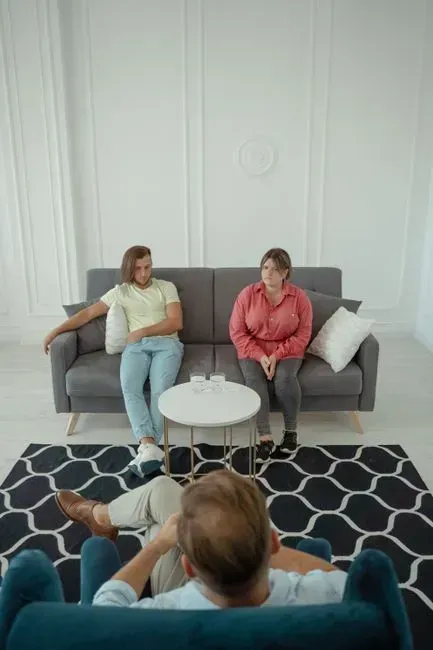
The takeaway for couples weighing whether to start early (Image Credits: Pexels)
The evidence doesn’t promise that preventative therapy will bulletproof a relationship, and no honest therapist would claim otherwise. What it does suggest is that couples who address communication patterns, expectations, and small frictions early tend to have more tools available when real difficulty eventually arrives, because difficulty tends to arrive for everyone eventually.
Choosing therapy before there’s a fire to put out isn’t about assuming something’s wrong. It’s closer to learning the layout of a building before you ever need to find the exit, a quiet kind of preparation that pays off precisely because you hope you’ll never need it in a hurry.