
People often see respect as being something seen in big gestures. However, a lot of the small routines in everyday life were a better sign of someone’s respect, including the way people entered a restaurant & how a cashier would handle your purchases. Many of these customs have either disappeared entirely or become simplified over time. Here are nine everyday parts of life that used to feel far more respectful than they do today.
The service-station routine at the pump

Anytime you pulled into a gas station, you could stay seated because someone handled the entire pump process for you. The attendant walked up & asked what you needed. Then, they’d pump the fuel, perhaps also clean the windshield, and check basic things like your car’s tire pressure. It really felt as though they had respect for you as a consumer.
Sadly, despite it being standard practice for decades across America, the majority of gas stations expect drivers to handle everything themselves. You’d be hard-pressed to find any attendants who’ll give your vehicle any extra touches. It feels as though they don’t care.
The department-store gift wrap counter

Many department stores used to have free wrapping stations that had staff wrapping your purchases for you. They’d add a ribbon & place your gifts in a sturdy box, and these counters were busy all day during the holiday season. Honestly, it was like the store actually respected you because they wanted to save valuable time for you at home.
Sure, a few locations do still offer it. But the majority of chains no longer have staffed wrapping areas and have switched to self-serve supplies instead. It’s difficult not to feel as though the store doesn’t really see the customer as someone who matters anymore.
Suitable calling hours

The majority of households used to have rather strict phone habits. Calling too early in the morning or after 9 PM meant that you were pushing your luck, unless something urgent was happening. Even the way that people answered the phone was different. People would answer with a short greeting & perhaps their last name before passing the receiver to the right person.
There was very rarely more than one phone in each home. As such, practically everyone followed the same rules, although these rules don’t really exist anymore. People reach out at any hour, now, either via phone or text, without bothering to ask about disrupting someone’s schedule.
Using “Mr./Ms.” with adults you didn’t know

Kids wouldn’t guess what to call an adult. No, the safe choice was always to use “Mr,” “Mrs,” or “Ms.” along with their last name, and you’d stick with using these titles until the person told you otherwise. It didn’t matter whether you were talking to teachers or neighbors, even your parents’ friends, or a complete stranger.
Using titles created a sense of distance between you & the other person that felt so respectful. Sadly, it’s not something that really exists anymore. The majority of people skip straight to first names when they’re giving introductions, and using titles sometimes sounds a little too formal.
Standing when an older adult entered the room

That’s not all for older adults. As soon as an older person entered the room or they were being introduced to someone new, it was the norm for younger people to stand up & sit back down once the greeting was done. It showed that they had respect for the senior person without the need for words.
Unfortunately, most greetings happen today when people are sitting or scrolling. You’d be lucky to have someone give you a mere half-turn, since the physical sign of respect doesn’t really exist as much in everyday settings anymore. People simply do not care.
Answering the door fully

People used to walk over when the doorbell rang & open the door all the way. They’d greet whoever was there face-to-face, even when the visit was unexpected, and it meant that the interaction started with a direct “hello.” But you’re more likely to hear a distant voice from behind a wall these days.
The majority of people answer the phone through a doorbell camera or perhaps ignore the visitor until they receive a text explaining why they’re there. It completely changes how the first interaction between people feels. Nowadays, there’s not really any of the basic human decency that people used to have.
Waiting for everyone to be served
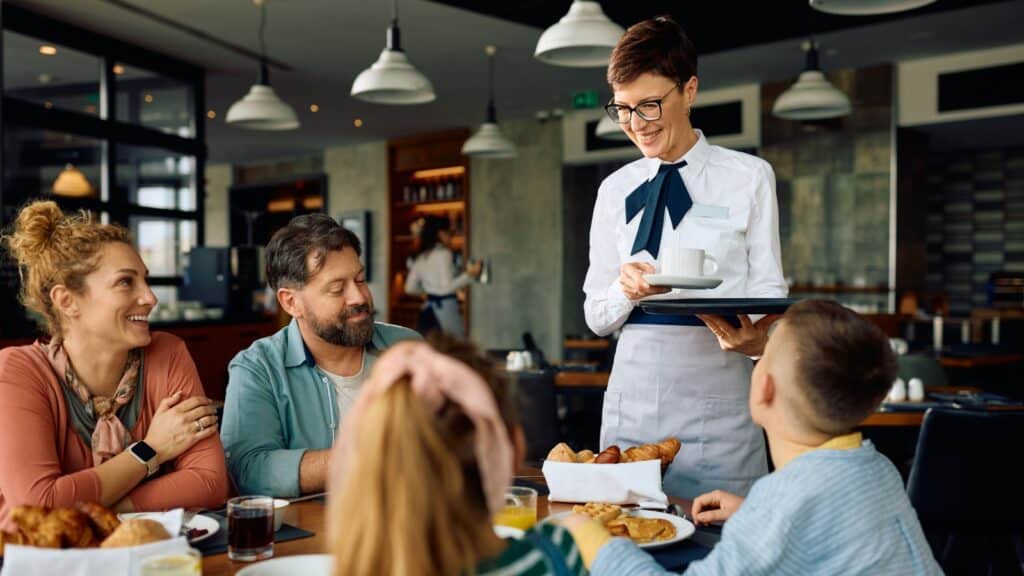
Meal times had rules that mattered before anyone picked up a fork, and that’s what made them so special. You’d sit with your plate in front of you and wait until every dish had arrived, sometimes until the host gave the signal to start eating. The rule applied during holidays as well as weeknight dinners.
But nowadays, it’s normal for people to start eating as soon as they receive their food. It’s especially common in restaurants where the food arrives at different times. The idea of a shared starting point for food has disappeared because our concept of respect during mealtimes has changed.
Acknowledging service workers directly

A transaction could last five minutes at a store, but it came with an exchange that genuinely felt personal. The tone & routine stayed the same whether you were at the grocery store or simply picking up some dry cleaning. Unfortunately, it’s a lot easier to stay focused on a phone or speak without actually making eye contact with the server.
The interaction moves a lot faster. However, it feels a lot less like two people actually notice or recognize each other, since the goal is now to get things over and done with as quickly as possible. Nobody wants to linger.
Letting adults speak first
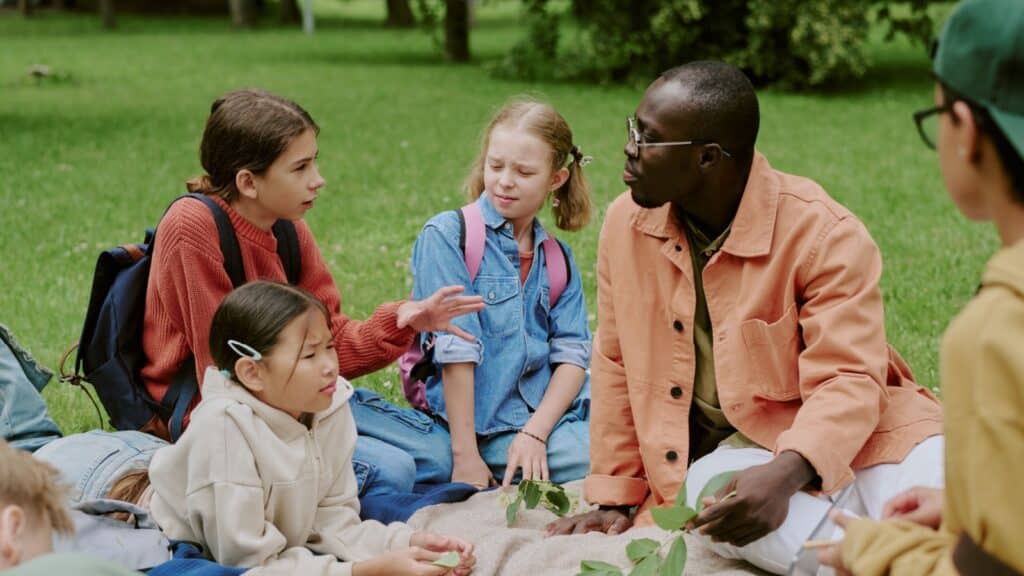
Kids would often hold back during mixed-age conversations, and they’d wait to talk until after the adults finished their thoughts. It wasn’t exactly something explained. Instead, it was simply a part of how conversations worked, with adults carrying the main thread, and kids jumping in once there was space for them to do so.
Today, conversations overlap quite a bit more. It’s common for younger speakers to talk at the same time as adults because there’s not really any sense of conversational order anymore. Kids don’t need to wait for a natural pause to join in.
7 Old-School Manners That Would Get You Canceled Today
Along with typical stereotypes and other overtly outdated gender rules, a lot of “proper etiquette” manners related to social customs have not aged well – at all. Below are some “old-school” manners that would absolutely get you canceled, called out, or turned into a viral TikTok thread today.
7 Old-School Manners That Would Get You Canceled Today