
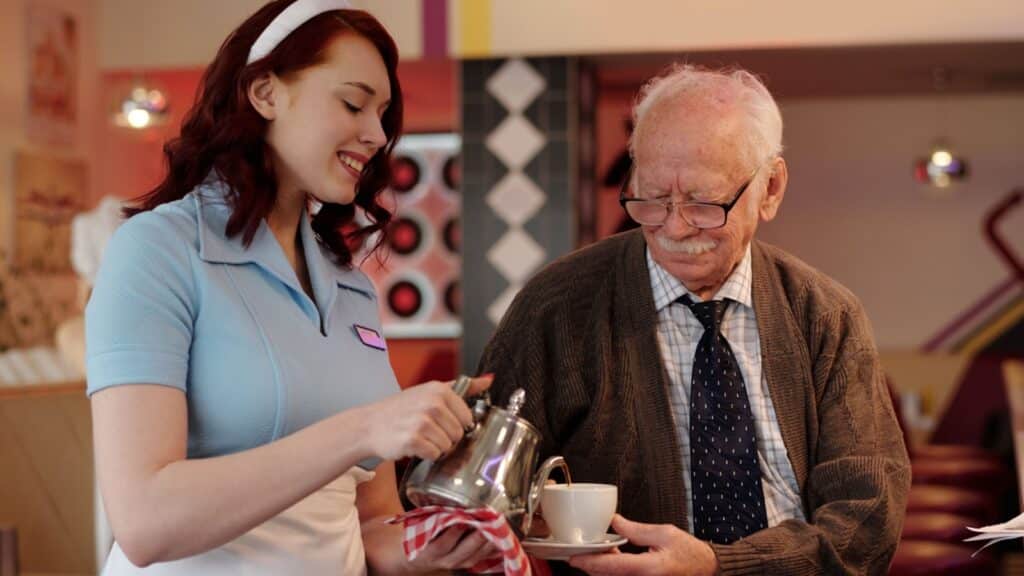
Many of the “old-school” polite and cute manners were basically designed to keep things in line via a typical social hierarchy: “Know your place.” What we were raised to believe were acceptable norms are now being exposed for what they really are. And many of those behaviors will likely result in being dragged on social media before one could even say “yes ma’am.”
Along with typical stereotypes and other overtly outdated gender rules, a lot of “proper etiquette” manners related to social customs have not aged well – at all. Below are some “old-school” manners that would absolutely get you canceled, called out, or turned into a viral TikTok thread today.
Commenting on People’s Weight Like It’s Weather Chat

Expressions like “Oh wow, you’ve gotten really skinny!” or “Looks like you put some weight on,” used to be a socially acceptable form of polite conversation; now they are a guaranteed way to ruin your social standing. No one appreciates someone commenting or judging them based on their weight, particularly if that person is a relative trying to point out things mirrors already show.
Today, you mention someone’s weight for once, and suddenly, you are in a 27-slide infographic about body shaming and trauma awareness.
Telling Kids to Hug Adults Even When They Don’t Want To

One of the most common “manners rules” we learned was to “go hug your Uncle Dan” as soon as you walked in the room. They didn’t care even if the child (their child!) looked extremely uncomfortable. But today? People would point it out fast (thankfully). They’d likely be accused of ignoring consent (ironically), teaching children to disregard boundary limits, and triggering a parenting subreddit.
As children and parents learn more about the right to autonomy, the idea of requiring a child to hug someone may seem demoralizing and a way to start a discussion about “Seriously, what made adults act that way back then?”
Calling People’ Sweetheart,’ ‘Dear,’ or ‘Honey’ at Work

Back then, it was totally acceptable and okay for a boss to call someone at work “sweetheart,” “dear,” or “honey.” However, today, if an employer addresses an employee with this type of name, a cold note from HR pops up mid-sentence.
Now, these kinds of things get reported on LinkedIn quite easily and start a big thread of over 300 comments, discussing the push for more professional etiquette, boundaries, and why Chad from accounting should take sensitivity training, because using pet names such as those toward younger employees (especially young female employees) is viewed as a condescending display of superior power.
Expecting Women to Serve Everyone at Gatherings

Women were once expected to do the “good hostess duty.” They were seen as responsible for feeding, hosting, and entertaining the guests on their own. It literally ran like a 1950s commercial: men sat and relaxed, women cooked, served, and cleaned. But this type of gender-based expectation is no longer acceptable today. Now it is “gender roles are suffocating, please stop.”
If people had a gathering today, guests would bring food, the men would help cook, and nobody (not just women) would be required to play the unpaid role of “waitress.”
Showing Up at Someone’s House Unannounced

Yes, back then, dropping by someone’s home used to be commonplace, and somehow, it kind of felt nice. But today, going to see someone without calling or letting them know you’re on your way is considered illegal behavior. Most people need at least 48 hours’ notice and a message along with a call, or perhaps a location-sharing request, before they finally open the door.
Today, if you were to drop by unannounced, it would no longer be “Oh, hey! Good shock!” It will most likely be, “What are you doing here? Why didn’t you text first? Are you okay?” Lately, private space matters way more, and everyone values their peace, and besides, who wants strangers to see socks and shirts tossed everywhere?
Telling Kids to “Hush” When Adults Are Talking

Old-school parents considered telling their kids to be quiet when adults talked to be a respect for adults. Today, it literally sounds like: “Your voice and feeling don’t matter until you’re older.” Modern parents would provide additional justifications, references, and sources from TED Talks covering emotional growth before allowing another adult to shush their child.
Kids now get to express themselves, voice their opinion, ask questions, and speak their mind with an outside voice… inside. If you try the old “children should be seen, not heard” line today, you’d be cancelled before you could complete your sentence.
Men Always Paying for Everything

Men used to be chivalrous … now it’s a red flag with outdated gender roles. If you were to tell someone in 2025 that men are expected to pay for ALL the meals, taxis, drinks, and outings on a date, there would be a TikTok mini-series about financial trauma, emotional labor, and ‘Who Benefits From This Setup?’
The new rules of dating state that everything should be “either split the bill or just stop complaining,” and if you force men to pay, it feels less romantic and more like you’re hiring him as your personal ATM.
7 Trends Gen Z Might Regret in 10 Years

Each generation has that one thing they thought was iconic, at least until they see their photos and have to whisper, “My God, what the heck was I thinking?” Here are 7 trends of Gen Z that may make the whole generation cringe in 10 years. Some of these may sting – a little too hard.
7 Trends Gen Z Might Regret in 10 Years