
Something quiet but significant is happening in the way people around the world form relationships. The old frameworks, whether arranged marriages, multigenerational households as the default, or the expectation that everyone marries young, are bending under the pressure of urbanization, economic stress, digital technology, and shifting ideas about gender. The pace of that bending, though, is not even. Some countries are transforming faster than others, in ways that are measurable and striking.
In many countries, marriages are becoming less common, people are marrying later, unmarried couples are increasingly choosing to live together, and many countries are seeing a decoupling of marriage and parenthood. These shifts are reshaping daily life, family structure, and cultural identity across very different societies. Here are ten countries where those changes are moving especially fast.
1. South Korea
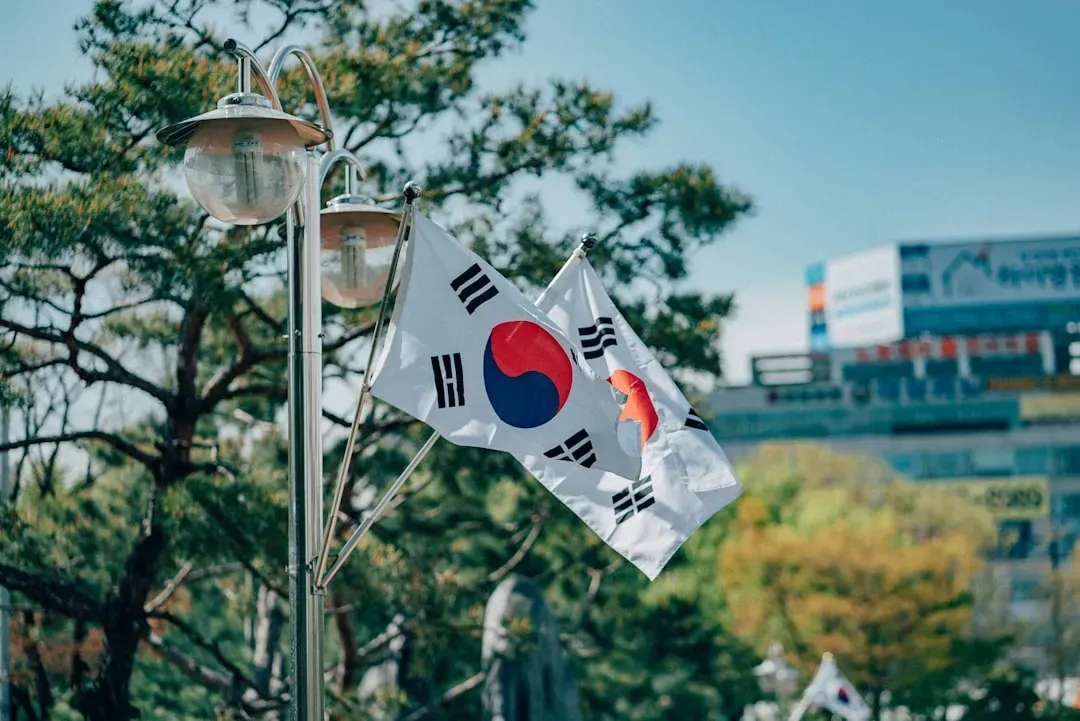
1. South Korea (Image Credits: Unsplash)
South Korea reported 222,400 marriages in 2024, down from 322,807 in 2013, and fertility rates fell to just 0.75 children born per woman in 2024, down from 1.19 in 2013. Those numbers represent one of the steepest demographic slides recorded anywhere in modern history. The country’s fertility rate was the lowest in the world for the fifth consecutive year in 2024.
Many refer to young Koreans as the “sampo generation” because they have given up on three things: dating, marriage, and children. Economic pressures remain a central factor: housing costs continue to soar, stable jobs are scarce, and real wages have stagnated, making the economic threshold required to establish a household feel out of reach for many. Women have gained more opportunities outside marriage, but within marriage, men have not correspondingly increased their contribution to housework and childcare, making marriage a less attractive option for many women.
2. China

2. China (Image Credits: Unsplash)
China recorded a total of 6.106 million marriage registrations throughout 2024, down 20.5 percent year-on-year, according to a bulletin of statistics issued by the Ministry of Civil Affairs. After nine consecutive years of decline from 2013 to 2022, China’s marriage registration numbers saw a brief rebound in 2023, but the downward trend resumed in 2024 and continued into 2025.
Experts point to shifting attitudes toward marriage and financial pressures as contributing factors, with rising education levels and a growing emphasis on individualism increasingly challenging traditional views on marriage. In response, authorities across China have rolled out a series of pro-marriage policies and measures, including revised marriage registration rules that simplify paperwork and offer greater flexibility for couples. Research places China in the first phase of a major marital transition, with South Korea in the second and Japan in the third, suggesting China’s changes still have considerable momentum ahead.
3. Japan

3. Japan (Image Credits: Unsplash)
Many young Japanese don’t see marriage as a priority because of the challenges posed by high costs of living and a tough job market, while Japan is also known for its intense corporate culture that often doesn’t allow both parents to work while raising children. Japan is experiencing drastic declines in marriage rates, with one of the main factors being deteriorating youth employment.
Japan and South Korea not only try to give monetary incentives to encourage people to have children, but actively try to get people to meet through events like government-organized speed-dating. The shift in Japan runs deeper than economics alone. Persistent marriage postponement among younger female cohorts is expected to continue to exert downward pressure on fertility in the population. Whole new lifestyle identities have emerged around deliberate singlehood, and the concept of “herbivore men,” referring to men who show little interest in relationships or marriage, has become a widely recognized social phenomenon in the country.
4. India
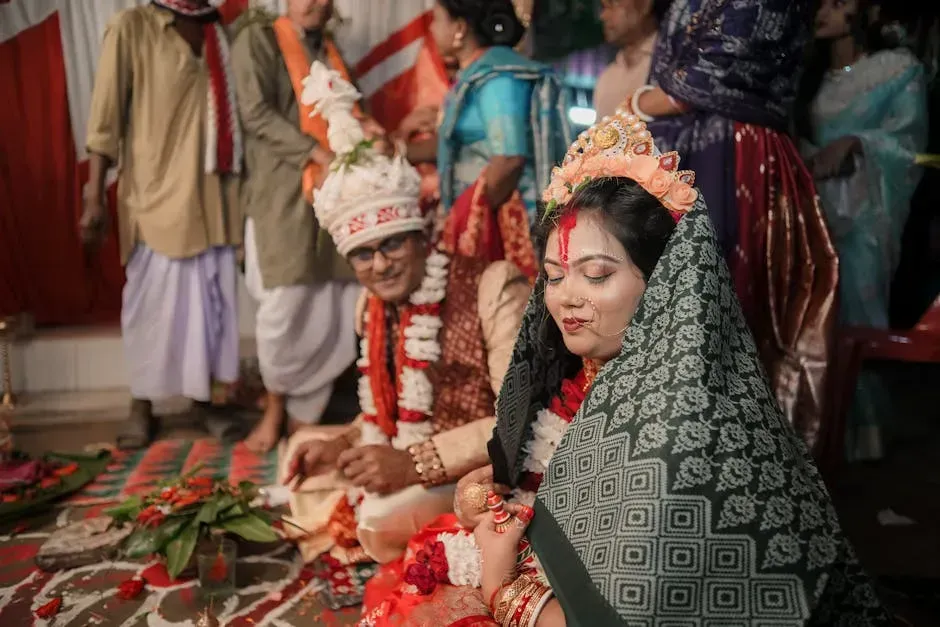
4. India (Image Credits: Pexels)
Marriage has deep-rooted religious, cultural, and familial importance in traditional Indian society, with arranged marriages being the most common norm for many centuries. Recently, however, there has been constant change in the institution of marriage, with factors like increased autonomy in partner selection, a shift in gender roles, and technological advancements influencing that change. Of all these influences, dating apps have been the most disruptive factor, redefining relationship norms and reshaping conventional matchmaking processes.
Arranged marriage remains popular in India, despite its decline in other contexts. What’s shifting is not the format as much as the decision-making process within it. Middle-class young adults were found to approach marriage with a pragmatic outlook, with many viewing arranged marriage as the “safest” option because parental support acts as a form of insurance, while others preferred self-selection to avoid the compatibility gamble of arranged marriage. With the growth of education, disposable income, and women’s liberation, metro cities are seeing a boom in live-in relationships.
5. Italy

5. Italy (Image Credits: Unsplash)
Italy has experienced rapid secularization in recent decades, leading to delayed marriages and increased acceptance of divorce despite historical Catholic influence. The country long held one of Europe’s strongest cultural commitments to formal marriage, but that consensus has weakened considerably among younger generations. The increase in divorce rates between 1990 and 2022 was highest in Italy, Portugal, and Spain.
Couples in Italy still like to celebrate, with more than half of weddings lasting two days or longer, and roughly a fifth lasting three days or more. Yet the path to getting there has changed. Nearly six in ten Italian couples have children before marriage. That figure represents a profound reversal from a generation ago, when births outside of marriage were rare and socially stigmatized. The Catholic framework that once structured Italian family life is no longer the default script for most young people living in cities.
6. Brazil

6. Brazil (Image Credits: Unsplash)
Brazil is seeing an increase in younger couples getting married, with nearly half of couples in 2024 being Gen Z, up from just fifteen percent in 2023. This youthful surge in weddings exists alongside a much broader transformation in how Brazilians approach partnership. Cohabitation without marriage has been legally recognized and socially accepted in Brazil for decades longer than in many other countries, making informal unions a genuinely mainstream relationship model rather than a marginal one.
Brazil’s geographic and economic diversity means that relationship norms shift sharply between rural and urban areas, as well as between different regions of the country. Social movements advocating for LGBTQ+ rights have also reshaped the legal landscape significantly, with same-sex marriage legalized nationally in 2013 through a Supreme Court ruling rather than legislation. The tension between deep religious conservatism in many parts of the country and the growing urban embrace of diverse relationship models makes Brazil one of the most internally contested places on the list.
7. Spain

7. Spain (Image Credits: Unsplash)
Gen Z weddings are on the rise in Spain, accounting for eighteen percent of weddings in 2024 compared to just one percent in 2023. Still, the bigger picture is one of sustained structural change. Spain has experienced rapid secularization, leading to delayed marriages and an increased acceptance of divorce despite its historically strong Catholic influence. The average age at first marriage in Spain is now among the highest in Europe, typically in the early to mid-thirties.
Spain legalized same-sex marriage in 2005, making it one of the earliest countries in the world to do so, and public attitudes toward varied relationship models have continued to shift decisively since then. Cohabitation among unmarried couples has grown steadily, particularly in large cities like Madrid and Barcelona. What’s especially notable is how quickly these social changes have accumulated across just two or three generations, given how conservative Spanish society was under Francoism as recently as the 1970s.
8. United States

8. United States (Image Credits: Unsplash)
Since 1972, marriage rates in the US have fallen significantly and are currently at the lowest point in recorded history. A major reason for declining US fertility is the drop in marriage rates, as the average number of births to married couples has remained quite steady for decades while marriage rates have continued to fall. In the US, meeting through a dating app is now the most common way couples connect, accounting for roughly a quarter of new partnerships.
The explanation for declining marriage has more to do with cultural shifts that encourage people to prioritize individual pursuits over marriage and family, shifting the horizon for marriage further down the road in ways that can decrease the likelihood of marrying at all. The 2024 American Community Survey counted more than 820,000 same-sex married couples in the United States, up from about 741,000 in 2022. The US is also seeing an unusual demographic split, with so-called “gray divorce” rising sharply among people aged fifty and over even as overall divorce rates decline.
9. Mexico
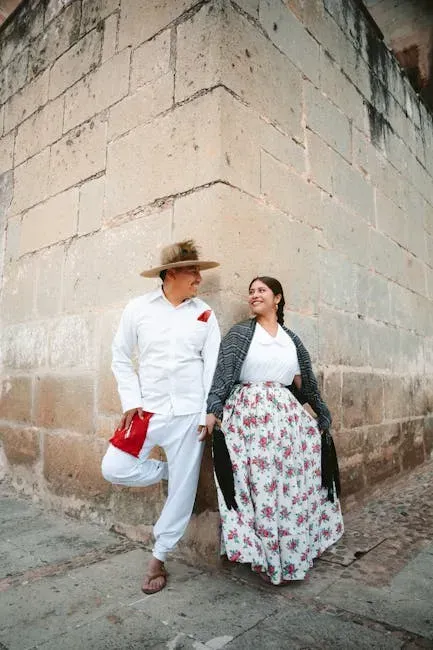
9. Mexico (Image Credits: Pexels)
In Mexico, work connections are the top way couples meet, with roughly a quarter of couples reporting that they met through their jobs. That finding points to a broader shift: as more women have entered the formal workforce in urban Mexico, the conditions under which people form relationships have fundamentally changed. Traditional courtship patterns rooted in family introductions and community ties are being displaced by workplace and online connections at a fast pace in metropolitan areas.
Mexico presents a particularly sharp contrast between tradition and transformation. Rural and indigenous communities often maintain deeply established marriage customs, including formal negotiations between families and large community celebrations, while major cities like Mexico City have a growing population of young professionals opting for cohabitation, delaying marriage, or choosing not to marry at all. Colombia, which shares similar cultural and regional dynamics with Mexico, has one of the lowest formal marriage rates in the OECD at just 1.4 marriages per 1,000 people, illustrating just how far that trend can travel across Latin America.
10. Sweden and the Nordic Region

10. Sweden and the Nordic Region (Image Credits: Unsplash)
The share of women married or in a union has changed more in Europe and North America than in Asia and South America over recent decades. Sweden sits at the leading edge of that shift. Cohabitation without marriage, known locally as “sambo,” has been a mainstream relationship model in Sweden since at least the 1980s, and it carries virtually no social stigma. Children are frequently born to unmarried couples, and the legal framework treats cohabiting partners with a degree of recognition that is unusual globally.
Declining marriage rates and stabilizing divorce rates across the OECD have been accompanied by higher ages at marriage: at the start of the 1990s, the average age at first marriage across OECD countries was 25 for women and 28 for men, but by 2021 those averages had risen to close to 32 for women and 34 for men. Sweden and its Nordic neighbors consistently push above those averages, with many couples living together for years or even decades before formalizing their relationship, if they ever do. The Nordic model increasingly functions as a reference point that other countries appear to be following, sometimes with a delay of a generation or more.
What ties these ten countries together is not the direction of change so much as its speed. The frameworks that governed who people married, when, and how are being renegotiated across wildly different cultures simultaneously, driven by economics, digital technology, and evolving expectations around gender and individual choice. The shift is uneven, contested, and in some places quietly painful. Whether that renegotiation leads somewhere more equitable is a question each of these societies is still working through.