
Parenting trends tend to swing like a pendulum. For a while, the conversation was almost entirely dominated by gentle parenting, attachment theory, and the careful validation of every feeling. Those ideas have real merit. Still, somewhere between overscheduled kids and a generation of young adults struggling with basic independence, something shifted. In 2025, a clear tension emerged between newer, softer parenting styles and older, tough-love approaches. Parents started quietly reaching back into the toolkit their own parents once used.
It’s not a full regression. Nobody’s bringing back harmful practices. What’s happening is more nuanced: parental authority appears to be making a comeback, with nearly half of goal-setting parents wanting to be more consistent with discipline. The tactics being revived aren’t about control for its own sake. They’re about structure, responsibility, and raising kids who can actually handle the world. Here are ten of them.
1. Assigning Regular Household Chores

1. Assigning Regular Household Chores (Image Credits: Pexels)
For a stretch, chores fell out of fashion in many households. Parents got busy, kids got overscheduled, and convenience quietly replaced accountability. Now, the tide is turning. Research shows that routines allow for parental scaffolding, enhancing children’s problem-solving and organizational skills through activities like chores. More parents are recognizing that a child who never cleans up after themselves is not being spared hardship – they’re being set up for it.
Assigning age-appropriate chores, letting kids make small decisions, and allowing natural consequences such as forgetting homework are strategies that build confidence and accountability. The chore chart that was once a fixture on every family refrigerator is experiencing a quiet, undeniable revival.
2. Enforcing a Non-Negotiable Bedtime

2. Enforcing a Non-Negotiable Bedtime (Image Credits: Pexels)
Bedtime had become a negotiation in many homes, a drawn-out event with five more minutes stretching into forty-five. Parents are pushing back. One effective way to set limits is by creating a daily routine, setting the same bedtime each night and the same schedule each day, which helps children learn what to expect. The predictability alone does a lot of the disciplinary work.
A predictable bedtime routine helps children get the rest they need and wind down before sleep, and following that routine signals to the body that it’s time to sleep, making it easier for children to settle down. A Pew Research survey from 2025 found that roughly three quarters of parents say ensuring their child gets enough sleep is one of their biggest priorities. A firm lights-out time is increasingly seen as a form of care, not cruelty.
3. Letting Natural Consequences Play Out

3. Letting Natural Consequences Play Out (Image Credits: Pexels)
For years, many parents rushed to soften every landing. Forgot your lunch? Mom would drive it to school. Failed to do your homework? A parent would write the excuse note. That pattern is wearing thin. Older, tough-love parenting encourages risk-taking, natural consequences, and discipline – and a growing number of parents are recognizing that rescuing kids from every uncomfortable moment actually does them a disservice.
Using natural consequences, such as losing toy privileges after throwing them, combined with praising good behavior more than punishing bad behavior and maintaining consistency, reduces parenting difficulties and helps children feel secure. The shift is subtle but meaningful: parents are learning to stay calm when their child is uncomfortable, trusting that the discomfort itself is the lesson.
4. Holding Firm on Screen Time Limits

4. Holding Firm on Screen Time Limits (Image Credits: Pexels)
The data here is genuinely striking. On average, children aged 8 to 18 in the United States spend about seven and a half hours a day watching or using screens. Many parents looked at that number and decided enough was enough. The vast majority of parents – roughly six out of seven – say making sure their child’s screen time is reasonable is a day-to-day priority, with nearly half calling it one of their biggest priorities.
A family media plan helps establish healthy digital boundaries, including setting specific times for screen use – such as allowing screens only after homework or chores are completed – and enforcing screen-free zones like the dinner table and bedrooms. This kind of firm, structured boundary is exactly the sort of rule that previous generations enforced without a second thought, and it’s back with a vengeance.
5. Delaying Smartphone Access

5. Delaying Smartphone Access (Image Credits: Unsplash)
Handing a child a smartphone used to feel like a rite of passage. Now, a growing movement of parents is deliberately holding off. Jonathan Haidt’s best-selling book “The Anxious Generation” sparked a movement to delay smartphone use and lean into a more play-based childhood, with cohorts of parents at some elementary schools signing pledges to wait until high school before giving kids cell phones.
Across the country, school phone bans moved quickly in many states with the start of the 2025-2026 school year, and Australia became the first country to ban social media for kids until age 16, with countries like Denmark considering similar restrictions. What was once a quiet parental choice is now a coordinated cultural pushback, and one with real policy teeth behind it.
6. Teaching Table Manners and Eating Together

6. Teaching Table Manners and Eating Together (Image Credits: Pexels)
Family dinners drifted away in many households, replaced by staggered mealtimes, screens at the table, and food eaten in transit. The reversal has been gradual but real. A study published in 2024 found that one of the strongest predictors of a child’s screen time is a parent’s screen time, which has pushed many families to create a phone-free dinner table as a deliberate household rule rather than an afterthought.
According to Pew Research, roughly three out of four parents say making sure their child has good manners is one of their biggest priorities. The dinner table turns out to be the best classroom for that. Expecting kids to sit, participate in conversation, and show basic courtesy at meals is an old-school expectation that’s quietly regaining ground in family life.
7. Applying Authoritative Discipline with Clear Rules

7. Applying Authoritative Discipline with Clear Rules (Image Credits: Pexels)
There’s an important distinction between authoritarian parenting – rigid, cold, my-way-or-the-highway – and authoritative parenting, which pairs firm expectations with genuine warmth. The latter is experiencing a real resurgence. Authoritative discipline has been described as “the research-backed sweet spot” that 2025 was brought back into focus. Parents who once leaned heavily into pure validation are now re-introducing consistent rules and predictable consequences.
Most children benefit from a mix of both structure and empathy – it’s possible to discipline a child and set firm boundaries while also acknowledging how they feel. The American Academy of Pediatrics has been clear for years that effective discipline combines warmth with structure. That combination isn’t new. What’s new is how many parents are rediscovering it after a decade of leaning too far in one direction.
8. Requiring Kids to Earn Privileges

8. Requiring Kids to Earn Privileges (Image Credits: Pexels)
The idea that certain things need to be earned – screen time, outings with friends, a later bedtime on weekends – was a standard feature of parenting for generations. It fell away as the pace of family life accelerated and saying yes became easier than holding the line. Now, parents are recognizing that kids need to learn resilience to succeed in the world, and that handing things out freely undermines the very skills children need most.
An important aspect of discipline is teaching children the rules of behavior – what is safe, what is fair, what is healthy – and involving them in making the basic rules and consequences for breaking those rules. When kids participate in setting the framework, they’re far more likely to respect it. Still, the expectation that privileges come after responsibilities is the old-school foundation underneath the modern framing.
9. Encouraging Independent, Unstructured Play
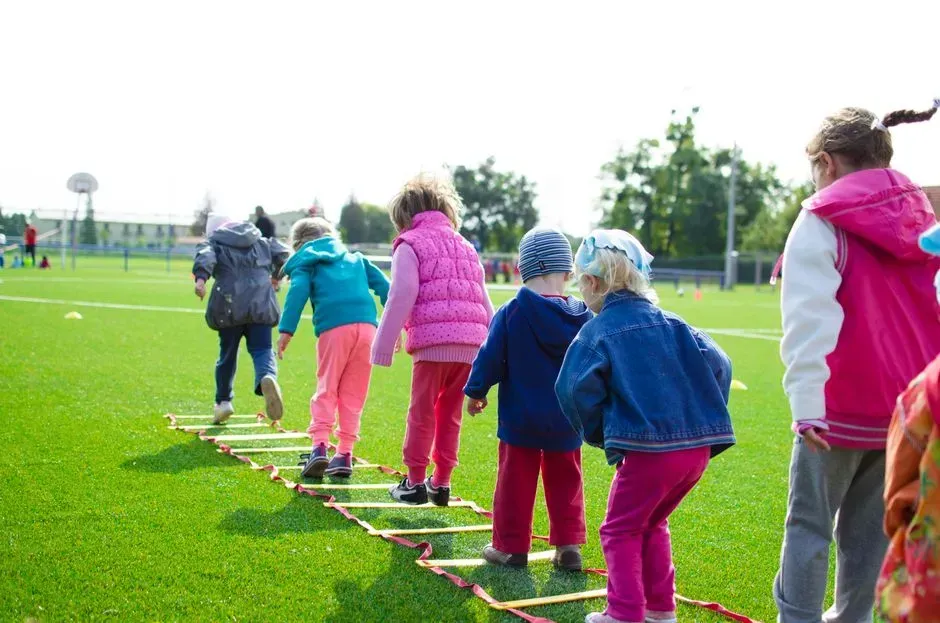
9. Encouraging Independent, Unstructured Play (Image Credits: Pexels)
Helicopter parenting turned childhood into a supervised, scheduled, adult-managed event. While close parental monitoring is done out of an abundance of concern, it can also limit the child’s independence. A countermovement has been building steadily, with parents pulling back and letting children navigate boredom, conflict, and imagination on their own terms again.
Embracing more independence – like letting kids bike to school on their own or a friend’s house – and encouraging hands-on, screen-free playtime have become deliberate choices for parents rethinking childhood. Setting aside regular times for play through indoor games, creative projects, or outdoor activities encourages children to be present and immersed, supporting their development while letting them explore, practice new skills, and enjoy independence. This is, in essence, just what childhood used to look like by default.
10. Maintaining Consistent Daily Routines

10. Maintaining Consistent Daily Routines (Image Credits: Unsplash)
Consistency was once taken for granted in family life. Fixed wake-up times, after-school rhythms, and predictable evening schedules weren’t seen as discipline tools – they were just how households ran. Research has since confirmed what previous generations practiced intuitively. Studies have found that consistent daily routines, along with supportive parent-child interactions, help young children develop emotion regulation skills, and that knowing the sequence of daily events lessens feelings of uncertainty, reducing stress and irritability, so children are better able to manage transitions and cope with change.
Recent research has begun to emphasize the importance of child routines by showing a positive link to language, cognitive, and socioemotional skills, and reduced behavioral issues. The impact of routines on child development is partly due to parental involvement, as routines create a structured context for consistent parent-child interactions and fostering relationships. The structure that once felt ordinary turns out to be one of the most powerful tools parents have.
What’s notable about this list is that none of these tactics require a return to harshness. They’re not about fear or punishment. They’re about structure, predictability, and the quiet confidence that comes when children know what’s expected of them. Most children benefit from a mix of both structure and empathy – you can discipline a child and set firm boundaries while also acknowledging how they feel. The parents bringing these approaches back seem to understand exactly that. They’re not rejecting modern parenting wisdom. They’re adding a spine to it.