
Every generation inherits a parenting playbook from the one before it. Some of those lessons are genuinely valuable. Others, it turns out, were never as helpful as they seemed – and a growing body of research is making that clearer than ever. There is a time-honoured hypothesis that the way one generation experienced parenting is transmitted to the next. That transmission doesn’t always carry wisdom. Sometimes it carries damage.
Parenting is a dynamic journey, a path that shifts and reshapes with each generation and every new discovery about how children grow and thrive. It’s not a static rulebook passed down unchanged through time. What may have been common practice for parents or grandparents might not stand up to the scrutiny of current research. Understanding which inherited habits to leave behind is one of the most honest things a parent can do.
1. Using Physical Punishment as a Discipline Tool

1. Using Physical Punishment as a Discipline Tool (Image Credits: Pexels)
For much of the twentieth century, spanking and other forms of physical punishment were treated as unremarkable parts of child-rearing. The idea was simple: a sharp consequence stops bad behavior. The evidence, however, tells a very different story. A meta-analysis involving over 160,000 children found that physical punishment can carry the risk of physical abuse and can have similar negative outcomes for children: mental health and emotional challenges, lower cognitive ability, lower self-esteem, more aggression, more antisocial behavior, and negative relationships with parents.
Long considered an effective, and even necessary, means of socializing children, physical punishment has been revealed to be a predictor of a wide range of negative developmental outcomes. The extent of agreement in the research literature on this issue is unusual in the social sciences. Physical punishment is associated with increased child aggression, antisocial behavior, lower intellectual achievement, poorer quality of parent-child relationships, and mental health problems such as depression. The very tool meant to teach boundaries has a habit of eroding them.
2. Dismissing Children's Emotions

2. Dismissing Children's Emotions (Image Credits: Unsplash)
Baby Boomers often grew up with structured routines, strict discipline, and limited discussion of emotions. That culture carried forward for decades. Children were told not to cry, to toughen up, or to stop overreacting – often by parents who genuinely believed they were building resilience. What that approach actually built was suppression.
Research findings show that authoritarian family education hampers the emotional expression, regulation, recognition, and consistency of children to significant extents. When a child learns early that their feelings are unwelcome or inconvenient, they don't stop having those feelings. They simply stop sharing them – and that silence tends to become very costly later in life.
3. Raising Children With an Authoritarian "Do As I Say" Approach
3. Raising Children With an Authoritarian "Do As I Say" Approach (Image Credits: Unsplash)
Authoritarian parents have high demandingness or control but lack responsiveness or acceptance. Parents often fail to understand the emotional needs of their children. There are preset rules and regulations that children are expected to follow, and if the child is unable to meet expectations, there are repercussions. Authoritarian parents attach strong values to maintaining their authority and suppress all efforts by children that challenge them. There is very little heart-to-heart communication between both generations.
Research from the timeframe 2015 to 2025 has found children from authoritarian homes to have lower emotional intelligence, higher anxiety and depression rates, and poorer social competence. Obedience without understanding rarely produces the outcomes parents are hoping for. When kids are raised by authoritarian caregivers, their experiences may prompt them to develop a hostile attribution bias – a tendency to assume that other people have aggressive or antagonistic intentions.
4. Teaching Children That Failure Is Something to Be Ashamed Of
4. Teaching Children That Failure Is Something to Be Ashamed Of (Image Credits: Unsplash)
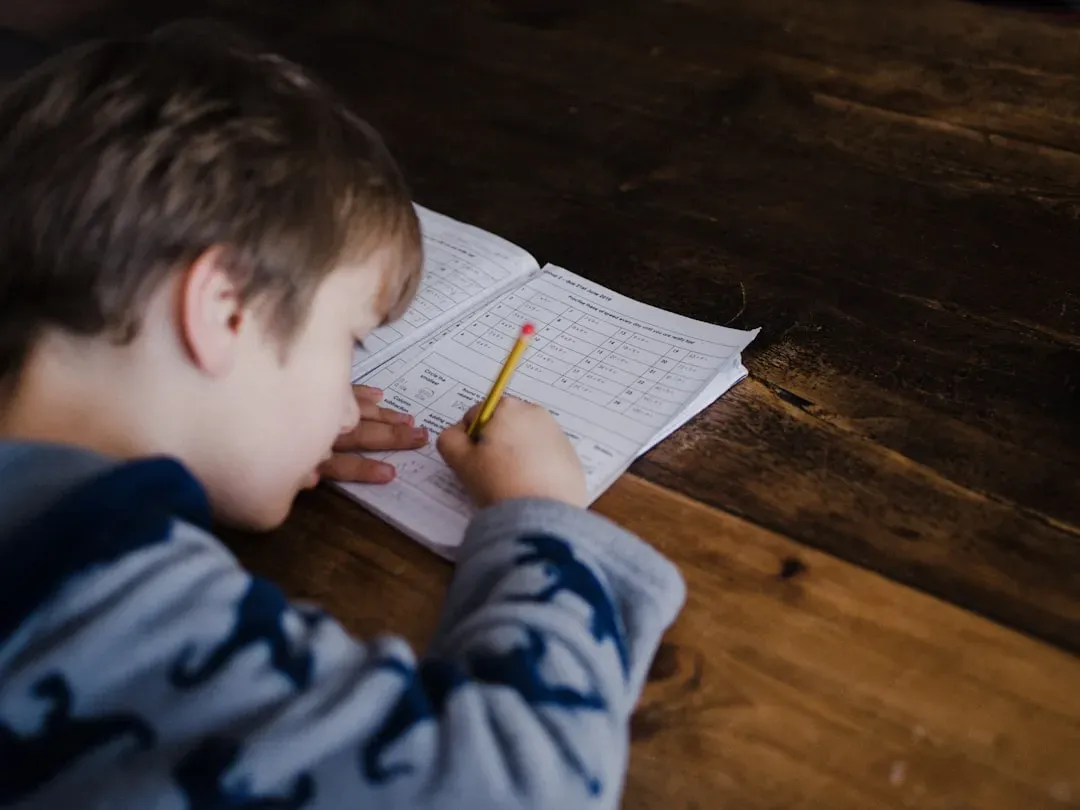
Previous generations often treated failure as a sign of weakness, laziness, or moral deficit. Children who made mistakes were punished, shamed, or simply told to try harder without much guidance on how. That framing left deep marks. Fear of failure often spans multiple generations, highlighting the importance of understanding how parents communicate about failure and mistakes to their children, and how they can offer constructive guidance and support.
Experimental and classroom-based research is increasingly highlighting the potential benefits of making and responding to failure moments – mistakes, errors, and failures – for promoting knowledge retention, deeper understanding, problem-solving skills, and self-regulation. Failure, framed correctly, is one of the most productive experiences a child can have. The old instinct to hide it or punish it actively works against learning.
5. Avoiding Conversations About Mental Health

5. Avoiding Conversations About Mental Health (Image Credits: Pexels)
Previous generations may have been hesitant to discuss mental health openly, but today's families face increased awareness – and sometimes pressure – to address emotional wellbeing proactively. For much of the last century, mental health struggles were either ignored or treated as private shame. Children dealing with anxiety, depression, or trauma were often told to push through without any real support.
Less visible than externalizing behavior but equally serious is the development of internalizing problems such as depression, anxiety, suicidal ideation, and other mental health concerns. Such problems are often ignored and left untreated, and can have lifelong effects, including influencing the parenting of the next generation. The silence surrounding mental health in past generations didn't protect children. It left them without language or tools to understand what they were experiencing.
6. Relying Entirely on Punishment-Based Discipline

6. Relying Entirely on Punishment-Based Discipline (Image Credits: Unsplash)
Parents and educators long espoused principles from 20th-century behavioral psychology based on rewards and punishments. These midcentury experiments shaped a parenting approach that caught on in American culture and quickly became dogma. Generations of parents learned to use rewards to reinforce desired behaviors and negative reinforcement like timeouts and loss of privileges to reduce unwanted ones.
It turns out that many old-school parenting and educational approaches based on outdated behavioral models are not effective, nor are they best-practice, particularly for the most vulnerable children. Physical and psychological punishments may elicit immediate compliance but often undermine long-term wellbeing and can perpetuate cycles of stress, aggression, and low self-esteem. The short-term win of compliance frequently comes at a long-term cost.
7. Passing Down Harsh Conflict Resolution

7. Passing Down Harsh Conflict Resolution (Image Credits: Unsplash)
Many parents don't realize that how they handle conflict in the household is, itself, something children absorb and replicate. Shouting matches, stonewalling, and aggressive arguing were common features of many households in past decades, treated as just how adults disagreed. Children were watching and learning. Research examined the intergenerational transmission of aggressive conflict resolution toward intimate partners and the potential spillover effects to harsh and inconsistent parental discipline toward children.
There is evidence that problem behaviors such as harsh parenting, substance use, and emotional distress are transmitted across generations. Stressors experienced in the family of origin are associated with emotional distress, disrupted family relationships in adulthood, and poor developmental outcomes for the next-generation child. In other words, the way conflict was managed two generations back can still echo in how a child today learns to handle disagreement.
8. Neglecting the Importance of Consistent Emotional Warmth

8. Neglecting the Importance of Consistent Emotional Warmth (Image Credits: Unsplash)
Providing for a child financially and keeping them physically safe was long considered enough. Emotional warmth – expressing affection, validating feelings, and being emotionally present – was sometimes seen as soft or unnecessary. Experiences of poor parenting practices place an individual at risk of developing dysfunctional internal working models of self and parent-child relationships, making it more likely that individuals will display poor parenting practices themselves.
Research shows that negative parenting experiences increase the likelihood that children will develop internal working models of the world as a hostile place, which leads to a misinterpretation of others' behaviors and more hostile responses in conflict situations. Warmth isn't indulgence. It's a foundational ingredient in how a child learns to trust themselves and the world around them.
9. Solving Every Problem for the Child

9. Solving Every Problem for the Child (Image Credits: Pexels)
On the opposite end of the spectrum from harsh discipline sits another inherited pattern: over-involvement. Well-meaning parents who experienced a cold or difficult upbringing sometimes overcorrected by swooping in to prevent their children from experiencing any friction at all. It felt like love. In practice, it often interfered with development. Often children just want a place to say what is on their mind, so parents should be cautious about jumping in with solutions. Supporting children as they struggle is part of healthy development, and swooping in to solve their problems does not prepare them for the future.
Children need the experience of navigating difficulty at a level proportionate to their age. When parents remove all obstacles, they inadvertently communicate that the child can't handle the world on their own. Kids raised by over-controlling caregivers lack role models and explicit instruction for learning healthy, effective strategies for coping with their negative emotions. The goal was always resilience. The method sometimes worked against it.
10. Replicating Parenting Practices Without Questioning Them

10. Replicating Parenting Practices Without Questioning Them (Image Credits: Pexels)
Perhaps the most quietly damaging inherited mistake is the one that underlies all the others: the assumption that because something was done to you, it must be appropriate to do to your own child. Parents must remain aware of the efficacy of their parenting practices and not simply replicate practices administered by their own parents, which is defined as intergenerational transmission, influencing parenting attitudes and behaviors from one generation to the next.
What may have been common practice for parents or grandparents might not stand up to the scrutiny of current research or align with our evolving understanding of child developmental milestones. The willingness to remain open to new information, to question old habits, and to adapt parenting approaches is paramount. Many parents today are taking a different parenting path than their own parents did, seeking advice, juggling work and family obligations, and navigating conversations around mental health. That willingness to reflect, rather than simply repeat, may be the single most important shift one generation can make for the next.
Breaking a generational pattern doesn't require perfection. It requires awareness. The fact that so many parents today are asking these questions at all is itself a meaningful departure from the past. Progress in parenting rarely arrives all at once – it tends to come one honest conversation, one course correction, and one generation at a time.