
Language is one of the most honest things about a person. You can update your wardrobe, learn new technology, and keep up with the latest trends, but the phrases that slip out in everyday conversation are almost impossible to fake. They’re baked in from decades of use, pulled from the cultural moment when you were young, impressionable, and forming your sense of what words were cool.
Youth culture has always been a significant driver of slang, as young people seek to distinguish themselves from older generations through innovative and creative language. The interesting flip side is what happens decades later, when those same phrases get carried forward into a world that has completely moved on. Here are ten that do it most reliably.
1. "Far Out"

1. "Far Out" (Image Credits: Pexels)
The Silent Generation had “cat’s pajamas,” Boomers had “far out,” and Gen X had “rad.” Of those, “far out” is perhaps the most instantly recognizable as a time stamp. It peaked as an expression of awe and enthusiasm during the late 1960s and into the 1970s, landing somewhere between “amazing” and “I can’t believe that’s real.”
“Far out” wasn’t just approval – it was awe. The phrase carries the unmistakable spirit of the counterculture era, when language was used to signal belonging to a whole generation’s way of seeing the world. Drop it in a conversation today and watch the younger people in the room do a quiet double-take.
2. "Groovy"
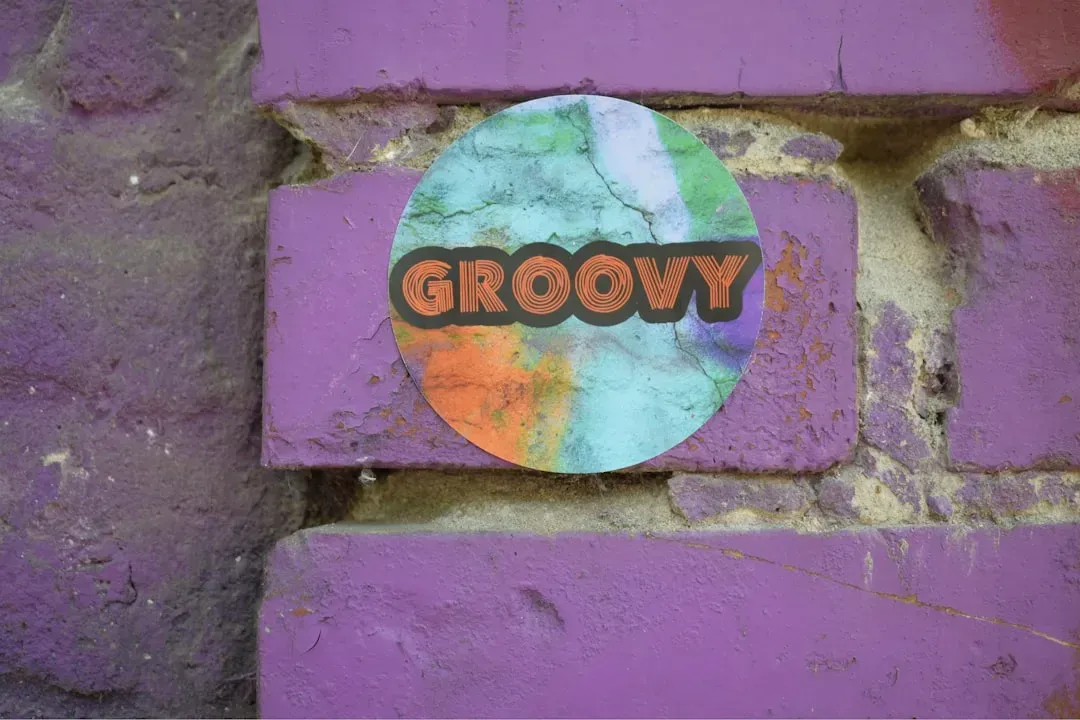
2. "Groovy" (Image Credits: Unsplash)
“Groovy” rewarded feel over form – not “Is it correct?” but “Does it move you?” That filter shaped how people evaluated music, art, even friendships. It was the go-to word of approval across the 1960s and early ’70s, used to describe anything from a song to a Saturday afternoon. Baby Boomers, born between 1946 and 1964, embraced slang on a wider scale, coining sayings like “boob tube,” “threads,” and “ticked off.”
Other slang words from this time include “groovy” for “cool,” “square” for “uncool,” and “moo juice” to describe a fresh glass of milk. “Groovy” survived longer than most of its contemporaries, partly because it sounds so cheerful. Still, anyone who uses it unironically in 2026 is almost certainly drawing from a very specific decade of memory.
3. "Right On"

3. "Right On" (Image Credits: Unsplash)
“Groovy,” “far out,” “right on,” “outta sight,” “bummer,” “dig,” “bread,” “split,” “foxy,” and “square” were all part of the everyday language of people who came of age in the 1960s and ’70s. “Right on” served as the era’s all-purpose stamp of approval and solidarity. It was the verbal equivalent of a raised fist, used to agree with someone, validate a point, or just signal that you were on the same side.
“Right on,” “bummer,” and “split” were efficient, low-friction, and humane – short words that soften edges and keep groups moving. The phrase was especially tied to the political and social movements of its time, which makes it carry extra weight when it still slips out today. It’s not just a dated word; it’s practically a document of a particular era.
4. "Gag Me With a Spoon"

4. "Gag Me With a Spoon" (Image Credits: Unsplash)
“Gag me with a spoon” is a hyperbolic 1980s slang phrase, popularized by Valley Girls, expressing extreme disgust, revulsion, or disbelief, suggesting something is so gross it makes you want to induce vomiting with a spoon. It was exaggerated by design, part of a broader Valley Girl dialect that spread through California and then, thanks to television and film, across the entire country.
The irony, the casual cool, and the tendency to express strong feelings through understated or absurd language – “whatever,” “bummer,” “gag me with a spoon” – all captured a generation that prided itself on not caring too much while actually caring quite a bit. Hearing this phrase today tends to trigger an immediate mental image of leg warmers and a very specific kind of mall. That’s not an accident.
5. "Talk to the Hand"

5. "Talk to the Hand" (Image Credits: Pexels)
When you were done with a conversation or didn’t want to hear someone’s excuses, you’d say “talk to the hand,” often with the full phrase being “talk to the hand, ’cause the face ain’t listening.” The gesture mattered just as much as the words. You’d extend your palm, face outward, as a literal barrier to whatever was coming next.
The phrase became popular in the late 1990s as a reaction to increasing media saturation. In an era where information overload was becoming the norm, “talk to the hand” was a defensive mechanism, a way to preserve personal boundaries in the face of constant noise. It’s pure Gen X, packed with the attitude and dry dismissiveness that defined the generation’s communication style.
6. "Gnarly"

6. "Gnarly" (Image Credits: Pexels)
The original use of the word “gnarly” was to describe branches or roots that had many bumps, twists and turns. The word was picked up by surfer culture and came to mean “beyond difficult or extreme,” and eventually it was picked up by Gen X in general. From there it stretched to cover anything that was impressively intense, whether that was a skateboard trick or a particularly bad traffic jam.
Taking a tour of the phrases Gen X popularized in the 1980s and ’90s, you feel transported back in time: gnarly, yuppie, chill pill, talk to the hand, gag me with a spoon and others. The word “gnarly” probably didn’t last because each generation creates its own word for describing something as “cool,” whether it be groovy, hip, lit, or anything else. Each era essentially overwrites the last.
7. "As If!"

7. "As If!" (Image Credits: Pexels)
“As if!” was the ultimate dismissive retort for Gen X, a quick way to convey disbelief without engaging in a lengthy explanation. It was a verbal eye-roll, a way to encapsulate skepticism and sarcasm in just two words. It required almost no effort to deploy and yet carried enormous weight in the right moment, landing as one of those phrases that sounds so complete it barely needs a sentence around it.
The phrase encapsulates Gen X’s penchant for brevity and wit, a language distilled from the influences of pop culture and media. “As if!” allowed people to maintain their cool while still making their opinions known. It was a snappy comeback that fit seamlessly into the fast-paced dialogue of the era. Most people today associate it directly with the 1995 film “Clueless,” which means using it earnestly in 2026 tends to read as either nostalgic or completely unaware.
8. "Don't Have a Cow"

8. "Don't Have a Cow" (Image Credits: Pexels)
In an age where people were just starting to become more expressive about their emotions, telling someone “don’t have a cow” was a lighthearted way to suggest they were overreacting. It offered a humorous lens through which to view escalating situations. Gen X embraced this phrase as a way to remind each other not to sweat the small stuff. The phrase was absurd enough to be funny, which was precisely the point.
Its peak moment arguably came through Bart Simpson, who turned it into one of the most recognizable catchphrases of early 1990s television. The expression reflects the generation’s penchant for humor in the face of adversity. “Don’t have a cow” was a call to keep things in perspective, an invitation to reel in emotions and focus on what really mattered. For anyone born after 1995, hearing it in real conversation tends to land more as a curiosity than a cue.
9. "Bread" (Meaning Money)

9. "Bread" (Meaning Money) (Menage a Moi, Flickr, <a href="https://creativecommons.org/licenses/by-sa/2.0/" target="_blank" rel="noopener">CC BY-SA 2.0</a>)
Before cash, “bread” was slang for money. In the ’60s, you might ask someone for some “bread” and they’d fork over dollars, not baked goods. The term originated in earlier British slang rooted in Cockney rhyming slang, but it landed firmly in mainstream American usage during the countercultural movements of the 1960s, when Baby Boomers were young adults reshaping the language around them.
Boomers also came up with “dig it” for when you’re really into something, or saying you have to “split” when it’s time to leave. These phrases formed a kind of in-group vocabulary that felt natural in the moment and genuinely creative for its time. Today, referring to money as “bread” will earn you a puzzled look from anyone under forty, though the impulse to use food as a metaphor for cash apparently never fully disappears across generations.
10. "Psych!"

10. "Psych!" (Image Credits: Pexels)
A playful shout of “Psych!” was Gen X’s way to pull the verbal equivalent of a prank. If you wanted to reveal that you were joking or had just faked someone out, this was the go-to phrase. It encapsulated that fun-loving trickster spirit, a reminder not to take everything at face value. The delivery mattered enormously. It had to come right at the peak of the other person’s reaction to land properly.
“Psych!” thrived in an era where humor was a form of currency among friends. It was an acknowledgment that not everything had to be serious, offering a lighthearted twist to interactions. Gen X loved to keep people guessing, and this phrase was an essential tool in their playful toolkit. Today it has an almost archaeological quality, a phrase that instantly signals when someone grew up, what they watched, and who their friends probably were.
None of these phrases are failures of language. They were, in their time, creative and sharp and completely alive. Youth culture has always driven slang forward, as each generation seeks to distinguish itself through innovative communication. What makes them interesting now is exactly what made them useful then: they’re specific. They belong to a moment. And that specificity, it turns out, is a more precise age-detector than any birthday.