
Most people can describe what a bad relationship feels like almost instantly. Ask someone to describe a safe one, though, and the answers get vague fast. Safety in a relationship is not the absence of conflict or the presence of constant affection. It's something quieter and more structural, built from small repeated patterns that either hold up under pressure or don't.
The signs below are drawn from decades of relationship research, particularly work on attachment and emotional regulation, and from patterns therapists consistently point to when describing what stability actually looks like day to day.
1. Disagreements don't threaten the relationship's existence

1. Disagreements don't threaten the relationship's existence (Image Credits: Pexels)
In a safe relationship, arguments happen without either person questioning whether the relationship itself is at risk. Conflict is treated as a normal part of two people sharing a life, not as evidence that something is fundamentally broken. Nobody threatens to leave as a way to win a point or shut down a conversation.
Relationship researchers, including John Gottman, have long noted that it is not the presence of conflict but how couples repair after it that predicts long term stability. Couples in safe relationships tend to return to a baseline of goodwill fairly quickly after a disagreement. The fight ends, and it actually ends.
2. You can say "no" without bracing for a reaction

2. You can say "no" without bracing for a reaction (Image Credits: Pexels)
A genuinely safe partner can hear a no, whether it’s about sex, plans, money, or a favor, without punishing the other person for saying it. There’s no sulking campaign, no guilt trip, no silent treatment used as leverage. Boundaries get acknowledged rather than treated as personal attacks.
This matters because the ability to refuse something without fear of retaliation is one of the clearest markers of autonomy within a relationship. Psychologists who study coercive control often point to boundary violations, subtle or overt, as one of the earliest warning signs in unhealthy dynamics. Its absence is quietly significant.
3. Your partner's mood doesn't dictate the emotional weather of the house

3. Your partner's mood doesn't dictate the emotional weather of the house (Image Credits: Pexels)
In safe relationships, one person’s bad day doesn’t automatically become everyone else’s crisis. A partner can be stressed, tired, or irritable without the entire household organizing itself around managing that mood. There’s a reasonable buffer between someone else’s internal state and your own sense of safety.
This is closely tied to what attachment researchers call emotional regulation within a partnership. When a partner can self soothe rather than offload distress onto others, the relationship develops a kind of emotional predictability. You stop needing to check the emotional temperature the moment you walk through the door.
4. Apologies include actual behavior change
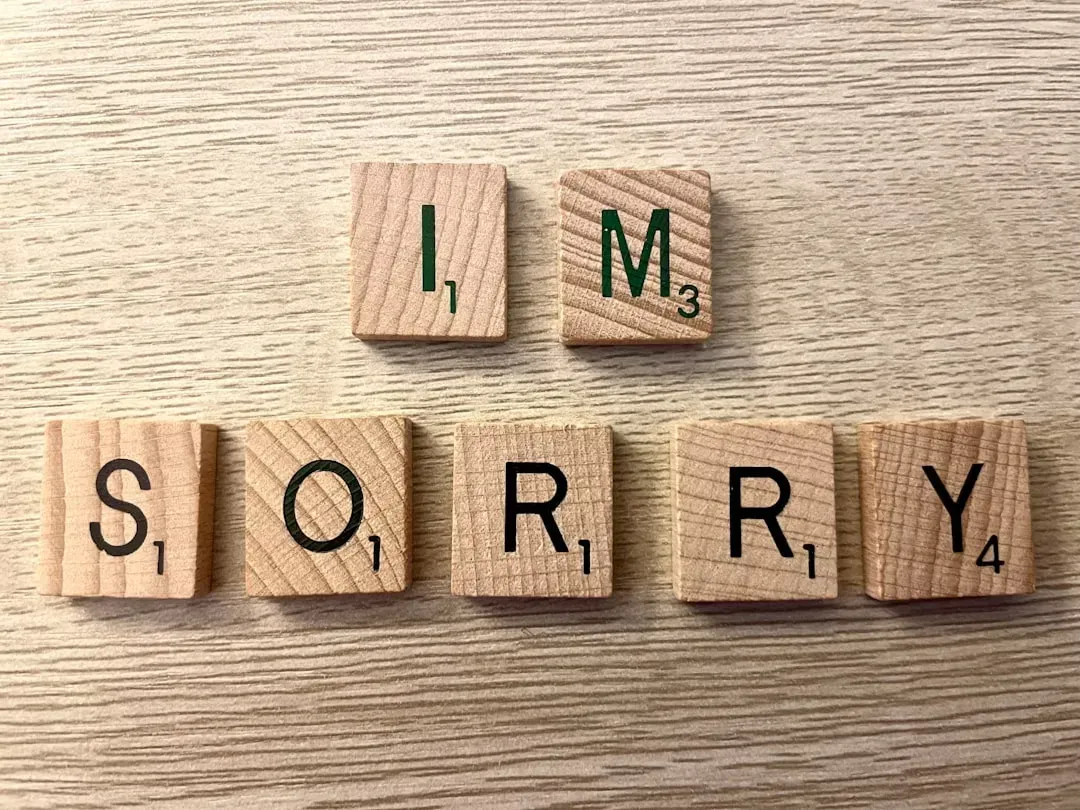
4. Apologies include actual behavior change (Image Credits: Unsplash)
Anyone can say the words “I’m sorry.” A safe relationship shows the difference between an apology used to end an uncomfortable conversation and one that leads to a real shift in behavior. Repeated apologies for the same offense, with no adjustment afterward, tend to signal something other than safety.
Therapists who work with couples often describe this as the gap between verbal repair and behavioral repair. Genuine safety tends to show up in the second kind, where the same mistake doesn’t just get acknowledged, it gets addressed. Over time, patterns shift instead of repeating on a loop.
5. You feel more like yourself, not less

5. You feel more like yourself, not less (Image Credits: Pexels)
A reliable, if informal, test of relationship safety is whether your personality expands or contracts around your partner. Do you laugh the way you naturally laugh? Do you still see friends, hold opinions, and pursue interests that existed before the relationship began?
Isolation from friends and family, even when framed as closeness or protectiveness, is one of the patterns relationship counselors watch for as a red flag. Safe relationships tend to do the opposite. They leave room for a full, separate identity to keep existing alongside the shared one.
6. Financial and major decisions are discussed, not dictated

6. Financial and major decisions are discussed, not dictated (Image Credits: Unsplash)
Money is one of the more common flashpoints in relationships, and how it’s handled says a lot about underlying safety. In stable partnerships, financial decisions, big purchases, and shared responsibilities tend to involve actual discussion rather than unilateral control by one person. Neither partner is kept in the dark about accounts, debts, or income as a form of control.
Financial abuse, where one partner restricts access to money or information as a means of control, is recognized by organizations like the National Domestic Violence Hotline as a distinct and often overlooked form of harm. Its absence, a basic shared transparency around finances, is a quiet but meaningful marker of safety. Nobody has to ask permission to know their own financial situation.
7. Physical affection never comes with pressure attached

7. Physical affection never comes with pressure attached (Image Credits: Unsplash)
In a safe relationship, physical closeness, whether it’s a hug, sex, or simply sitting near each other, isn’t used as a bargaining chip or a source of guilt when it’s declined. Desire is allowed to fluctuate without becoming a source of tension or punishment. Consent isn’t a one time conversation; it’s an ongoing, low key check-in built into daily life.
Sex therapists and relationship educators frequently point out that pressure, even subtle pressure like sighing or withdrawing affection after a no, undermines the basic trust physical intimacy depends on. Genuinely safe relationships tend to treat a partner’s bodily autonomy as non negotiable. There’s no scorekeeping involved.
8. Mistakes get discussed, not weaponized later

8. Mistakes get discussed, not weaponized later (Image Credits: Unsplash)
Everyone brings past mistakes into an argument occasionally, that’s fairly human. But in safe relationships, old issues that have genuinely been resolved don’t keep getting dragged back out during unrelated fights. Vulnerable disclosures, admitted insecurities, or past struggles aren’t stored up as ammunition for future conflicts.
This kind of restraint requires a level of trust that something shared in confidence will stay contained to its original context. Couples therapists often describe this as one of the more subtle tests of emotional safety, since it only becomes visible under stress. When it holds, even during a heated moment, it says something real about the relationship’s foundation.
9. You're not walking on eggshells, even during hard weeks
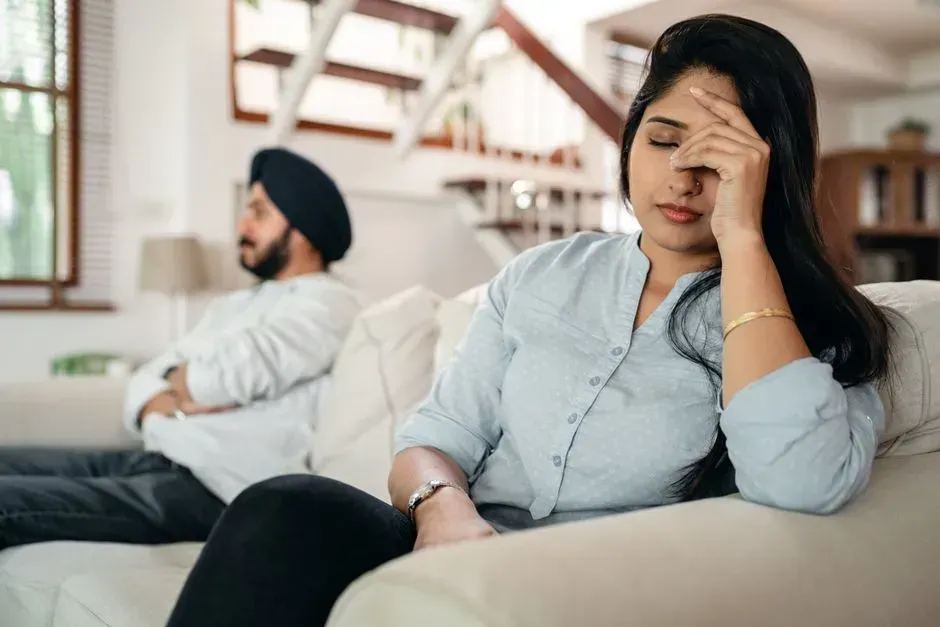
9. You're not walking on eggshells, even during hard weeks (Image Credits: Gallery Image)
Stress happens. Jobs get hard, families get complicated, sleep gets short. A safe relationship absorbs some of that stress without requiring one partner to constantly monitor their words or tone to avoid setting off the other.
The phrase “walking on eggshells” shows up often in psychological literature on relationships marked by unpredictability or intermittent hostility, since it captures the low grade vigilance that builds up over time. Its absence isn’t dramatic or obvious day to day. It shows up more as a background ease, a sense that hard weeks are hard because of outside pressures, not because of what might happen at home.
10. Both people can imagine, and talk about, the relationship ending

10. Both people can imagine, and talk about, the relationship ending (Image Credits: Unsplash)
This one sounds counterintuitive, but it holds up. Safe relationships tend to have two people who could, in theory, describe what it would look like to end things without panic, threats, or catastrophizing. That doesn’t mean either person wants that outcome. It means the relationship isn’t held together by fear of what happens if someone leaves.
Researchers studying commitment note a meaningful difference between relationships sustained by genuine choice and those sustained by fear, obligation, or dependency. When both partners feel free to stay, the staying itself means more. Safety, in this sense, often coexists with a surprising amount of freedom.
These ten signs rarely arrive all at once, and few relationships display every one of them perfectly at every stage. What tends to matter more is the overall pattern, whether these behaviors show up consistently over time rather than as isolated good moments surrounded by tension. Safety, in the end, isn’t a feeling that gets declared once. It’s something a relationship keeps proving, in small ways, again and again.