
There’s a quiet negotiation that happens in many relationships, one that never quite makes it into the actual conversation. A man forms a thought, weighs the likely response, runs the mental odds of it spiraling into a two-hour discussion, and then quietly lets the thought go. It’s not dishonesty. It’s risk management.
Research has found that men often engage in self-censoring, characterized by a reticence to communicate their feelings for fear of conflict or the relationship ending. That pattern tends to build quietly over time. The things left unsaid don’t disappear. They pile up. Here are ten of the most common ones.
1. "I Just Need 30 Minutes Where Nobody Needs Anything From Me"

1. "I Just Need 30 Minutes Where Nobody Needs Anything From Me" (Image Credits: Unsplash)
Many men value independence deeply and may require personal space to recharge emotionally, and understanding this need without taking it personally is part of what makes a relationship work. The problem is that asking for this space rarely comes out cleanly. It sounds like rejection when it’s actually closer to maintenance.
Part of a man’s natural process of dealing with stress involves having a good amount of space and time alone to process and work through real problems. When he disappears into the garage or goes quiet for a bit, it’s usually decompression, not distance. Most men know this about themselves. Saying it out loud, though, is another matter entirely.
2. "I Heard You. I Just Don't Want to Talk About It Right Now"

2. "I Heard You. I Just Don't Want to Talk About It Right Now" (Image Credits: Unsplash)
Stonewalling is more commonly observed in men than in women, as men are more likely to withdraw during conflict to self-soothe and avoid emotional flooding, and this is associated with increased physiological stress markers such as elevated heart rate and blood pressure. So what looks like indifference is often a body that’s already overwhelmed. The withdrawal is biological, not theatrical.
Many men tend to withdraw emotionally as a coping mechanism to avoid confrontation or to process their feelings internally, and this behavior is often misunderstood but is usually a way for them to regain composure before re-engaging in the conversation. What men often wish they could say is simply: “Give me an hour, and I’ll actually be able to talk about this properly.” That sentence, somehow, never quite lands without becoming the topic itself.
3. "I'm Proud of What I Do for This Relationship, Even If It Goes Unnoticed"

3. "I'm Proud of What I Do for This Relationship, Even If It Goes Unnoticed" (Image Credits: Unsplash)
Men often value respect, appreciation, and trust in relationships, and they need to feel valued for their efforts and respected as individuals, which helps them open up emotionally and strengthen the bond with their partner. The issue isn’t insecurity. It’s that a lot of what men do in relationships is practical and therefore invisible. Fixing things, planning logistics, quietly managing stress so it doesn’t spill onto the household.
While women might verbalize feelings more freely, men often show emotions through actions rather than words, and this doesn’t mean men feel less. Rather, their way of expressing affection or stress may be less direct, and a man might prefer problem-solving or offering practical support instead of discussing feelings at length. Acknowledging that quietly, without turning it into a tally of contributions, would mean a lot. Saying it risks sounding like a complaint.
4. "Sometimes I Just Want to Fix the Problem, Not Explore It"

4. "Sometimes I Just Want to Fix the Problem, Not Explore It" (Image Credits: Pexels)
Women tend to converse to sustain relationships, while men prefer to solve problems and realize goals, and so in a heterosexual relationship, when a man doesn’t want to discuss his relationship, his female partner may assume, understandably, that the relationship is in trouble. That’s the gap in a nutshell. He’s already moved to solutions. She’s still processing. Neither approach is wrong, but the collision point is exhausting.
Research shows that the male partner tends to take a more logical approach more often than the female partner, and these findings underscore the distinct communication styles of men and women. Most men don’t want to overrule the emotional conversation. They just genuinely believe that identifying the problem and solving it is the kindest thing they can do. Saying this plainly, without it becoming a referendum on emotional intelligence, feels nearly impossible.
5. "I Don't Always Know How I Feel, and That's Not Me Being Evasive"

5. "I Don't Always Know How I Feel, and That's Not Me Being Evasive" (Image Credits: Unsplash)
Less than roughly one quarter of American men are open to having conversations about mental health in relationships. Part of that reluctance isn’t avoidance. It’s genuine uncertainty. Many men simply haven’t had much practice naming emotions with precision, and being asked to do it in real time, mid-conflict, is a bit like being asked to translate a language you’re still learning.
Masculine socialisation leaves men feeling stigmatised for their mental health problems. Add to that the fear of saying the wrong thing and making it worse, and silence starts to look like the safer option. Men often wish they could admit “I don’t know what I’m feeling yet” without it immediately being read as emotional unavailability or a lack of care.
6. "Can We Just Have a Nice Evening Without Discussing Us?"
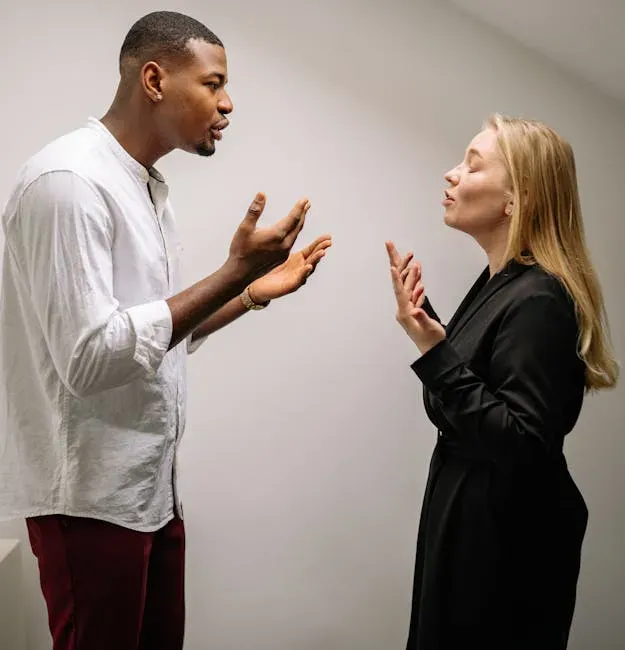
6. "Can We Just Have a Nice Evening Without Discussing Us?" (Image Credits: Pexels)
According to a YouGov survey conducted in early 2026, the topic Americans in relationships are most likely to argue about is tone of voice or attitude, with more than a third of respondents saying they sometimes argue about this with a partner. Tone. Not substance. Just tone. That tells you something about how much of relationship friction is really about the meta-conversation: how things get said, not what gets said.
There are evenings where a man just wants to sit next to the person he loves, watch something silly on TV, and not perform emotional availability. That’s not a red flag. Spending time apart, or even just in calm parallel company, can create a sense of longing and anticipation that enhances the excitement and desire within the relationship. Saying “I don’t want to talk about us tonight” sounds alarming, even when it’s actually an act of contentment.
7. "I Feel Criticized More Often Than I Feel Appreciated"

7. "I Feel Criticized More Often Than I Feel Appreciated" (Image Credits: Pexels)
Psychologist John Gottman identified four negative communication patterns that predict relationship failure, which he termed the “Four Horsemen of the Apocalypse,” including criticism, contempt, defensiveness, and stonewalling. Criticism tops that list not because partners are cruel, but because it’s easy to notice what’s wrong and harder to name what’s quietly right. Men feel this acutely, especially when their actions are the primary way they show love.
Research from 2024 found that roughly one in four American men have felt pressure from a romantic partner to change their attitude. Feeling perpetually in need of adjustment wears on a person. Most men won’t say this because it sounds like a counterattack. So it stays inside, slowly shaping how willing they are to try new things or be vulnerable, until the distance becomes hard to explain.
8. "My Silence Doesn't Mean Something Is Wrong"
8. "My Silence Doesn't Mean Something Is Wrong" (Image Credits: Pexels)
According to researcher Albert Mehrabian, only a small fraction of communication relies on actual words, with the remaining portion stemming from tone and nonverbal cues, and despite this, verbal language is crucial in shaping how people perceive our words. That dynamic creates a specific problem for quieter men. Their silence gets interpreted through an emotional lens that doesn’t match their internal state.
Sometimes he’s quiet because he’s thinking about the game. Sometimes because he’s mentally chewing on a work problem. Men who are comfortable in their own space often don’t feel the need to fill every moment with chatter or activity, and they know how to sit with their thoughts and use that time for personal growth. Explaining that without it becoming a conversation about what’s “really going on” is a communication puzzle most men quietly give up on.
9. "I Want to Be Trusted to Handle Things My Own Way"

9. "I Want to Be Trusted to Handle Things My Own Way" (Image Credits: Unsplash)
Researchers have found that males often communicate to establish and maintain a sense of agency and competence, while women tend to communicate with the relationship in mind, constantly trying to find ways to improve it by relating to the other person. Neither style is superior, but the friction is real. When a man does something his own way and it gets corrected or second-guessed, it often lands harder than the partner intended.
Using “I” statements helps share experience without putting a partner on the defense, and saying something like “I’m feeling frustrated because I don’t feel prioritized” can open the door for discussion. Men could use that same tool in reverse. “I feel competent. I’d like the chance to show that.” The obstacle is that saying it sounds defensive before the first word is even out. So the request never happens, and the dynamic continues.
10. "I Love You. I Just Don't Always Love Talking About Our Relationship"

10. "I Love You. I Just Don't Always Love Talking About Our Relationship" (Image Credits: Unsplash)
Research shows that nearly three quarters of Gen Z and a strong majority of Millennials who date men say it’s important for men to know that emotional intimacy is just as important as physical intimacy. That expectation is fair. The difficulty is that emotional intimacy, for many men, is built through shared experience rather than shared dialogue. Being together, doing things together, building something together. That’s the love language, even if it doesn’t always come with a vocabulary.
Men’s self-work in relationships often focuses on knowing themselves well enough to communicate more authentically with partners. The wish to say “I love you without needing to narrate it” isn’t emotional laziness. It’s a different grammar of closeness. Research has found that the most satisfied couples are those who do not avoid discussion of relationship problems entirely, which suggests the goal isn’t silence forever. It’s finding a rhythm where some things can be felt without immediately becoming agenda items.
Most of these ten things aren’t complaints. They’re requests, quietly held. The irony is that the fear of them becoming a conversation is precisely what prevents the kind of understanding that would make the conversation unnecessary in the first place. A relationship where both people can speak plainly, without calibrating every sentence for fallout, is rarer than it should be. It’s also worth working toward.