
Long before anyone talked about generational trauma or inherited financial anxiety, there was a quieter transfer happening at kitchen tables across postwar America. Parents who had lived through breadlines and blackout curtains passed something down to their kids that never showed up in a history textbook: a set of everyday habits so ingrained that most Boomers never stopped to ask where they came from.
Look closely at how Boomers manage money, talk about their jobs, or even fix a leaky faucet, and you start to see the fingerprints of the generation that raised them. The Silent Generation didn't write manifestos or lead marches for their own values. They just modeled a way of living, and it stuck.
1. A reflex to save before spending

1. A reflex to save before spending (Image Credits: Unsplash)
Boomers grew up watching parents who treated every dollar like it might be the last one for a while. Having experienced the economic hardship of the Great Depression as children, members of the Silent Generation developed a strong sense of frugality, risk aversion, and a desire for financial security. That wasn’t just a personal quirk, it was a survival strategy passed down at the dinner table.
Many Boomers still pay off credit cards in full or feel genuine discomfort carrying a balance, even when they can easily afford not to. Having witnessed economic collapse during the Depression, the Silent Generation is extremely financially cautious, saving aggressively, avoiding unnecessary risks, and preferring tangible assets like homes and savings accounts. That caution didn’t disappear with the next generation, it just got a little less extreme.
2. Sticking with one employer out of loyalty, not just necessity

2. Sticking with one employer out of loyalty, not just necessity (Image Credits: Unsplash)
Job-hopping was practically unheard of in Silent Generation households, and that mindset rubbed off. Loyalty to one’s employer was the norm, with many people spending their entire careers in a single company, valuing stability and job security above potential career prospects, which created a stable workforce and contributed to the postwar economic boom. Boomers absorbed that lesson early, even if the economy eventually forced some of them to adapt.
Interestingly, Boomers didn’t copy the pattern exactly. While they were not loyal to a single organization or firm compared to previous generations, they are not often job-hoppers, and they often feel that changing jobs negatively affects their careers. It’s a softened version of their parents’ loyalty, but the underlying discomfort with frequent job changes is still there.
3. Fixing things instead of tossing them

3. Fixing things instead of tossing them (Image Credits: Unsplash)
Anyone who’s watched a Boomer parent patch a torn jacket or keep a car running for two decades has seen this habit in action. They often repair an item before replacing it, both at home and in the workplace, a trait passed straight down from the Silent Generation. It wasn’t about being cheap so much as being trained never to waste.
The instinct runs deeper than most people realize. From their childhood experiences during the Depression and the example of frugality set by their own parents, Silents tended to be thrifty and even miserly, preferring to maximize a product’s lifespan, which led some to develop hoarding behaviors in the guise of not being wasteful. Boomers didn’t inherit the hoarding tendency at the same intensity, but the “fix it, don’t ditch it” mentality still shows up in garages and toolsheds everywhere.
4. Trusting institutions first, questioning them second

4. Trusting institutions first, questioning them second (Image Credits: Unsplash)
There’s a reason so many Boomers default to trusting doctors, banks, and government agencies before doubting them. The Silent Generation was raised to respect elders, follow rules, and trust institutions, valuing hierarchy, proper etiquette, and doing things by the book, and this generation rarely questioned authority figures like teachers, doctors, or government officials. That deference didn’t vanish overnight when it got passed to the next generation.
Boomers grew up in homes where rule-following was simply expected, not negotiated. Even as they later challenged plenty of institutions during their own youth, many still carry a baseline respect for order and process that their parents modeled decades earlier at home.
5. Treating homeownership as the ultimate marker of stability

5. Treating homeownership as the ultimate marker of stability (Image Credits: Unsplash)
For the Silent Generation, owning a home wasn’t just a financial goal, it was proof that the hard years were finally over. That value transferred directly. By age 35, about 62% of Boomers owned homes, reflecting how early and strongly this generation prioritized settling down and putting down roots.
Compare that to more recent generations, and the contrast becomes even clearer. Only 13% of Millennials got married and became parents early, and by age 35, 49% owned homes, reflecting a shift towards postponing traditional milestones. Boomers moved fast on homeownership because their parents had drilled in the idea that a paid-off house equals safety.
6. Keeping feelings close to the chest

6. Keeping feelings close to the chest (Image Credits: Unsplash)
The nickname “Silent Generation” wasn’t really about being quiet in the modern sense. This generation earned the nickname not because they lacked opinions, but because they were raised to value discretion, humility, and quiet strength. That reserved style of communication left a mark on how their kids were raised in turn.
Plenty of Boomers grew up hearing some version of the idea that children should be seen and not heard, and that emotional restraint was simply good manners. Many of the Silents raised their children to be seen and not heard. It’s part of why a lot of Boomers still prefer to handle problems privately rather than airing them out loud.
7. Delayed gratification, even when it isn't necessary anymore

7. Delayed gratification, even when it isn't necessary anymore (Image Credits: Pexels)
Waiting to buy something until you’d actually saved for it wasn’t a virtue for the Silent Generation, it was just how life worked. Experiencing childhood during the Great Depression and World War II, they valued frugality and delayed gratification. Boomers absorbed that patience even though they came of age during a much more prosperous stretch of American history.
That patience didn’t disappear once the economy improved. Growing up, scarcity was a common reality because of widespread unemployment and rationing for the war effort, and this fostered frugality and delayed gratification, attitudes that influenced the Silent Generation’s response to the world even as times improved. Many Boomers still hesitate before a big purchase, almost out of habit rather than necessity.
8. Marrying and settling down early

8. Marrying and settling down early (Image Credits: Pexels)
The Silent Generation set records for how young they married and started families, and that pattern echoed forward. As with their own parents, Silents tended to marry and have children young, and American Silents are noted as being the youngest of all American generations in the age of marriage and parenthood. Boomers followed a similar early-commitment script, at least at first.
Life didn’t stay entirely traditional once Boomers grew into adulthood, though. What set the Boomers apart from their parents was not their marriage rates, or that they married in their early 20s, but rather that they were much more likely to be divorced, and divorced Boomers were less likely to remarry than their counterparts from the Silent Generation. Still, the instinct to settle down young came straight from the household they grew up in.
9. Preferring face-to-face conversations over digital shortcuts

9. Preferring face-to-face conversations over digital shortcuts (Image Credits: Unsplash)
Long before texting and video calls existed, the Silent Generation built relationships through direct, in-person contact, and that value transferred surprisingly intact. Boomers value face-to-face interactions and prefer meetings within the workplace as the best communication mode. It’s a small thing, but it explains why so many Boomers still pick up the phone instead of sending a quick message.
This preference isn’t about resisting technology out of stubbornness. It reflects a communication style modeled at home decades earlier, one built around directness and personal accountability rather than convenience.
10. A quiet sense of civic and patriotic duty
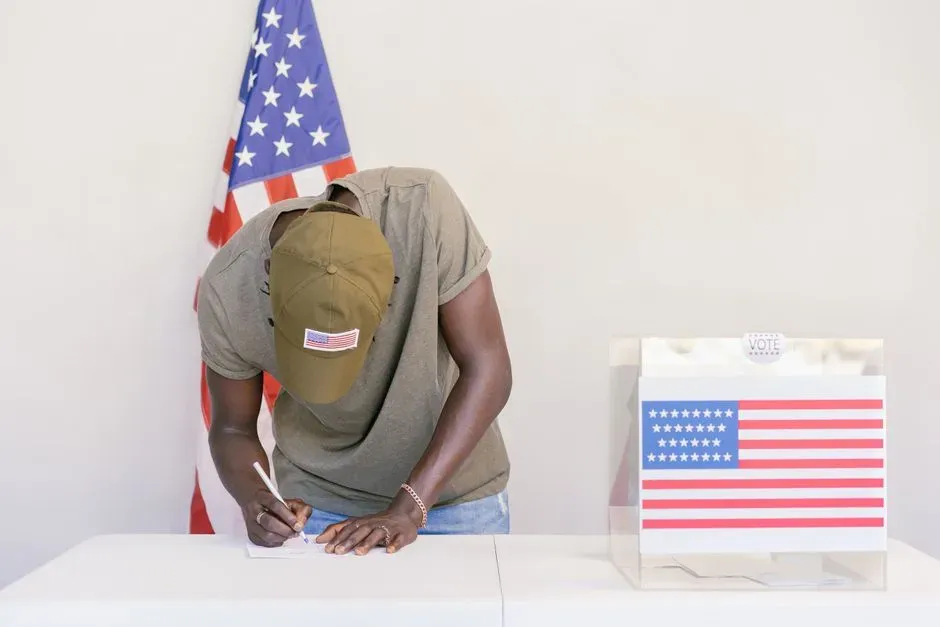
10. A quiet sense of civic and patriotic duty (Image Credits: Pexels)
The Silent Generation came of age believing that showing up, whether at the voting booth, in the workforce, or for their country, was simply part of being a responsible adult. Their devotion extended to family, employers, and country, forming a loyalty that shaped how they lived every part of their lives. That same sense of obligation carried into how Boomers approached civic life.
It wasn’t loud or performative, just steady and consistent. World War II instilled a sense of patriotism, duty, and a willingness to sacrifice for the greater good in many members of the Silent Generation, and the war also led to increased opportunities for education and employment after the conflict ended. Boomers grew up watching that quiet duty in action long before they understood exactly where it came from.
The habits Boomers carry today didn’t appear out of nowhere. They were absorbed slowly, from parents who rarely explained themselves but consistently modeled how to work, save, and show up. Decades later, those lessons are still visible, sometimes softened, sometimes stubbornly intact, but never entirely gone.