
Some people just carry themselves differently. Not loudly, not with obvious virtue signaling, but in the small consistent ways they treat others, hold themselves accountable, and show up when no one is watching. It’s the kind of thing you notice over time rather than in a single interaction.
Character defines who a person is at their core, and it’s forged by ethics, values, upbringing, and environment. These elements work together to shape a person’s moral compass and behavior. The habits below aren’t dramatic gestures. They’re quiet, everyday patterns that tend to trace back to a genuinely values-driven upbringing.
1. They Tell the Truth Even When It's Uncomfortable

1. They Tell the Truth Even When It's Uncomfortable (Image Credits: Unsplash)
Honesty is a key indicator of trustworthiness. A person who consistently tells the truth, even when it’s uncomfortable or inconvenient, earns trust over time. This kind of person does not deceive others or keep secrets that could harm them. It’s a habit, not a performance, and it tends to be consistent across high-stakes situations and trivial ones alike.
Children who are raised with great values are consistently honest and understand the importance of telling the truth. They act with integrity and with consideration for others because they were raised to understand that the feelings and experiences of other people matter. That early lesson has a way of hardwiring itself into how someone navigates the world as an adult.
2. They Own Their Mistakes Without Deflecting

2. They Own Their Mistakes Without Deflecting (Image Credits: Pexels)
Accountability is a fundamental trait of genuinely good people. It involves taking responsibility for your actions and being honest with yourself and others. Most people find it genuinely uncomfortable to admit fault, which is exactly why those who do it naturally stand out so clearly.
Good people aren’t perfect; they’re accountable. They own mistakes, apologize sincerely, and change their behavior afterward. Mistakes don’t cancel goodness; refusal to grow does. That distinction is worth holding onto. Accountability isn’t about self-flagellation. It’s about honesty with consequences.
3. They Listen More Than They Talk

3. They Listen More Than They Talk (Image Credits: Unsplash)
Listening is not waiting to talk. It is showing a real interest in someone’s story. You ask a question, then you let the silence hang so the answer can grow. That kind of patience is increasingly rare, and when you encounter it, you feel it immediately.
A genuinely good person does not need to be the star of every interaction. They avoid dominating the conversation and instead look for balance. People raised with real values tend to understand, often from watching their own parents, that being heard is a gift worth giving.
4. They Treat Everyone With the Same Basic Dignity

4. They Treat Everyone With the Same Basic Dignity (Image Credits: Pixabay)
When someone treats every person as worthy of basic dignity, it is a strong sign that their goodness is not an act. It is who they are, even when no one “important” is watching. The server at a restaurant, the maintenance worker in a building, the stranger struggling with a heavy bag. Consistency across status levels says everything.
Unlike performative niceness, genuine goodness persists when no one watches. They treat janitors with the same respect as CEOs. This isn’t a rule they follow. It’s a reflex shaped by years of being taught that every person has inherent worth.
5. They Practice Genuine Gratitude
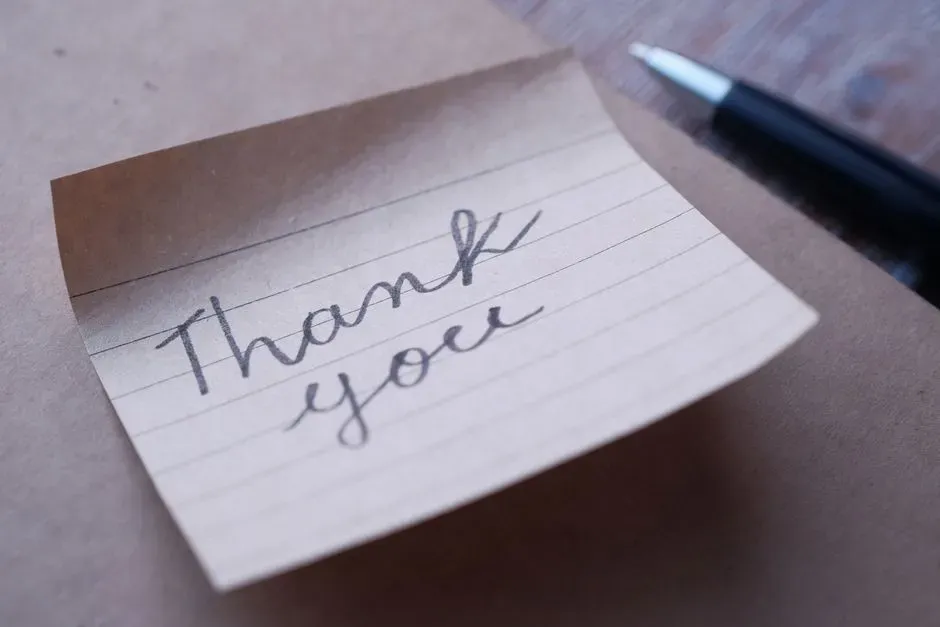
5. They Practice Genuine Gratitude (Image Credits: Pexels)
Gratitude, the practice of acknowledging and appreciating the positive aspects of life, has been widely studied in psychology. The research consistently points to the same conclusion: real gratitude, the kind that isn’t performed for an audience, tends to be one of the most reliable markers of good character. It reflects an awareness that life involves others doing things for you.
Kids who are raised well are taught to keep in mind that they aren’t any better than anybody else and that life takes a lot of hard work. Gratitude is the natural extension of that teaching. It doesn’t need to look dramatic. A quiet thank-you, a note, a remembered favor. That’s usually enough to signal a lot.
6. They Give Without Keeping Score

6. They Give Without Keeping Score (Image Credits: Pexels)
They do not track favors like debt. That spirit is called altruism. It builds strong communities and strong teams. People raised with real values tend to give from a place of genuine motivation rather than social calculation. The difference is subtle but detectable over time.
Well-raised kids give more than they take. When it comes to their time, energy and resources, they do their best to be a net asset instead of a net drain in any situation. That orientation doesn’t disappear in adulthood. If anything, it becomes more pronounced as life gets more complicated and the temptation to protect one’s own resources grows stronger.
7. They Stay Consistent When No One Is Watching
7. They Stay Consistent When No One Is Watching (Image Credits: Pexels)
Consistency in actions and words is another marker of a good person. This trait reflects integrity and honesty. When someone says they will do something and then follows through, it builds trust. This kind of consistency is quiet by nature. There’s no announcement. People simply notice it over time.
Habit-identity associations were stronger when participants explicitly considered which values their behaviors served. The results suggest that habits may serve to define who we are, in particular when these are considered in the context of self-related goals or central values. In other words, doing the right thing habitually isn’t accidental. It reflects a deep alignment between identity and behavior.
8. They Have Empathy That Goes Beyond Surface Level
8. They Have Empathy That Goes Beyond Surface Level (Image Credits: Unsplash)
Many parents believe empathy is one of those soft skills, like courage or humility, that are important to healthy development. According to educational psychologist Dr. Michele Borba, empathy reigns supreme among social-emotional skills and plays a surprising role in predicting kids’ life-long success. That empathy doesn’t vanish once childhood ends. It becomes a kind of social intelligence that quietly shapes every adult relationship.
People raised with a strong sense of fairness are able to engage in perspective-taking where they consider the views and experiences of others. It’s the difference between someone who sympathizes with your problem and someone who actually pauses to understand your experience. One is polite. The other is a genuine habit of mind.
9. They Keep Their Promises

9. They Keep Their Promises (Image Credits: Pexels)
Promises are easy to make when life is calm. They matter most when schedules shift and you feel stretched. If you text to say you are running late, or you reschedule with care, you are showing promise-keeping energy. Small acts like these build trust in families, teams and friendships.
Dependability is essential. A trustworthy person follows through on commitments and promises. If they say they will do something, they do it. Their reliability breeds confidence and trust in their relationships. Reliability at this level isn’t something most people consciously decide to practice. It tends to have been modeled for them growing up.
10. They Hold Themselves to a Standard, Not Just Others
10. They Hold Themselves to a Standard, Not Just Others (Image Credits: Unsplash)
A key sign of a good person is that they act with integrity. This means being honest and transparent, even when it’s difficult. People with integrity honor their commitments. They make promises they can keep and openly acknowledge when they cannot fulfill them. The emphasis here is on the self-directed nature of this standard, not enforcing it outward but holding it inward.
Psychologists have found that people who maintain a strong connection to their values experience greater psychological resilience. That inner standard, developed through upbringing, becomes a stabilizing force rather than a source of rigidity. It helps a person stay grounded when circumstances push back.
11. They Approach Fairness as a Default, Not an Effort

11. They Approach Fairness as a Default, Not an Effort (Image Credits: Unsplash)
Fairness involves treating others equitably, justly, and without bias. Psychological research emphasizes the importance of fairness in promoting trust, cooperation, and social harmony. For someone raised with real values, fairness isn’t something they have to consciously invoke. It’s the starting position.
Fairness is a crucial value that some kids aren’t taught. Unlike parents who tell their kids to do whatever it takes to win, those who emphasize the value of treating others with respect raise children who are able to engage in perspective-taking where they consider the views and experiences of others. That particular habit, fairness as a reflex rather than a calculation, is perhaps the most telling of them all.
None of these habits announce themselves. That’s the point. Values instilled in childhood tend to show up in the texture of everyday behavior rather than in grand declarations. The person who was raised with real values often doesn’t know they’re signaling anything at all. They’re simply living out what they were quietly taught.