
There's a particular kind of confusion that happens at family dinners now. Gen X parents watch their twenty-something kids do something completely unremarkable to them, like ignoring a phone call from a number they don't recognize, and react as if they've just witnessed a small act of rebellion. It isn't rebellion. It's just a different set of defaults, built by different tools and different economic conditions, and the gap between the two generations keeps showing up in small, everyday moments.
What follows isn't a list of complaints from either side. It's a rundown of habits and attitudes that have become second nature to Gen Z, backed by actual survey data, that still leave a lot of Gen X people scratching their heads.
1. Letting every unknown call go straight to voicemail

1. Letting every unknown call go straight to voicemail (Image Credits: Pexels)
For Gen X, a ringing phone used to mean something urgent enough to warrant an interruption. For Gen Z, it usually means a scam, a robocaller, or something that could just as easily wait for a text. A recent survey conducted by Uswitch found that a quarter of people aged 18 to 34 never answer phone calls, preferring to respond via text or investigate unknown numbers online.
The habit isn’t laziness so much as a filtering system. One survey found that 66% of Gen Z respondents intentionally avoid replying to unfamiliar numbers in order to protect their peace, compared to only 45% of millennials. To someone who grew up racing to catch the landline before it stopped ringing, that level of avoidance can look almost rude, even though it usually isn’t personal at all.
2. Announcing you're in therapy like it's no big deal

2. Announcing you're in therapy like it's no big deal (Image Credits: Pexels)
Mental health used to be a closed-door topic in most Gen X households, something handled quietly if it was handled at all. Gen Z has flipped that script almost entirely, treating therapy the way earlier generations treated a dentist appointment. A 2025 report found that 42% of Gen Z Americans say they are currently in therapy, a 22% increase since 2022.
What might surprise Gen X even more is how openly this gets discussed. Among Gen Z and Millennials currently in therapy, 83% openly tell others that they are going to a therapist. A generation that grew up watching its parents avoid the subject entirely now brings it up casually in group chats and even at work, which can feel jarring to anyone raised on the idea that you just push through.
3. Leaving a job after a year without a second thought

3. Leaving a job after a year without a second thought (Image Credits: Unsplash)
Sticking with one employer for a decade or more used to be seen as proof of character. Gen Z largely doesn’t buy that framework, and the numbers back up just how different their approach is. A 2025 Randstad survey of over 11,000 workers found that Gen Z’s average tenure in the first five years of their career is just 1.1 years, compared to 2.8 years for Gen X.
This isn’t simply a personality trait, either. Job-hopping has lost much of its financial upside, with the salary difference between people who stay in their jobs and those who switch reaching its lowest level in ten years. Many economists now argue the behavior has more to do with a shaky entry-level job market than with any lack of ambition, but that nuance rarely survives the dinner-table version of the conversation.
4. Wanting to be an influencer as a real career goal

4. Wanting to be an influencer as a real career goal (Image Credits: Pexels)
Ask a Gen X parent what they wanted to be at fourteen, and the answer probably involved a stethoscope, a badge, or a briefcase. Ask a lot of Gen Z teenagers the same question today, and the answer might just be a ring light. A Morning Consult survey of over 2,000 adults found that 57% of Gen Zers said they’d be an influencer if given the opportunity, compared to 41% of adults from all age groups.
It isn’t just a fantasy, either. A majority, 53%, of Gen Zers surveyed considered influencing a respectable career choice, and a similar share said they’d leave their current job if being an influencer could sustain their lifestyle. For a generation raised on the idea that a “real job” meant an office and a title, watching kids build spreadsheets around brand deals and affiliate links takes some adjusting.
5. Running a side hustle even while working full time

5. Running a side hustle even while working full time (Image Credits: Unsplash)
Having one job used to be the whole point. For a lot of Gen Z, one paycheck often isn’t the plan, or even the goal. Among Gen Z workers holding full-time roles, 31% said they’d prefer to combine that job with a second income source on the side.
This overlaps with the loyalty question too, since fewer young workers see any single job as a long-term commitment. Over half of Gen Z workers surveyed, 52%, said they were actively looking for a new role, while a mere 11% planned to stay in their current job long term. Gen X, who often measured stability by a steady single paycheck, tends to see this constant hustling as exhausting rather than empowering.
6. Questioning whether college is even worth it

6. Questioning whether college is even worth it (Image Credits: Pexels)
For Gen X, a four-year degree was practically the default path, the thing you did before adult life started for real. Gen Z has grown up watching that equation get shakier by the year. Recent data shows the unemployment rate for men ages 22 to 27 is almost the same regardless of whether they have a college degree or not.
That statistic alone has changed how a lot of young people plan their twenties. According to social commerce platform Whop, 42% of US teens are actively earning money online through their own digital channels instead of waiting for a diploma to open doors. To someone who spent years paying off student loans on the assumption that a degree was non-negotiable, skipping it entirely can look like a gamble bordering on recklessness.
7. Doing almost everything through an app instead of in person
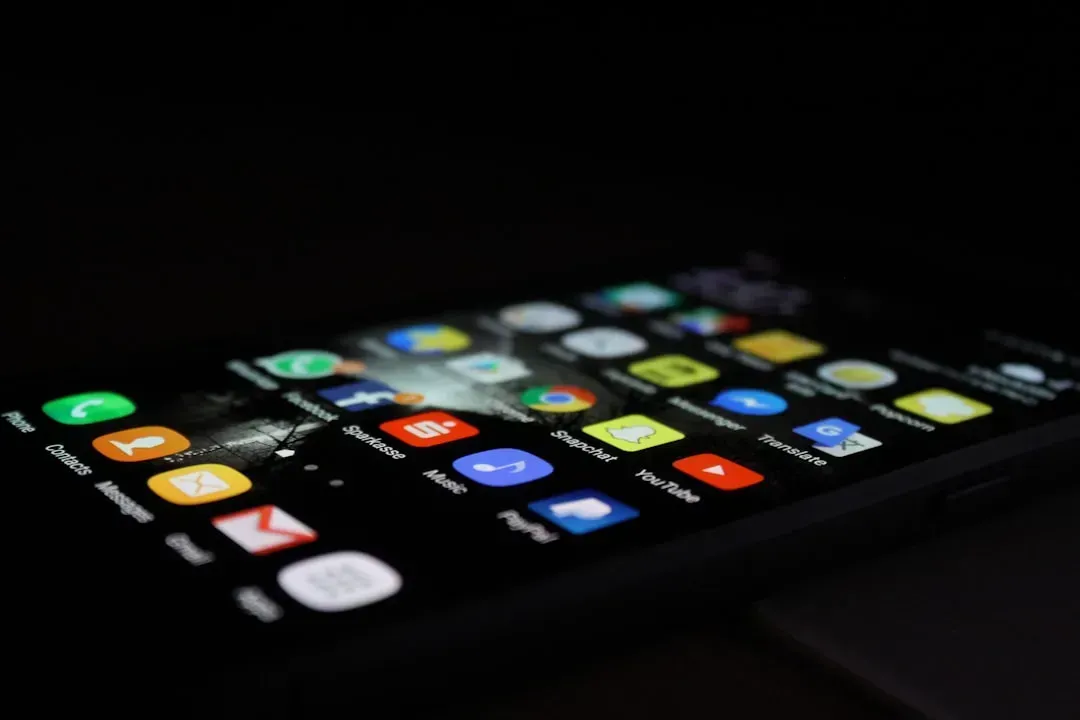
7. Doing almost everything through an app instead of in person (Image Credits: Unsplash)
Ordering food, hailing a ride, splitting rent, even talking to a doctor: Gen Z routes nearly all of it through a screen rather than a phone call or a face-to-face errand. This isn’t new behavior exactly, but the scale of it keeps expanding, and it quietly replaces small interactions that used to fill a day, like chatting with a cashier or calling a restaurant directly. Gen X grew up with those little exchanges built into daily life, so watching an entire transaction happen without a single spoken word feels oddly sterile.
The shift also changes what counts as a “normal” errand. Booking a therapy session, paying a friend back, or scheduling a haircut can all happen silently through an app, with no human contact required at any point. For a generation that once had to use a payphone just to check in with someone, that level of frictionless silence takes some getting used to.
8. Expecting remote or hybrid work as the baseline, not a perk

8. Expecting remote or hybrid work as the baseline, not a perk (Image Credits: Unsplash)
Gen X came up in a world where being physically present at your desk was practically the definition of working hard. Gen Z, many of whom entered the workforce during or right after the pandemic, never fully absorbed that assumption, and they don’t see why they should. To them, flexibility isn’t a bonus tacked onto a good job offer, it’s closer to a baseline expectation.
This has turned into one of the more persistent points of friction in modern offices, where managers raised on face time struggle to evaluate output from people they rarely see. It isn’t that Gen Z workers don’t want structure, it’s that they measure commitment differently, often by results rather than hours logged in a chair. That distinction alone can be enough to spark an entire generation’s worth of eye-rolling on both sides.
9. Using AI tools for basically everything, without shame

9. Using AI tools for basically everything, without shame (Image Credits: Unsplash)
Gen X remembers a world where writing an essay meant sitting with a blank page and just grinding through it. For a lot of Gen Z, reaching for an AI tool to draft an email, summarize a reading, or brainstorm an idea is about as controversial as using a calculator. It’s treated less like cheating and more like a normal extension of how work gets done.
This habit has crept into schoolwork, job applications, and even everyday communication, often without much internal debate about whether it’s appropriate. To older generations who spent years developing skills the slow way, this can look like shortcutting effort itself, even though younger workers usually see it as simply using the tools available to them. The disagreement isn’t really about capability, it’s about what counts as authentic effort in the first place.
10. Being casual about pronouns and fluid gender identity

10. Being casual about pronouns and fluid gender identity (Image Credits: Pexels)
For a lot of Gen X adults, gender was rarely discussed outside of a simple binary, and pronouns weren’t something anyone thought to ask about. Gen Z grew up in classrooms and online spaces where introducing yourself with your pronouns became fairly routine, treated less as a political statement and more as basic courtesy. That shift alone can feel like an entirely new social language to navigate for anyone who didn’t grow up with it.
The difference isn’t just linguistic, it reflects a broader comfort with identity as something flexible rather than fixed. Many Gen Z people move through friend groups, workplaces, and families where gender-neutral language is simply expected, not up for debate. Gen X, even when supportive, often describes feeling like they’re constantly relearning etiquette that used to feel settled.
11. Getting news and life updates from social media, not traditional outlets

11. Getting news and life updates from social media, not traditional outlets (Image Credits: Unsplash)
Gen X still tends to associate real news with a broadcast, a newspaper, or at least a website with a masthead. Gen Z largely skipped that step entirely, absorbing headlines, opinions, and even breaking news through short videos and creator commentary instead. It isn’t that they don’t care about current events, it’s that the delivery method looks completely different.
This extends beyond politics into everyday life updates too, where a status change, a new job, or even a relationship shift often gets announced through a post before it’s mentioned in conversation. For Gen X, who learned news through fixed schedules and trusted mastheads, watching credibility get built through follower counts and algorithmic reach instead of institutional reputation remains one of the harder shifts to fully accept.
None of these habits exist in a vacuum. They grew out of different economic pressures, different technology, and a workplace that stopped offering the kind of stability Gen X once took for granted. What looks like a values gap on the surface is often just two generations adapting to very different versions of the same world, using whatever tools happened to be available to them at the time.