
Parenting in 2026 comes loaded with invisible pressure. There's always another article warning you that you're doing something wrong, another expert reframing what "good" looks like, another trend making rounds on social media that leaves you second-guessing routines you've followed for years. It's exhausting, and for many parents, that exhaustion has become the norm.
The good news is that a growing body of research and a wave of child development specialists are pointing in a surprisingly liberating direction: some of the things parents work hardest at are simply not necessary. A few of them are actively counterproductive. Letting go of these habits doesn't make you a less devoted parent. It might actually make you a better one.
1. Keeping Your Child Constantly Entertained

1. Keeping Your Child Constantly Entertained (Image Credits: Pexels)
The impulse to fill every quiet moment is understandable, but it's one of the most common habits experts encourage parents to release. More families are beginning to treat boredom not as a lapse in parenting but as a constructive space that builds creativity, problem-solving skills, and resilience. That shift reflects a real change in how child development specialists think about downtime.
Experts reinforce the idea that free play and downtime are essential, not optional, for healthy child development, and findings from The Harris Poll show that children want more real-world freedom and less adult control over their time. In fact, a 2026 clinical report reaffirmed by the American Academy of Pediatrics emphasizes that play strengthens brain structure and function, particularly executive skills such as impulse control, emotional regulation, and goal-setting.
2. Helicopter Parenting and Doing Tasks Your Child Can Handle

2. Helicopter Parenting and Doing Tasks Your Child Can Handle (Image Credits: Pexels)
Helicopter parenting is a style where parents hover over their kids and tend to micromanage them, which can be counterproductive if the goal is to raise autonomous kids. Research published in journals like Child Development has confirmed just how widespread this has become. Overparenting, which means taking over and completing developmentally appropriate tasks for children, is pervasive and hurts children's motivation.
Parents that provide excessive assistance and anticipatory problem solving implicitly convey negative feedback to children, suggesting they are not competent and unable to tackle problems on their own, which consequently undermines children's sense of competence and control. Stepping back on age-appropriate tasks isn't indifference. It's one of the most effective ways to build genuine confidence.
3. Praising Everything Your Child Does

3. Praising Everything Your Child Does (Image Credits: Unsplash)
Most parents know praise is good for kids. What's less understood is that the type of praise matters enormously. Research has found that person praise can decrease young children's motivation to challenge themselves and lead to feelings of helplessness if they fail, while a long-term study of children whose mothers used process praise showed these children were more likely to be confident in preschool and later in primary school.
More broadly, constant praise may mean children unconsciously feel they are doing things for adult approval rather than for themselves, which can work against the development of self-regulation and a healthy sense of identity. The fix isn't to stop encouraging your child. It's to shift from praising who they are to acknowledging what they did and how they did it.
4. Overscheduling After-School Activities

4. Overscheduling After-School Activities (Image Credits: Pexels)
Families are letting go of the "one more activity" mindset so everyone can have breathing room. That shift is backed by what researchers have observed in children's behavior and wellbeing. The pressure for early achievement has reached concerning levels in modern parenting, with parents increasingly pushing children toward accelerated development milestones, often at the expense of crucial developmental stages, a trend that has led to rising anxiety levels among young children and strained family relationships.
Fewer structured lessons and competitive schedules, and more open-ended play and downtime, is increasingly what experts are recommending for children's wellbeing. The Harris Poll surveyed more than 500 children ages 8 to 12 across the United States and found that nearly half say they would rather play with friends in activities not organized by adults. Kids are telling us something. It's worth listening.
5. Posting Your Child's Life on Social Media

5. Posting Your Child's Life on Social Media (Image Credits: Unsplash)
In 2024, we started to see a "sharenting" reckoning. That momentum has continued, with more parents pausing before sharing photos and milestones of their children online. Children have little control over their digital presence, and letting them decide what moments feel okay to share can help them feel safer and more in control.
More parents are pausing before posting the tough or private moments of their kids' lives. Experts note that this matters beyond privacy. Sharenting often comes from a place where parents need external validation or approval, and it's important to respect a child's privacy and autonomy so they feel valued for who they are, not just how they can be showcased.
6. Treating Every Setback as Something to Fix

6. Treating Every Setback as Something to Fix (Image Credits: Pixabay)
Modern parenting experts advocate for balanced protection that allows appropriate risk-taking and natural consequences, an approach that helps children develop crucial life skills while maintaining adequate safety boundaries. When parents rush in to fix every frustration, they short-circuit a child's natural learning loop. Children need to feel the full sequence of struggle, effort, and resolution.
Most research on the topic views overparenting as rooted in self-perpetuating cycles of parental anxiety, whereby overparenting limits child independence, which in turn heightens child anxiety and reinforces a parental tendency to intervene. Recognizing this cycle is often the first step toward breaking it. Letting a disappointment land, rather than immediately softening it, is not cruelty. It's development.
7. Helicopter-Style Monitoring of Homework

7. Helicopter-Style Monitoring of Homework (Image Credits: Pexels)
Staying involved in a child's education is valuable. Sitting beside them for every assignment is a different matter. Researchers report that parents with overparenting beliefs placed more responsibility on themselves and school officials for their students' success and failures, and research suggests this can be detrimental to parents' own health. The irony is that heavy homework involvement tends to reduce a child's sense of ownership over their own learning.
Developmentally, a major concern about overparenting is that it ill-prepares youngsters for adulthood and often handicaps their future, as adults may lack essential critical thinking and life skills and remain dependent on their parents or some other adult. Encouraging your child to wrestle with a problem before stepping in teaches far more than a correct answer ever could.
8. Applying One-Size-Fits-All Discipline

8. Applying One-Size-Fits-All Discipline (Image Credits: Pexels)
Traditional parenting often promoted uniform disciplinary methods, assuming all children would respond similarly to the same approaches, but modern child development research strongly contradicts this stance, highlighting the importance of individualized parenting strategies that consider each child's unique personality, needs, and circumstances. What works brilliantly for one child in a family can be completely ineffective for another.
Every child has unique strengths and growth areas, which means parents need to tailor their parenting and discipline approach to each child individually. This isn't about inconsistency. It's about being attentive enough to know what actually resonates with the particular child in front of you rather than defaulting to habit.
9. Using Screen Time as a Reflex Punishment

9. Using Screen Time as a Reflex Punishment (Image Credits: Unsplash)
Removing screen access when a child acts out feels intuitive and immediate. Research, though, complicates the picture. Taking away screen time may feel like a quick fix when kids act out, but it often backfires by eroding trust, prompting sneaky behavior, and stifling open communication. Over time, using devices as the primary lever of control can make screens feel even more desirable and forbidden.
Setting clear expectations, encouraging self-regulation, and fostering conversations about digital boundaries create deeper understanding and healthier habits. Parents who implement positive technology management strategies report stronger family relationships and better digital habits among their children. The conversation is almost always more productive than the confiscation.
10. Chasing Developmental Milestones Competitively
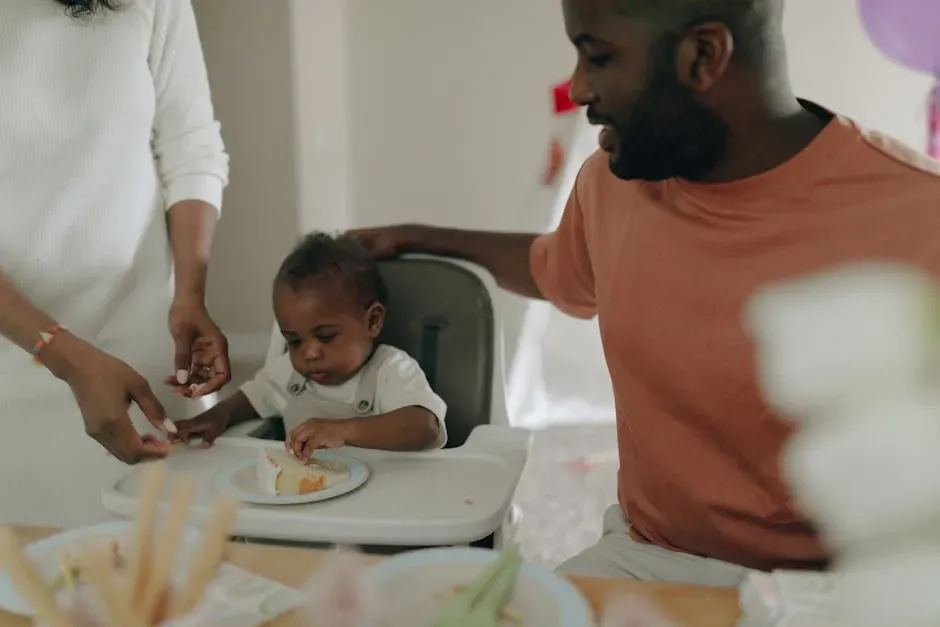
10. Chasing Developmental Milestones Competitively (Image Credits: Pexels)
If you've spent enough time with parents, you've likely overheard a conversation about someone's child learning to read at two or mastering potty training by 16 months. The competitive tracking of milestones has become a quiet but persistent source of parental anxiety. Progressive approaches focus on supporting natural development rhythms, emphasizing play-based learning and individual interest exploration, which better supports long-term success while preserving childhood joy and creativity.
Children do not develop in straight lines or on synchronized schedules, and the research supports a far more relaxed approach than popular parenting culture tends to promote. Overparenting can be considered a subcategory of modern parenting characterized by both high levels of care and a developmental misalignment to children's needs, leading to a potential for harm. Trusting a child's own pace is not resignation. It's attunement.
11. Feeling You Have to Be a Perfect Parent

11. Feeling You Have to Be a Perfect Parent (Image Credits: Unsplash)
A peer-reviewed study published in the journal PLoS ONE found that a third of parents who identified as "gentle parents" reported feelings of burnout and parent uncertainty, with part of the problem being that people confuse "gentle" with being overly permissive in every moment, an impossible standard that sets parents up for failure. The pressure to perform optimal parenting around the clock is not just exhausting. It's unsupported by what research actually shows about children's needs.
Letting go of the obligation to keep children perfectly entertained and managed could also help parents feel less stressed, as approximately 41 percent of parents in the U.S. said they are so stressed they cannot function, according to a report from the U.S. Surgeon General in 2024. Children don't need a flawless parent. No matter how smart, calm, or emotionally intelligent you think you are, kids will shake your foundation, and success at parenting often entails the ability to be a forever student and a willingness to pivot when needed.
The most grounded shift happening in parenting today isn't about adopting a new method or following a new trend. It's about subtraction. Letting go of the routines that drain energy without delivering real benefit. The evidence, increasingly, is on the side of doing a little less, trusting your child a little more, and giving both of you room to breathe.