
There's a particular kind of worry that creeps up on adult children long before any major health event happens. It usually starts with something small, a stack of unopened mail, a pantry with three jars of the same mustard, a hallway that suddenly has less furniture in it than it used to. These quiet shifts in daily habits often say more about aging than any single doctor's visit ever could.
Many of these behaviors are harmless adaptations, ways older adults instinctively simplify their lives or manage new physical limitations. Others, though, can be early signals of cognitive change, mobility decline, or growing isolation. Here are eleven of the most common patterns families notice, and why they tend to raise eyebrows at holiday visits.
1. Rearranging furniture to create wider walking paths
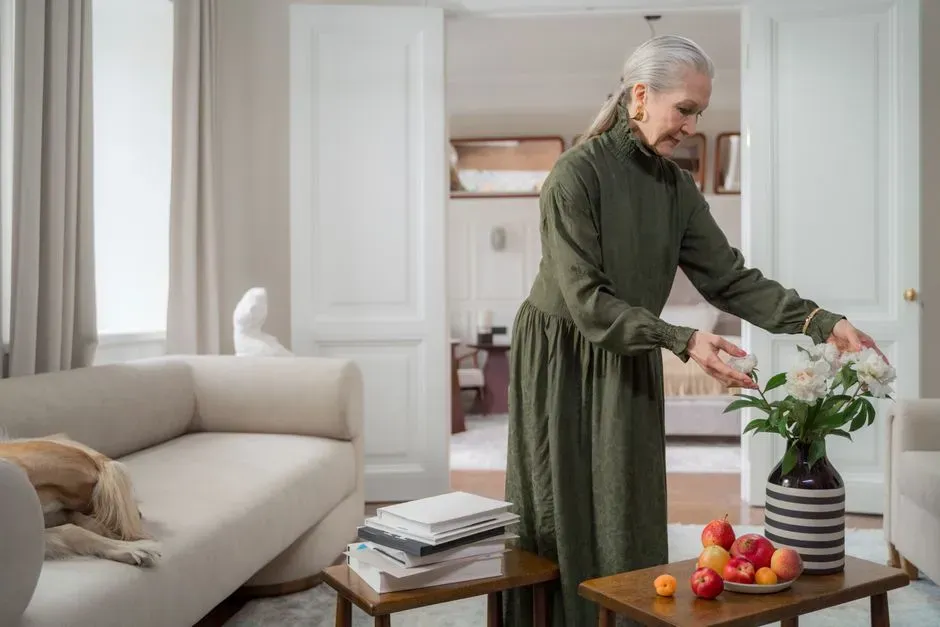
1. Rearranging furniture to create wider walking paths (Image Credits: Pexels)
One of the first things adult children notice is that a parent’s living room suddenly has a lot more open floor space. Side tables disappear, rugs get rolled up, and furniture gets pushed against walls to create a clear route from the bedroom to the bathroom. This isn’t about redecorating. It’s an unconscious response to a fear of falling, which becomes a much bigger concern after 65 since falls are the leading cause of injury among older adults.
Occupational therapists actually recommend this kind of decluttering, but when it happens gradually and without explanation, it can look like something else entirely to family members. Children sometimes worry it signals a recent near miss, like a stumble the parent never mentioned. In many cases, that instinct is correct, and the rearranging started right after a scare nobody talked about.
2. Leaving lights on throughout the house, day and night

2. Leaving lights on throughout the house, day and night (Image Credits: Unsplash)
A house that’s lit up like a stadium at three in the morning is a classic sign that something has changed. Age related vision decline is extremely common, with conditions like cataracts and macular degeneration affecting a large share of adults over 65, making shadows and dim corners feel genuinely hazardous. Leaving lights on constantly is often a low-effort workaround for eyes that no longer adjust quickly between light and dark.
It can also point to anxiety about being alone, especially after a spouse has passed or moved into care. Adult children sometimes read this as forgetfulness, assuming a parent simply forgot to flip the switch. More often, it’s a deliberate, if slightly inefficient, coping strategy for two very real and very different fears.
3. Stockpiling nonperishable food and household supplies

3. Stockpiling nonperishable food and household supplies (Image Credits: Pexels)
Pantries that suddenly look prepared for a months-long siege tend to make children uneasy. This habit often traces back to a mix of factors: reduced mobility making frequent shopping trips harder, memory changes that lead to duplicate purchases, and a lingering caution left over from pandemic-era shortages that hit hardest for isolated seniors. Some of it is genuinely practical, since fewer car trips means fewer opportunities for a fall or accident on icy steps.
However, hoarding behavior can also be an early marker of cognitive decline, particularly when it’s paired with disorganization or an inability to recall what’s already been purchased. Geriatric specialists note that mild cognitive changes frequently show up first in everyday tasks like meal planning and shopping, long before they appear anywhere else. Families who notice ten cans of the same soup often aren’t overreacting by asking a few gentle questions.
4. Avoiding the stairs entirely, even for simple errands
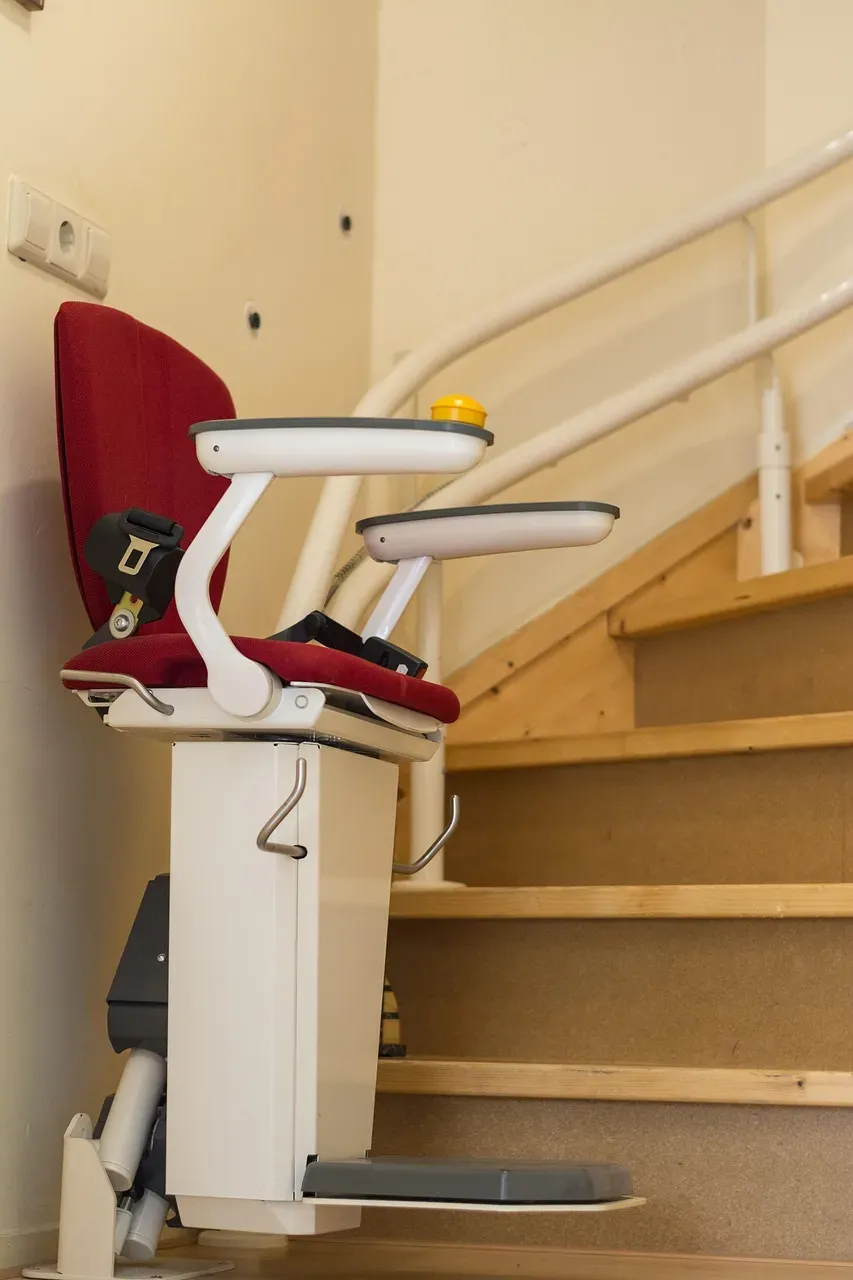
4. Avoiding the stairs entirely, even for simple errands (Image Credits: Pixabay)
When a two-story house slowly turns into a one-story life, with a parent sleeping in a downstairs den and skipping the upstairs bathroom altogether, it’s rarely a lifestyle choice. Joint pain, balance issues, and general muscle loss make stairs one of the first things older adults quietly opt out of. This kind of self-imposed restriction can happen gradually enough that the parent doesn’t even register it as a big change.
Adult children often catch on when they visit and realize an entire floor of the house has essentially been abandoned. It’s a practical adaptation, but it also signals declining strength and balance that may need a real conversation, particularly if a fall risk assessment or physical therapy could help reverse some of that decline. Left unaddressed, this kind of avoidance tends to accelerate the very weakness it’s trying to work around.
5. Writing everything down, from grocery lists to daily routines

5. Writing everything down, from grocery lists to daily routines (Image Credits: Pexels)
Sticky notes on the fridge, notebooks by the phone, reminders taped to the front door. A sudden explosion of written notes is one of the more visible shifts families describe. For some, it’s simply smart organization, a way to stay on top of medications, appointments, and errands without relying purely on memory.
For others, it’s compensation for memory lapses that have already started causing real problems, like missed bills or forgotten appointments. The difference usually comes down to whether the system works. A well-organized notebook that actually gets used is reassuring, while notes that pile up unread or get duplicated across five different pads is a pattern worth watching more closely.
6. Withdrawing from long-standing social activities

6. Withdrawing from long-standing social activities (Image Credits: Pexels)
A parent who used to play cards every Thursday or attend church every Sunday suddenly stops showing up, often citing tiredness or vague excuses. Social withdrawal is one of the more concerning shifts because loneliness and isolation are strongly linked to both cognitive decline and increased mortality risk in older adults, according to research from the National Institute on Aging. It rarely happens all at once, which makes it easy to miss until months have passed.
Sometimes the cause is physical, hearing loss making group conversations exhausting, or incontinence making outings stressful. Other times it reflects depression, which is underdiagnosed in older populations partly because it doesn’t always look like sadness so much as flat disinterest. Either way, a parent quietly dropping out of activities they once loved is rarely nothing.
7. Letting mail and paperwork pile up unopened

7. Letting mail and paperwork pile up unopened (Image Credits: Pexels)
A growing stack of unopened envelopes on the kitchen counter is one of the most common things adult children stumble across during a visit. Sometimes it’s simple avoidance, bills and insurance forms that feel overwhelming to deal with alone. Other times it points to something more serious, like difficulty processing written information or executive function changes that make sorting and prioritizing tasks genuinely hard.
Financial exploitation is also a real risk factor here, since seniors who fall behind on mail sometimes miss fraud alerts or suspicious account activity until real damage is done. The Consumer Financial Protection Bureau has flagged elder financial abuse as a growing concern, often made easier when paperwork goes unchecked for weeks at a time. A pile of mail isn’t dramatic on its own, but it’s often the first visible thread that unravels into a bigger conversation about who’s managing the finances.
8. Repeating the same stories or questions within a single conversation

8. Repeating the same stories or questions within a single conversation (Image Credits: Pexels)
Everyone repeats a story now and then, but a noticeable pattern of asking the same question three times in one phone call is different. Adult children often describe this as the moment they started paying closer attention, sometimes without even mentioning it to the parent directly. It can stem from normal age-related slowing in short-term memory, which is common and not automatically alarming on its own.
It can also be an early sign of mild cognitive impairment, which according to the Alzheimer’s Association affects a meaningful share of adults over 65 and doesn’t always progress to dementia. The distinction usually requires a proper cognitive screening rather than a guess based on a single visit. Families who notice this pattern consistently, rather than occasionally, are often the ones who eventually push for that evaluation.
9. Keeping the thermostat unusually high, even in warm weather

9. Keeping the thermostat unusually high, even in warm weather (Image Credits: Pexels)
A house that feels overheated to everyone but the person living in it is a small but telling detail. Circulation naturally decreases with age, and a lower metabolic rate means many older adults genuinely feel cold at temperatures younger family members find perfectly comfortable. It’s not stubbornness so much as a real physiological shift that isn’t always well explained to family.
That said, a thermostat set unusually high can also strain a fixed income, and some seniors quietly cut back on other expenses to cover heating costs without ever mentioning it. It can occasionally signal thyroid issues as well, since hypothyroidism becomes more common with age and often includes cold intolerance as a symptom. A warm house isn’t cause for alarm by itself, but combined with other changes, it’s worth a mention at the next doctor’s visit.
10. Reorganizing important documents and mentioning end-of-life plans

10. Reorganizing important documents and mentioning end-of-life plans (Image Credits: Pexels)
When a parent starts pulling out the will, updating beneficiary forms, or casually mentioning where the safe deposit key is kept, it can feel unsettling even though it’s often a healthy, proactive move. Estate planning attorneys generally encourage this kind of organization well before it becomes urgent, since scrambling to locate documents during a health crisis is far more stressful for everyone involved. Still, the timing of these conversations can catch children off guard, especially if a parent hasn’t previously talked openly about mortality.
Sometimes this behavior follows a specific trigger, a friend’s passing, a new diagnosis, or simply turning a milestone age that prompts reflection. Other times it’s harder to pinpoint, and children are left wondering if something’s been left unsaid. Either way, financial planners consistently note that having these conversations early, calmly, and before a crisis tends to prevent far messier situations later.
11. Refusing help with tasks that have clearly become difficult

11. Refusing help with tasks that have clearly become difficult (Image Credits: Pexels)
Perhaps the most emotionally loaded item on this list is the parent who insists on mowing the lawn, climbing a ladder to clean gutters, or driving at night despite obvious struggles. This resistance often has less to do with the task itself and more to do with independence and identity. Losing the ability to do something unassisted can feel like losing a piece of who they are, which makes the refusal understandable even when it’s frustrating to watch.
Geriatric psychologists point out that autonomy is one of the strongest predictors of life satisfaction in older adults, which is part of why pushback against help can be so fierce. The challenge for families is finding a middle ground, offering support in ways that don’t feel like a takeover. It’s rarely solved in one conversation, and most families find it takes several attempts, timed around the right moment, before a parent accepts help gracefully.
None of these behaviors, on their own, mean a crisis is imminent. Context matters enormously, and a single item on this list is often just a normal adaptation to getting older. It’s the accumulation of several changes happening close together that tends to be the real signal worth acting on.