
Walk into almost any office in 2026 and you can feel it: two generations working side by side, reading the same job description in completely different ways. One group learned that showing up early and staying late was proof of commitment. The other grew up watching that same devotion lead to burnout, layoffs, and very little loyalty in return.
The result is a quiet standoff over what "professional" even means anymore. Some of these disagreements are cosmetic, like clothing or how quickly someone replies to a message. Others cut much deeper, touching on how people define success, health, and what they owe an employer in exchange for a paycheck.
1. Answering emails and calls after hours
1. Answering emails and calls after hours (Image Credits: Pexels)
For decades, checking your inbox at ten at night was treated as a sign of dedication rather than a red flag. Gen Z has largely stopped playing along with that script. More Gen Z employees, at 51 percent, feel pressure to be available after hours than millennials at 45 percent, Gen X at 39 percent, and baby boomers at 27 percent. Despite feeling that pressure, many simply do not respond once their shift ends, treating the boundary as non negotiable rather than optional.
This isn’t laziness so much as a rejection of a habit that never actually protected anyone’s career. They watched a previous generation of workers answer email at 10 p.m., stay tethered through the weekend, and talk about burnout like it was just the toll you pay for success, and a Gen Z employee’s preference for flexibility usually isn’t about ducking work, it’s about rejecting performance theater. Younger workers would rather be judged on Monday’s output than on Sunday’s inbox activity.
2. Treating office attendance as proof of work

2. Treating office attendance as proof of work (Image Credits: Pexels)
Boomers often equate a full parking lot with a productive company. Gen Z has a different metric entirely. Gen Z has proved that productivity isn’t tied to a desk, and with digital tools making collaboration seamless, they prefer flexible setups that blend home and office work, with success today measured by outcomes rather than hours spent under fluorescent lights. The Gallup data backs this up in a nuanced way, since it’s not really about avoiding the office altogether.
Gallup’s 2025 findings show 71 percent of Gen Z prefer a hybrid work model, with only 23 percent wanting to work fully remote and just 6 percent preferring fully on site work. That middle ground gets misread by older managers as flakiness, when it’s closer to a practical compromise between collaboration and sanity. The insistence isn’t on skipping work, it’s on skipping the assumption that a chair at a desk equals effort.
3. Wearing formal business attire without question

3. Wearing formal business attire without question (Image Credits: Unsplash)
Suits, ties, and structured blazers used to be the entry fee for being taken seriously in an office. That fee has quietly stopped being collected. What used to signal professionalism now often feels outdated, as Gen Z favors comfort and individuality over stiff suits and heels, choosing styles that help them think and work freely.
Boomers sometimes interpret this shift as disrespect toward the workplace itself. Gen Z tends to see it the opposite way, arguing that rigid dress codes measured conformity rather than competence. Gen Z’s casual approach to communication and dress codes is often perceived as unprofessional by older coworkers, while Gen Z views traditional workplace formality as unnecessarily rigid or inauthentic. As more companies loosen these expectations, the friction hasn’t disappeared, but it has softened considerably.
4. Staying at one company for decades out of loyalty

4. Staying at one company for decades out of loyalty (Image Credits: Pexels)
The thirty year, one employer career path that defined much of the Boomer generation simply doesn’t match how Gen Z approaches work. Randstad’s research reveals that Gen Z’s average tenure in the first five years of their career is just 1.1 years, significantly shorter than Millennials at 1.8, Gen X at 2.8, and Baby Boomers at 2.9. That gap looks alarming on paper, but it reflects a different calculation about risk and reward.
Rather than viewing job hopping as flightiness, many young workers see it as the only realistic way to build a career in an unstable market. Gen Z is not job hopping for the sake of it, rather they’re moving because of their ambition and a perceived lack of pathways within the roles they are exiting, and one in three Gen Z workers plans to change jobs within the next year. Staying put out of pure loyalty, without growth or reward attached, just doesn’t register as a virtue to this generation the way it did to their grandparents.
5. Powering through illness and burnout

5. Powering through illness and burnout (Image Credits: Pixabay)
Boomers were often taught that showing up sick, exhausted, or emotionally drained was simply part of being a responsible employee. Gen Z has broken from that tradition fairly openly. Seventy two percent of Gen Z report at least one burnout symptom, including exhaustion, loss of motivation, or emotional detachment, compared to 62 percent for Gen X and 38 percent for Baby Boomers.
Rather than treating that number as a personal failing, many young workers treat it as data worth acting on. Sixty one percent of Gen Z would strongly consider leaving their job if offered one with better mental health benefits. That willingness to walk away for wellness support is exactly the kind of leverage older generations rarely had, or rarely used even when they did.
6. Climbing the corporate ladder as the default goal

6. Climbing the corporate ladder as the default goal (Image Credits: Pexels)
For many Boomers, career success meant one thing: moving up, gaining a title, and eventually managing people. That path has lost a lot of its appeal for younger workers. Only 6 percent of Gen Z say their primary career goal is to reach a leadership position.
Instead of chasing a corner office, many are chasing something less tangible but arguably more durable. Seventy seven percent of Gen Z prioritize work life balance over climbing the corporate ladder, and 89 percent consider a sense of purpose essential to their job satisfaction and wellbeing. Management, in this view, is just one option among several, not the finish line everyone is racing toward.
7. Following hierarchy without asking why
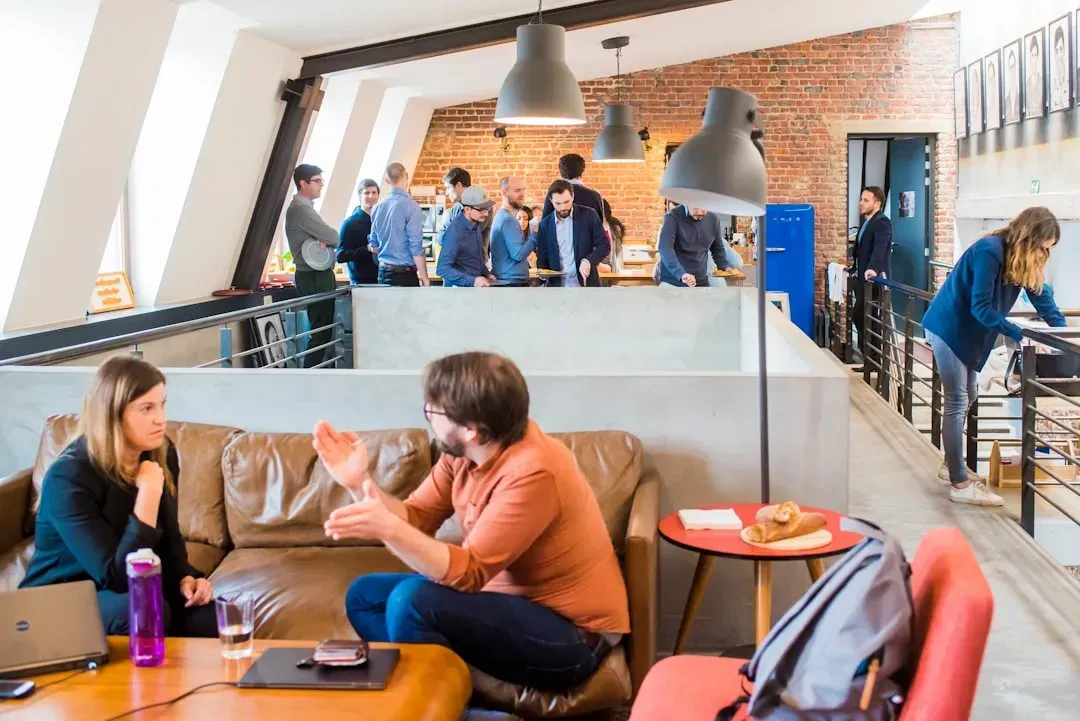
7. Following hierarchy without asking why (Image Credits: Unsplash)
Boomer era offices tended to run on clear chains of command, where you didn’t question a decision simply because of who made it. Gen Z tends to want the reasoning behind the decision, not just the decision itself. Boomer workplaces revolved around hierarchy and rank, while Gen Z focuses on openness and teamwork instead, valuing clear communication, mentorship, and shared input over rigid structures.
This doesn’t mean younger employees reject structure entirely. It means they expect leadership to earn deference through clarity rather than assume it through title. Forty two percent of Gen Z and 41 percent of Millennials believe managers should foster a positive and inclusive work culture, but only 22 percent say that’s actually happening. That gap between expectation and reality is a big part of why hierarchy, on its own, doesn’t carry the same automatic authority it once did.
8. Answering the phone instead of texting or messaging

8. Answering the phone instead of texting or messaging (Image Credits: Pexels)
A ringing phone used to be the fastest, most respected way to get an answer at work. For Gen Z, it’s often the least preferred option on the list. Millennials, who came of age with email as the professional standard, tend to favor more formal, structured communication, while Gen Z, raised on instant messaging and social media, prefers quick, visual, and asynchronous exchanges.
This isn’t just a stylistic quirk, it has measurable consequences when ignored. Research from Wichita State University indicates that forcing Gen Z employees into communication styles like emails that don’t align with their natural preferences can reduce productivity by up to 30 percent. Insisting on phone calls or long email chains, in other words, might be costing companies more than it’s earning them in formality.
9. Treating unpaid overtime as a badge of honor

9. Treating unpaid overtime as a badge of honor (Image Credits: Pexels)
There’s a long tradition in many offices of quietly rewarding whoever stays latest or answers the most after hours requests. Gen Z has generally declined to compete in that particular contest. Answering emails at midnight used to mean you were a true go getter ready for a promotion, but modern workers correctly identify this expectation as a fast track to exhaustion, arguing that you are paid for your scheduled hours and your free time should be entirely yours.
The pushback isn’t only philosophical, it shows up in actual job searching behavior. According to a 2025 Gallup report, 51 percent of employed workers are actively seeking or watching for new jobs, largely due to rigid rules. When unpaid extra effort stops translating into raises or promotions, younger workers see little reason to keep offering it for free.
10. Compromising personal ethics to keep the peace

10. Compromising personal ethics to keep the peace (Image Credits: Pexels)
Older workplace norms often discouraged employees from pushing back on assignments, even ones that felt uncomfortable, on the theory that a paycheck came with certain obligations. That assumption doesn’t hold the same weight with Gen Z. Deloitte’s Gen Z and Millennial Survey reveals that half of Gen Zers have rejected an assignment or project due to their personal ethics or beliefs.
This extends beyond individual tasks into how they choose employers in the first place. Seventy five percent feel an organization’s community engagement and societal impact is an important factor when evaluating potential employers. For a generation that came of age watching companies make very public promises about values, a mismatch between stated principles and actual practice tends to get noticed and remembered.
11. Separating personal struggles from professional conversations

11. Separating personal struggles from professional conversations (Image Credits: Pexels)
Boomers were largely raised to keep stress, anxiety, or personal difficulty out of the workplace entirely, treating the office as a place for output only. Gen Z has moved that conversation into the open, sometimes to the discomfort of older colleagues. Forty percent of Gen Z feel stressed or anxious all or most of the time, with much of this stress stemming from their work environment, and the top workplace stress drivers are long working hours and feeling under recognized or under rewarded, followed by toxic workplace culture.
Rather than hide those pressures, many younger employees expect leadership to acknowledge and address them directly. If a company says employees aren’t expected to answer emails while out sick but executives do it anyway, the message gets lost, which is why it’s critical for leaders to model healthy boundaries and visibly prioritize wellbeing. That expectation of transparency around mental health marks one of the clearest breaks from how the previous generation was trained to operate.
None of this means Gen Z lacks work ethic or respect for the job itself. It means the definition of respect has shifted from visible sacrifice toward visible results, boundaries, and honesty about what a sustainable career actually requires. Whether that shift makes workplaces better or simply different depends a great deal on who you ask, and which generation is doing the answering.