
Walk into any dinner party, work event, or casual get-together and you’ll notice a pattern pretty quickly. Some people move through the room with an ease that’s hard to pin down. They’re not necessarily the loudest, the most attractive, or the most accomplished people there. They just carry themselves differently. There’s a steadiness to them.
Confidence at social gatherings isn’t about performing. It’s mostly about what you don’t do. The habits that quietly undermine people in social settings are surprisingly consistent, and once you know what they are, you start noticing them everywhere, including, sometimes, in yourself.
1. They Never Constantly Seek External Validation

1. They Never Constantly Seek External Validation (Image Credits: Unsplash)
Seeking validation is the psychological pattern of relying on external approval to confirm your worth, decisions, and identity. While some of this is perfectly normal and even healthy, many people find themselves trapped in exhausting cycles where their mood, confidence, and sense of self rise and fall based on others' reactions. Confident people simply don't operate this way at a gathering. They've developed a more stable internal compass.
When a child is repeatedly given approval, they build up their sense of value. They eventually become confident in their internal sense of validation, meaning they don't need outside approval because they can often validate and approve themselves. That internal foundation shows up clearly in social settings, where they aren't scanning the room for reassurance after every comment they make.
2. They Never Monopolize the Conversation
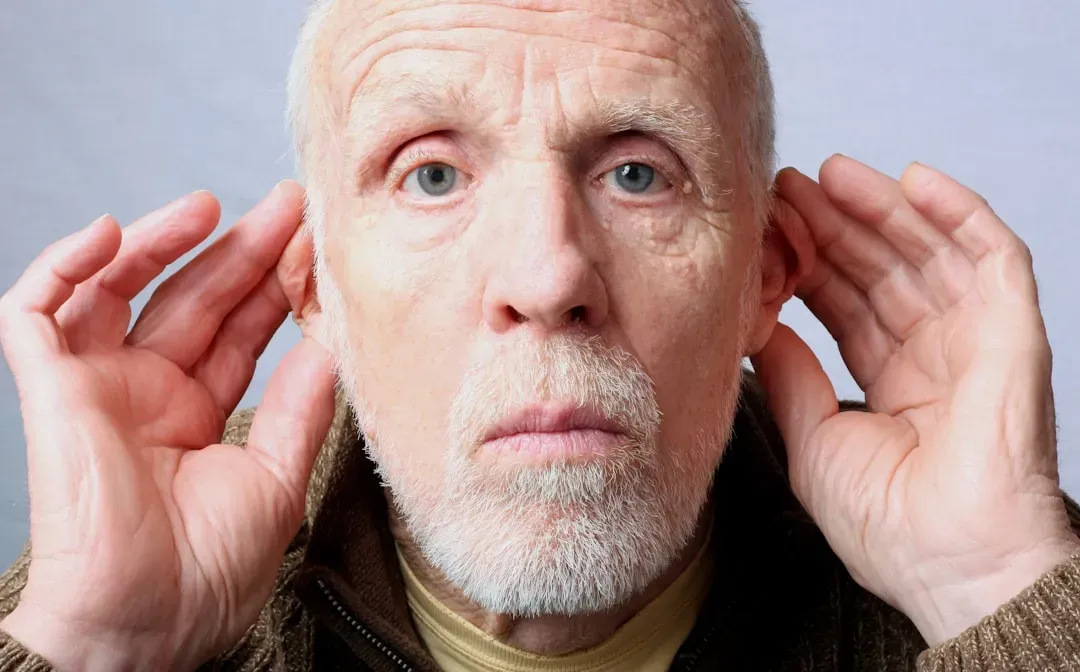
2. They Never Monopolize the Conversation (Image Credits: Unsplash)
There's a particular kind of person who arrives at a party and subtly takes over every exchange, steering things back to their own stories, opinions, or problems. In psychology, this is called self-focused attention. Co-opting conversations and bringing the focus back to their own problems and feelings is a way of trying to get reassurance, driven by the fear that maybe they didn't do something right.
Confident people genuinely listen. They ask follow-up questions not to seem polite but because they're actually curious. That willingness to stay in a supportive role during a conversation, without needing to redirect the spotlight, signals a level of inner security that most people find magnetic.
3. They Never Use Closed-Off Body Language

3. They Never Use Closed-Off Body Language (Image Credits: Pexels)
Many people with social anxiety unconsciously exhibit body language that can make them feel and appear more uncomfortable in social settings. Closed-off gestures, slouched postures, or even rapid movements can signal nervousness. Confident people, by contrast, tend to keep their body language open and relaxed without even thinking about it much.
Open gestures include uncrossed arms, visible hands, and relaxed shoulders. These simple cues signal to others that you're approachable and willing to engage. It's a small thing physically, but it changes the entire social dynamic around you. People gravitate toward open body language without always knowing why.
4. They Never Apologize for Taking Up Space

4. They Never Apologize for Taking Up Space (Image Credits: Unsplash)
Confident people don't preface their opinions with disclaimers, shrink themselves to avoid standing out, or constantly qualify what they say. A German study found that participants who adopted a confident posture made more decisive choices than those who had a more doubtful posture. The posture and the mindset reinforce each other in both directions.
Negative facial expressions, withdrawn posture, muscle tension, and shallow breathing aren't just symptoms of anxiety. They also reinforce it. Once anxiety is activated, these physical responses can keep it going. Confident people have learned, consciously or not, to interrupt that cycle rather than feed it.
5. They Never Overshare to Fill Silence

5. They Never Overshare to Fill Silence (Image Credits: Unsplash)
Silence at a social gathering can feel unbearable to people who are anxious. The impulse to fill every pause with personal information, confessions, or emotionally heavy topics is a real phenomenon, and it tends to backfire socially. Confident people are comfortable letting a moment breathe. They don't treat silence as a problem to be urgently solved.
This isn't about being cold or withholding. It's about reading the room. Sharing something meaningful at the right time carries far more weight than flooding a conversation with details just to avoid discomfort. The ability to be present without narrating every thought is one of the quieter markers of genuine confidence.
6. They Never Compare Themselves Out Loud

6. They Never Compare Themselves Out Loud (Image Credits: Unsplash)
Over-reliance on external approval can diminish self-worth, and social comparison can lead to anxiety, depression, and low self-esteem. Confident people understand this intuitively. They don't make comments at gatherings designed to subtly position themselves above or below others, and they don't fish for comparisons that flatter them.
One behavior psychologists observe is what they call "compare and despair," in which a person compares themselves to someone they perceive as worse off in order to inflate their self-esteem. Confident people skip this entirely. Their self-worth isn't that fragile, so they don't need the social math to work out in their favor.
7. They Never Pretend to Agree with Everything

7. They Never Pretend to Agree with Everything (Image Credits: Pexels)
Unhealthy validation manifests as compulsive approval-seeking where you modify your authentic self to gain acceptance, or make decisions based solely on what others might think rather than your own values. At a gathering, this can look like laughing at jokes you don't find funny, nodding along with opinions you disagree with, or changing your stated preferences depending on who's listening.
The tendency to suppress true opinions to gain acceptance can leave someone feeling detached from who they really are. This may erode confidence and create emotional exhaustion. Confident people express measured disagreement naturally, without drama, because they're not afraid of slightly disrupting someone else's expectations.
8. They Never Check Their Phone Compulsively

8. They Never Check Their Phone Compulsively (Image Credits: Unsplash)
Reaching for your phone the moment there's a pause in conversation is one of the most common escape behaviors in social settings. It signals discomfort, disengagement, and a preference for a more controlled environment. Confident people notice this impulse and generally don't act on it. They're willing to stay present even when a moment feels slightly awkward.
Social media has exploited ancient brain mechanisms by providing instant, quantifiable feedback through likes, comments, and shares. The unpredictable nature of social media responses strengthens the compulsion through intermittent reinforcement, the same psychological principle that makes gambling addictive. Confident people at gatherings aren't feeding that loop. They're actually there.
9. They Never Try to Impress Everyone in the Room

9. They Never Try to Impress Everyone in the Room (Image Credits: Unsplash)
There's a real difference between being engaging and trying to impress. Engaging people draw others into a shared experience. Impressing people is fundamentally about managing how you're perceived. Fear of rejection can prevent individuals from expressing their true thoughts and feelings, and chasing validation can lead to inauthenticity, where people conform rather than stay true to themselves.
Confident people accept fairly early in a social gathering that not everyone will warm to them, and that's fine. They're not running a charm offensive. They connect genuinely with the people they click with and don't burn energy trying to win over every person in the room. That selectivity, paradoxically, tends to make others more drawn to them.
10. They Never Avoid Eye Contact Out of Anxiety

10. They Never Avoid Eye Contact Out of Anxiety (Image Credits: Pexels)
Individuals with social anxiety may avoid eye contact or shift their attention inward in response to anxiety induced by social situations. These strategies can make it more difficult to process social cues, hindering behavioral synchrony with conversation partners. Confident people tend to hold steady eye contact naturally, not in an aggressive or fixed way, but in a way that communicates genuine attention.
Improving social skills can enhance confidence. Making eye contact during conversations, using open body language to show engagement, and asking open-ended questions to keep conversations flowing are all habits that feel effortless to someone who's genuinely at ease. For a confident person, these aren't strategies. They're just how they show up.
11. They Never Arrive with an Exit Strategy in Mind

11. They Never Arrive with an Exit Strategy in Mind (Image Credits: Pexels)
Some people walk into a gathering already planning how to leave it. They clock the exits, set a mental timer, and spend the whole event calculating when they can bow out without seeming rude. Signs of deeper social anxiety include persistent fear that doesn't improve over time and avoidance behavior, such as regularly skipping social events. Planning your escape before you've even arrived is a milder version of the same pattern.
Confident people come in without a rigid timetable. They stay as long as they're genuinely enjoying themselves and leave when it feels right, not because they've hit a predetermined limit. That openness changes the quality of every interaction they have, because they're actually present rather than quietly counting down.
12. They Never Let One Awkward Moment Derail the Whole Evening

12. They Never Let One Awkward Moment Derail the Whole Evening (Image Credits: Unsplash)
Everyone says something clunky at a party. A joke lands wrong, you blank on someone's name, you accidentally walk into the wrong conversation. The difference is in how people handle it. Research in Clinical Psychological Science suggests that attempting to conceal anxiety hinders non-verbal communication, increasing instances of social rejection, and ultimately affirming individuals' negative expectations about social interactions. Dwelling on a misstep makes the next interaction harder, not easier.
Confident people let it go relatively quickly. They don't replay the moment in their heads for the rest of the evening or preemptively brace for the next one. Mindfulness techniques help individuals focus on the present moment without judgment, and practicing regular meditation can reduce anxiety symptoms. That ability to reset, to shake off a stumble and re-engage, is one of the most practical advantages confidence offers in any social setting.
Confidence in social settings is less about personality type than most people assume. It's a collection of small, learnable behaviors, most of them centered on where you place your attention. The people who seem most at ease in a crowded room are usually the ones who've stopped working so hard to manage how they're seen, and started focusing outward instead.