
What do a Baby Boomer couple celebrating 40 years of marriage and a Gen Z pair navigating their first serious relationship actually have in common? More than you’d think – and yet, in so many ways, they’re operating from entirely different playbooks. Relationship priorities don’t exist in a vacuum. They’re shaped by the world each generation grew up in, the crises they survived, the technology they reached for, and the values they quietly absorbed along the way.
The gap between how a Millennial defines a “healthy relationship” and what a Baby Boomer considers one can be surprisingly wide. It’s not about right or wrong. It’s about context. Dive in and you might be surprised by just how much the era you were born into quietly rewrites your expectations of love, connection, and commitment.
1. Communication Style and Technology Habits
1. Communication Style and Technology Habits (Image Credits: Pexels)
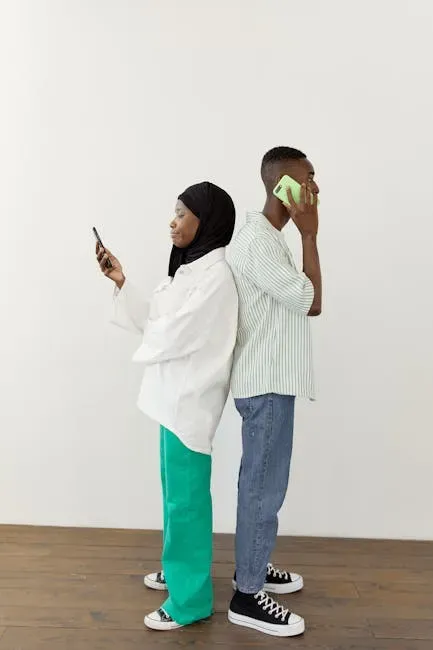
Here's the thing – how you learned to communicate as a kid tends to stick with you for life. Generation X prefers in-person communication, landline calls, and email, a direct reflection of the world they grew up in. Meanwhile, Millennials, born between 1981 and 1996, grew up in a more digitally connected world, which is reflected in their communication preferences – they often prefer text and instant messaging for their convenience and ability to facilitate quick, collaborative exchanges.
Gen Z takes it even further, and honestly, it gets interesting here. While roughly nine in ten Gen Z individuals prefer messaging over calls, about four in ten still value face-to-face connection for important topics. That's a nuance a lot of people miss – digital nativity doesn't mean digital exclusivity. Interestingly, while Gen Z is the most proficient in digital communication, they also value face-to-face interaction and interpersonal relationships, seeking activities and environments that foster genuine connections.
2. Mental Health Awareness and Emotional Openness

2. Mental Health Awareness and Emotional Openness (Image Credits: Pexels)
Few factors reshape relationship priorities as dramatically as how openly a generation talks about its inner life. Older generations tend to carry a much heavier stigma around vulnerability. Generation X grew up in an era of increasing divorce rates and the latchkey kid phenomenon, becoming known for its independence and self-reliance. They were the first to experience the rise of the self-help movement and the stigmatization of mental health issues, and while some Gen Xers are open to therapy, others may still carry skepticism, believing they should "tough it out" on their own.
Younger generations are flipping that script fast. Gen Z is the most likely generation to seek therapy treatment, with roughly more than a third already receiving professional help. That willingness to seek support doesn't stay outside the relationship – it changes how people communicate emotional needs with their partners entirely. When expectations around mental health support aren't aligned across generations, it can lead to misunderstandings, further straining workplace relationships and weakening trust – and the same dynamic plays out in romantic relationships too.
3. Financial Security and Economic Anxiety

3. Financial Security and Economic Anxiety (Image Credits: Unsplash)
Money and love have always been entangled. But the specific financial anxieties each generation carries into their relationships differ significantly. Younger adults often feel the squeeze from unstable job markets, student debt, and the cost of starting families, while older adults face stress tied to health and financial stability in retirement. These aren't just background worries – they actively shape what people look for in a partner and when they feel "ready" for deeper commitment.
Less than a third of Gen Z feel financially secure, with more than half saying they are very or extremely worried about not having enough money. That level of financial anxiety inevitably bleeds into relationship timelines. When economic uncertainty makes it impossible to plan major life decisions, couples can feel like they're losing control of their shared future, and the stress intensifies when partners have different timelines or priorities. For older generations who built equity in stable economic eras, these concerns can feel foreign – creating a real disconnect in how different generations approach long-term partnership.
4. Core Values Around Work-Life Balance and Commitment

4. Core Values Around Work-Life Balance and Commitment (Image Credits: Pexels)
I think this is the factor people argue about most – especially across family dinner tables. The values that each generation absorbed during its formative years quietly define what a "good partner" even looks like. Influenced by historical events like the Cuban Missile Crisis and the Civil Rights Movement, Baby Boomers tend to prioritize loyalty and dedication. Stability and long-term commitment are almost baked into their relationship blueprint. Millennials operate differently. The key values of this generation include work-life balance, social commitment, and realism – a trio that pushes many Millennials to view relationships as partnerships of equals, not traditional roles.
Gen Z is described as the first truly global generation, strongly connected through technology, which equally values mental, physical, and material well-being, and is genuinely concerned with developing authentic personal relationships. That word "authentic" does a lot of heavy lifting for this generation. Both Millennials and Gen Z tend to prioritize diversity, inclusion, and social justice, and are also passionate about sustainability, environmental issues, mental health, and wellness. These shared values influence who each generation chooses as a partner and what they expect a relationship to stand for.
5. The Role of Shared Life Goals and Relationship Timelines

5. The Role of Shared Life Goals and Relationship Timelines (Image Credits: Pexels)
Timing is everything, and it turns out each generation has a wildly different internal clock. Baby Boomers tend to value stability and often marry young, Millennials are more likely to wait longer to marry and question traditional norms, and Generation Z seems less interested in conventional relationship milestones and more focused on mental health. That's a fascinating three-generation arc – from "settle down early" to "what does settling down even mean?" It's not cynicism, it's context.
Generation Z and Millennials are more likely to prioritize their career and lifelong learning as relationship-adjacent goals, weaving professional ambition tightly into the fabric of their romantic expectations. Roughly four in ten professionals say some form of hybrid or flexible work option would be among their top priorities when accepting a new role, and each generation has its own distinct definition of what that flexibility means. That same need for flexibility spills into relationships – who does the emotional labor, who relocates for a partner's career, how couples handle family planning when both people are chasing ambitions. These are the conversations that define what a committed relationship looks like in 2026, and they look different depending on which generation is having them.
Generations don't just inherit values from thin air. They're shaped by economics, technology, historical events, and the mental health conversations happening – or not happening – around them. Understanding that doesn't mean excusing incompatibility. It means recognizing that when two people from different generations build a relationship, they're essentially negotiating between two different worlds. What priorities would you say define your own generation's approach to love and connection?