
Every generation swears it's raising kids the "right" way, and every generation ends up standing corrected a couple of decades later. That pattern is playing out again right now, as the oldest members of Gen Z step into parenthood and start openly questioning some of the household rules they grew up under. The gap isn't just generational nostalgia either. It shows up in surveys, in pediatric research, and in the quiet arguments happening at family dinners between new parents and their own Boomer moms and dads.
1. Physical punishment as the default response to misbehavior

1. Physical punishment as the default response to misbehavior (Image Credits: Unsplash)
For a lot of Boomer households, a swat on the backside wasn’t a big moral event. It was Tuesday. Spanking, or the threat of it, functioned as a quick behavioral fix, and it was widely accepted as normal parenting rather than something controversial.
Gen Z parents, by contrast, have grown up alongside decades of child development research showing that physical discipline predicts worse behavior and poorer mental health outcomes over time, with no real benefit over other approaches. Meta-analyses on spanking find it predicts worse behavior, more aggression, and poorer mental health, with no documented benefits over alternatives. That data has landed hard with younger parents who came of age reading about attachment science instead of just hearing “because I said so.”
2. Telling kids to toughen up instead of talking about feelings

2. Telling kids to toughen up instead of talking about feelings (Image Credits: Pexels)
Boomer parenting often treated emotional wobbles as something to push through rather than sit with. Sadness, anxiety, or stress got waved off with a version of “you’ll be fine,” and the goal was resilience through minimization rather than resilience through support.
One example frequently discussed is the expectation that children should “toughen up” when facing emotional difficulties, and in previous decades, feelings such as anxiety, sadness, or stress were often minimized or dismissed. Gen Z parents have flipped that script almost entirely. Today, mental health professionals encourage open conversations about emotions and emphasize the importance of validating a child’s experiences, and younger parents have absorbed that message deeply, often prioritizing emotional check-ins over quick fixes.
3. Kids stay quiet and defer to adults, no exceptions

3. Kids stay quiet and defer to adults, no exceptions (Image Credits: Pexels)
The “seen and not heard” mindset didn’t start with Boomers, but plenty of them inherited it and passed pieces of it along anyway. The parents of boomers placed a lot of emphasis on respect, growing comfortable with clear hierarchies and strict expectations that sometimes carried over into family life, and some boomers grew up believing children should respect parents, teachers, bosses, and other authority figures without question.
Gen Z parents tend to see unquestioning obedience as a rule that outlived its usefulness. Rather than expecting silence and compliance, many now encourage kids to ask why, to push back respectfully, and to voice disagreement without automatically being labeled disrespectful. It’s less about tearing down authority and more about treating a child’s opinion as something worth hearing at all.
4. One parenting style, applied to every kid the same way

4. One parenting style, applied to every kid the same way (Image Credits: Unsplash)
Boomers largely worked from a single playbook and stuck to it, regardless of which kid they were raising or what that particular child actually needed. Generally speaking, baby boomers followed a mix of authoritarian and authoritative parenting styles, and that mix tended to stay fairly consistent across siblings and situations.
Gen Z parents have explicitly rejected the idea that one method fits every child. Gen Z parents reject the one-size-fits-all parenting model, instead embracing flexibility, balance, and emotional intelligence. Survey data backs this up too: the majority of Gen Z parents choose parenting styles based on what their individual child needs rather than trying to make one preferred style work regardless of personality, and they tailor their approach to suit the circumstances as well as the child.
5. College at all costs, no matter the child's actual interests

5. College at all costs, no matter the child's actual interests (Image Credits: Unsplash)
For Boomers, the finish line of good parenting was pretty clearly marked. Boomers were focused on getting kids to college, treating a four-year degree as close to a mandatory milestone rather than one option among several. Whether or not a kid was suited to that path mattered less than simply getting them there.
Gen Z parents are noticeably less locked into that script. Having entered adulthood during a rocky post-pandemic job market, many now prioritize practical skills and real-world readiness over a specific credential. Gen Zers, who came of age during a challenging post-COVID job market, see the need to be “practical, resilient and future-ready.” College still gets discussed, but it’s treated as a tool rather than a trophy every kid is required to chase.
6. Handle parenting problems quietly, on your own, without outside help
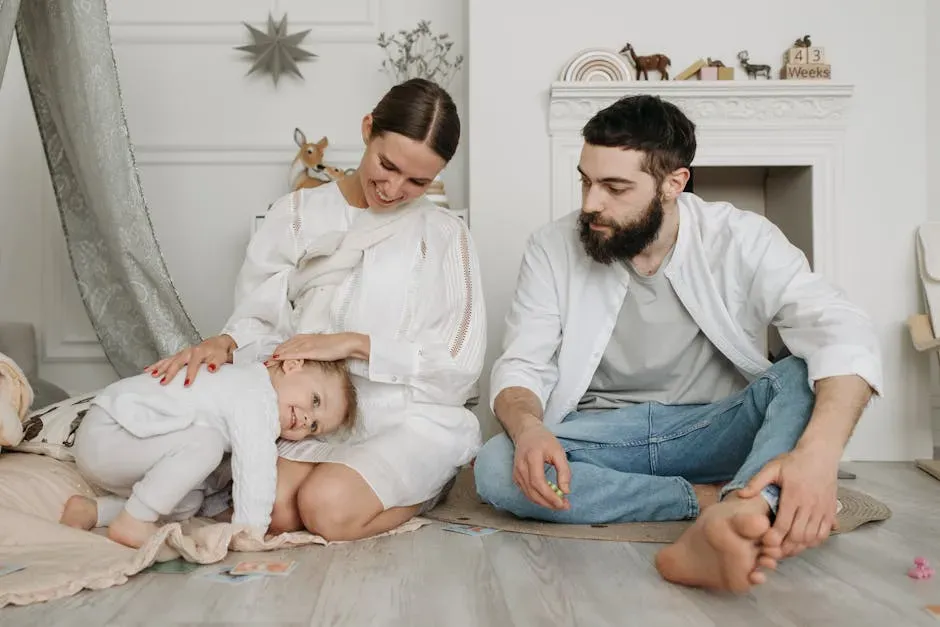
6. Handle parenting problems quietly, on your own, without outside help (Image Credits: Pexels)
Boomer parents mostly relied on whoever was physically nearby, family, neighbors, maybe a pediatrician, and left it at that. Struggling openly, or admitting you needed outside support, wasn’t really part of the culture. As one Boomer parent put it while reflecting on the shift, “Parents today are bombarded with information. When my kids were young, I relied only on the people physically around me for information, tips and tricks.”
Gen Z parents have gone in almost the opposite direction, treating therapy, parenting research, and online communities as normal resources rather than last resorts. Much of this is framed around actively breaking inherited patterns instead of quietly repeating them. Despite Gen Z being the first generation raised with “gentle parenting” in mind, many are leaning toward “cycle-breaking parenting,” which focuses on healing generational trauma by actively identifying and addressing negative family patterns. It’s a shift from private endurance to open problem-solving, and it shows no sign of reversing.
None of this means Boomers got everything wrong or that Gen Z has cracked some perfect formula. Plenty of the independence and resilience built into old-school parenting still has value, even as some of its harder edges get sanded down. What’s changing is less about which generation is “right” and more about which lessons get carried forward, which ones get quietly retired, and how much information today’s parents have access to that their own parents never did.