
Something has quietly shifted in how younger Americans think about where to live. The old script – graduate, move to New York or San Francisco, grind it out – is losing its hold. Millennials are leaving large, colder cities like New York, Boston, and Chicago in significant numbers and heading to warmer climates. The reasons aren’t hard to understand: crushing rents, student debt, and remote work flexibility have all rearranged the map.
Millennials have undertaken a mass exodus from large cities, leaving New York City, Chicago, and Washington, D.C. at the highest rates. What’s taken their place is a more diverse, sometimes surprising set of destinations – places that offer real career prospects alongside a cost of living that doesn’t make homeownership feel like a fantasy. Here’s where they’re actually going.
Nashville, Tennessee: The Welcomer City With Corporate Clout

Nashville, Tennessee: The Welcomer City With Corporate Clout (Image Credits: Unsplash)
JLL now defines Nashville as a "welcomer city" because it still offers plenty of corporate job opportunities, but is more affordable than large cities. That combination is precisely what younger generations are searching for. In 2024, Oracle announced plans to establish its "world headquarters" in Nashville, committing $1.2 billion in capital investment over a decade and pledging to add 8,500 jobs to the area.
Tennessee has a lot of job opportunities in growing metro areas, and it also has no state income tax on wages and lower utility and transportation costs compared with more popular coastal cities, making it an attractive option for those beginning their careers. Compared with Nashville, San Francisco's cost of living is 66.3% higher, and housing is nearly 150 percent more expensive. For a generation shaped by financial precarity, that gap is hard to ignore.
Raleigh, North Carolina: The Quietly Ambitious Tech Hub
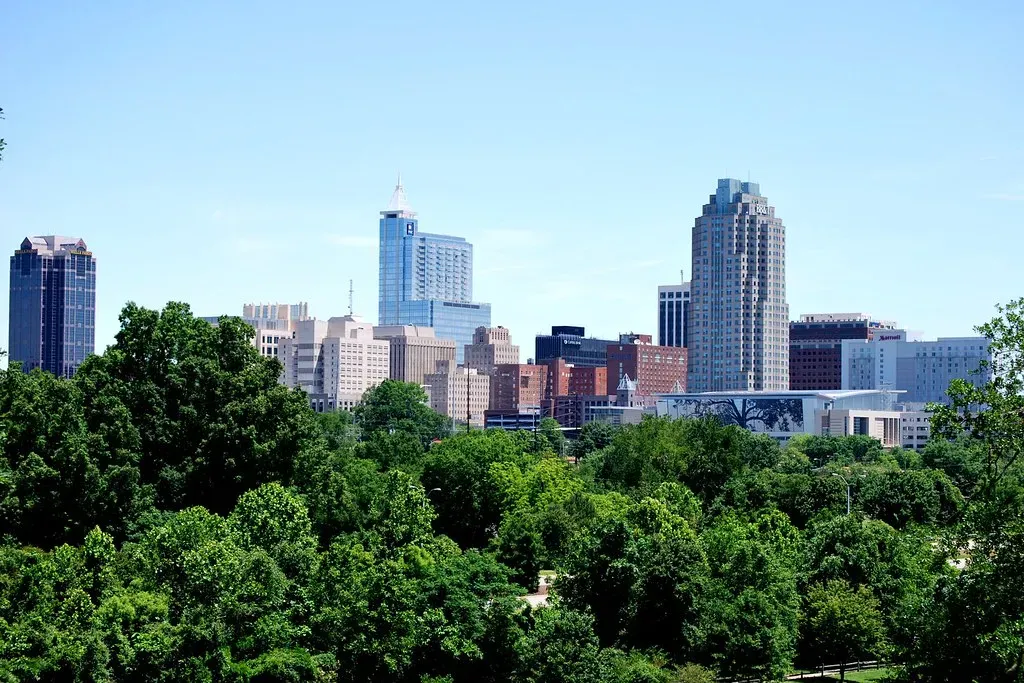
Raleigh, North Carolina: The Quietly Ambitious Tech Hub (twbuckner, Flickr, <a href="https://creativecommons.org/licenses/by/2.0/" target="_blank" rel="noopener">CC BY 2.0</a>)
A SmartAsset study ranked Raleigh-Cary as the number one metro in the U.S. for millennial homeownership in 2024, with more than four and a half percent of residents aged 25 to 44 purchasing a home through a conventional mortgage. That's a remarkable figure for a city still considered mid-sized. Known as the "Silicon Valley of the South," Raleigh is home to a growing number of startups, tech accelerators, and entrepreneurial communities.
Research Triangle Park is one of the prime innovation centers of the U.S., and its interdependence with Raleigh's universities makes it a natural choice for Gen Zers targeting a job in a STEM field paired with affordable living costs. North Carolina's low state income tax – just 4.25% in 2025 and dropping further by 2029 – makes Raleigh even more financially appealing for young professionals, entrepreneurs, and remote workers. The infrastructure is there, the price is right, and the city is still growing.
Minneapolis, Minnesota: The Midwest's Underrated All-Rounder

Minneapolis, Minnesota: The Midwest's Underrated All-Rounder (Image Credits: Pexels)
Minneapolis earned the title of the best city for the up-and-coming Generation Z in 2025's ranking, swapping places with Atlanta compared to the previous year. That's not an accident. The city has a sizable community of young people, with more than nine percent of its residents aged between 20 and 24, and it offers great educational opportunities, with more than half of young adults enrolled in some form of education.
It's also one of the cultural focal points of the Midwest when it comes to music, the culinary arts, and winter festivals. Furthermore, the city's young population benefits from youth development programs like TechHire Minneapolis and AchieveMpls, which are focused on offering career readiness and training paths. Minneapolis has a remarkable in-migration to out-migration ratio of 25.00, meaning that for every Gen Z resident leaving the area, 25 new Gen Z residents moved in. That kind of momentum tends to be self-reinforcing.
Orlando, Florida: Sun, Tax Breaks, and a Surprising Corporate Scene
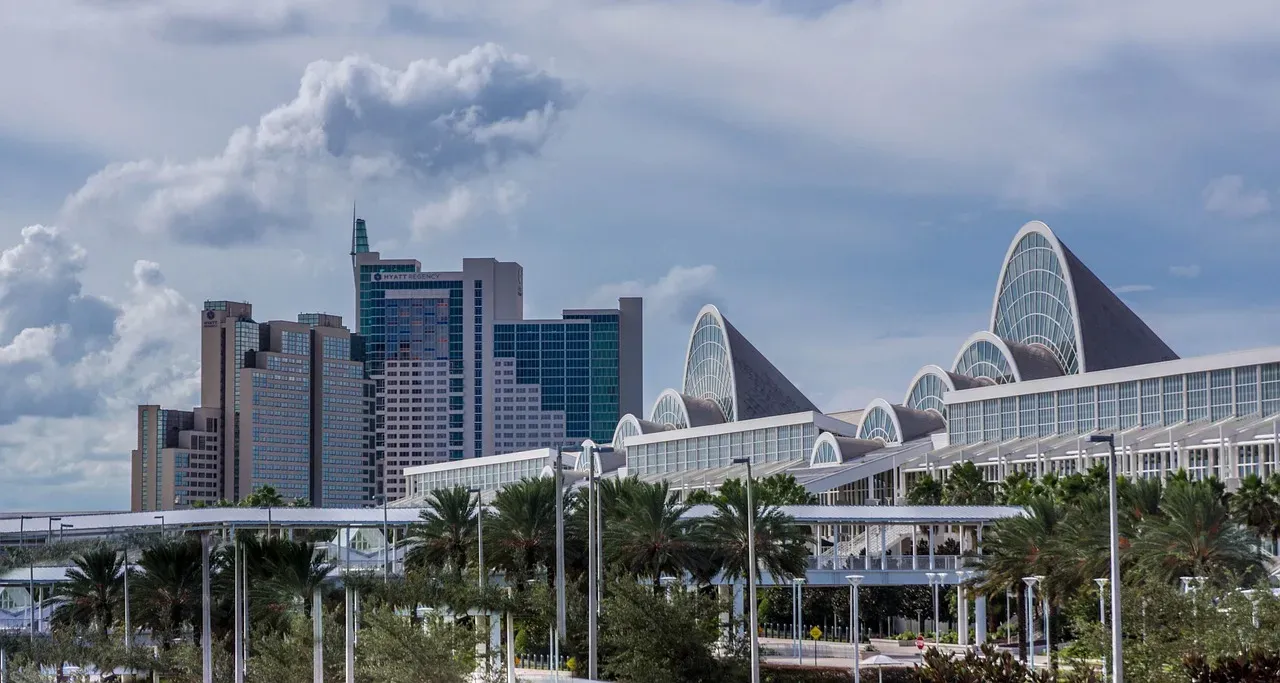
Orlando, Florida: Sun, Tax Breaks, and a Surprising Corporate Scene (Image Credits: Pixabay)
Welcomer cities like Nashville and Orlando are now legitimate contenders in the innovation economy, according to JLL, which tracks talent migration, office market dynamics, and corporate investment across 135 cities globally. Orlando's appeal used to be framed mostly around tourism, but that story has evolved considerably. Travel + Leisure made the decision to relocate its global headquarters downtown, while Boston-based cybersecurity firm SimSpace also moved its headquarters to Orlando, and global banking software company Temenos, AMD, and Charles Schwab have all announced expansions there in recent years.
A cost-of-living comparison by Apartments.com shows the cost of living in San Francisco is 80.6% higher than in Orlando, and housing prices are 226.2% higher. That kind of delta shapes decisions quickly, especially for younger professionals still building savings. Nashville's outsized cultural presence and Orlando's favorable tax policy make them powerful magnets for talent, according to JLL's analysis of talent migration data.
The Carolinas (Myrtle Beach and Raleigh-Charlotte Corridor): A Full Region on the Rise

The Carolinas (Myrtle Beach and Raleigh-Charlotte Corridor): A Full Region on the Rise (Image Credits: Flickr)
The Carolinas continue to bring home the blue ribbon as the most moved-to states, and the area welcomed newcomers including Chattanooga, Spokane, and San Antonio onto broader move-to lists in 2025. The region isn't just a retirement play anymore. The five most popular states people are moving to include Florida, Texas, North Carolina, Arizona, and South Carolina, and the Carolinas are holding steady near the top of that list year after year.
Both the Carolinas and Tennessee boast lower-than-average costs of living, southern charm, and lively culinary scenes as big draws. The Carolinas shine with a larger diversity of nature ranging from mountains to beaches to forestlands. According to RentCafe March 2025 estimates, rentals in these states are around $200 below the national average of $1,750 per month. For younger renters trying to build financial stability, that monthly savings adds up fast.
Midwest Small Cities (Columbus, Omaha, and Kansas City): The Sleeper Picks

Midwest Small Cities (Columbus, Omaha, and Kansas City): The Sleeper Picks (Image Credits: Unsplash)
The affordability and livability that characterizes many population centers in the Midwest resulted in the region recording no fewer than four out of ten cities among the best for Gen Z to relocate to in 2025. These aren't consolation destinations. Omaha may fly under the radar, but its cost-effectiveness and booming employment sectors like finance and tech make it a Gen Z sleeper hit in the Midwest.
Columbus is quietly becoming a Midwestern magnet for young adults. Nearly a third of its jobs are tailored for early-career professionals, and the city also benefits from a strong educational ecosystem that supports Gen Z's growth and development. Many younger people have made moves to the Midwest, where homes are about 30 percent cheaper than on the coasts. A 2025 ConsumerAffairs analysis found that seven of the ten most accessible metros for young homeowners are in the Midwest. That's not a fluke. It's a pattern that's only growing clearer.
The broader shift isn't really about rejecting city life. It's about redefining what a good city actually offers. Affordability, career opportunity, and community used to be things younger generations had to sacrifice to get one or the other. The places above are showing that the trade-off isn't as inevitable as it once seemed.