
Something has been shifting quietly across America for years now. The pull of the big city – the jobs, the buzz, the sense of possibility – is losing ground to a different kind of appeal. More families are trading traffic-choked commutes and sky-high rents for places where kids can actually play outside after dinner, where neighbors know your name, and where a decent house doesn't require a second mortgage on your soul.
A familiar pattern has returned after years of disruption: an exodus from once-popular, hive-like megacities – where skyrocketing costs of living and population density are the norm – in favor of smaller, more breathable towns with lower costs of living and easier access to the outdoors. Affordable housing prices, educational opportunities, and a lower cost of living remain the most popular reasons for families to move. These six towns have figured out how to offer all three.
Conway, South Carolina – Coastal Access Without the Coastal Price Tag

Conway, South Carolina – Coastal Access Without the Coastal Price Tag (Image Credits: Pixabay)
Situated just 15 miles from Myrtle Beach and the Atlantic Coast, Conway is a town where proximity to the ocean doesn't automatically mean a punishing price tag. The median home value hovers around $289,000, keeping it within reach for many families. Conway sits close enough to enjoy all the entertainment and dining that a major tourist destination offers, while also maintaining a more affordable cost of living and small-town charm through its historical downtown and Riverwalk along the Waccamaw River.
When it comes to work, Conway's job base is diversified across education, health care, county government, and light manufacturing, providing ample opportunities for residents who prefer not to commute too far. In recent move-tracking data, Conway saw more than four times the number of people moving in compared to those leaving, from a total population of just under 30,000 residents. It's a number that speaks plainly: families aren't stumbling into Conway by accident.
Apex, North Carolina – The Peak of Good Living, Literally
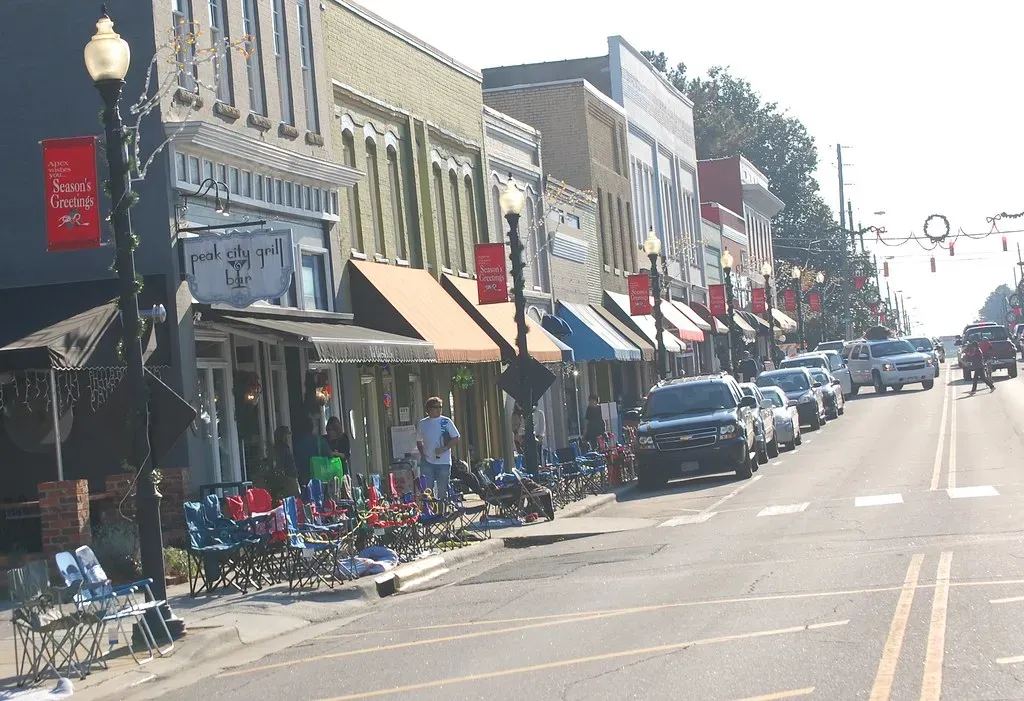
Apex, North Carolina – The Peak of Good Living, Literally (Donald Lee Pardue, Flickr, <a href="https://creativecommons.org/licenses/by/2.0/" target="_blank" rel="noopener">CC BY 2.0</a>)
Known as the "Peak of Good Living," Apex combines historic charm with modern conveniences, making it an increasingly popular choice for families. It's a quiet suburban town outside of Raleigh that is widely regarded as ideal for raising kids. It provides a smaller-town feel while being close enough to Raleigh for big-city activities, and its proximity to the Research Triangle – connecting Duke University, North Carolina State University, and the University of North Carolina at Chapel Hill – offers steady employment opportunities.
Apex has earned recognition as one of the most liveable cities in America, with a cost of living that runs only about three percent above the national average, along with a healthy supply of single-family homes and new construction. The town skews notably family-focused, with the average age of residents at 38.3 years and nearly two-thirds of the population married. That demographic fingerprint is less a coincidence and more a direct result of what Apex consistently delivers.
Greenville, South Carolina – A Southern City That Punches Above Its Weight

Greenville, South Carolina – A Southern City That Punches Above Its Weight (Image Credits: Pexels)
Greenville's population is diverse, and the city is well-suited to families, retirees, and singles alike. Parents find it appealing because of a highly rated public school system and a wide range of family-friendly activities, including Falls Park on the Reedy River, the Greenville Zoo, and the Children's Museum of the Upstate. The pace of living is slower, the weather is mild, and South Carolina ranks among the better states for tax considerations. Like many smaller towns, Greenville features a dedicated Main Street and a lively, walkable downtown.
Greenville has attracted newfound economic momentum in manufacturing, finance, and technology, giving families not just a pleasant place to live but a genuinely growing job market to step into. The Carolinas and Tennessee have consistently topped move-in destination lists, driven by affordability, access to nature, and smaller-city charm – and Greenville sits comfortably at the center of that story. It's a town that rewards families who do their homework before the move.
New Braunfels, Texas – Where the River Runs Through a Booming Town

New Braunfels, Texas – Where the River Runs Through a Booming Town (Image Credits: Pexels)
New Braunfels has one of the highest move-in rates of any comparable American city, with roughly 2.67 people arriving for every one who leaves, alongside a public school score of A-minus. Part of that pull comes from the lifestyle: families can tube, kayak, and fish in the Comal and Guadalupe Rivers, or cool off at one of the country's largest waterparks. For a town of around 110,000, that's a remarkable recreational offering.
Families heading to Texas are drawn by numerous small towns that offer the ideal balance of affordability and quality of life. New Braunfels fits that description almost precisely, sitting in the corridor between San Antonio and Austin and benefiting from both metro areas without fully absorbing their costs. Housing prices have already risen notably over the past several years as demand has grown, so families eyeing New Braunfels are wise to move sooner rather than later.
Bend, Oregon – Outdoor Living With a Practical Side

Bend, Oregon – Outdoor Living With a Practical Side (Image Credits: Pexels)
For families that crave a mix of outdoor adventure and a relaxed pace of life, Bend sits in Central Oregon and offers year-round recreation, from skiing at Mount Bachelor in winter to paddleboarding along the Deschutes River in summer. Bend's schools are well-regarded, and the city is home to numerous family-friendly events, including outdoor movie nights, farmers' markets, and art festivals.
With a growing number of job opportunities in tech, healthcare, and tourism, Bend is as practical as it is beautiful. Bend is the only city in the West to crack the national top 10 relocation destinations in recent rankings, climbing dramatically from its earlier position earlier in 2025. That kind of upward momentum tends to mean one thing: families are telling other families that it works.
Broken Arrow, Oklahoma – The Underdog That Keeps Outperforming
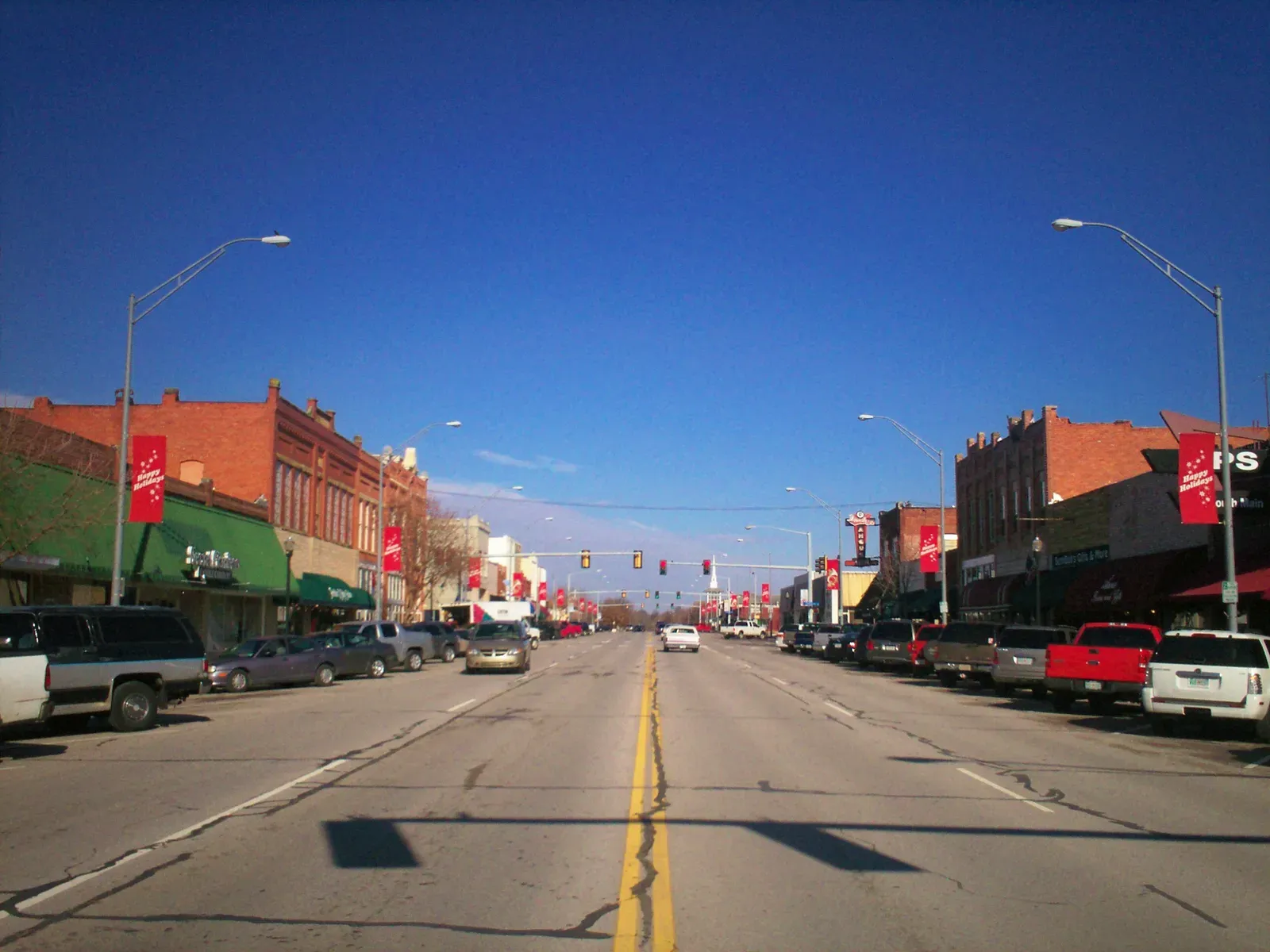
Broken Arrow, Oklahoma – The Underdog That Keeps Outperforming (Transferred from en.wikipedia, <a href="https://commons.wikimedia.org/w/index.php?curid=4015922" target="_blank" rel="noopener">Public domain</a>)
Broken Arrow, Oklahoma, with a median home price of around $275,000, ranks as the most affordable town in America where families can still find low crime rates and strong public schools. Broken Arrow Public Schools, founded in 1904, serves more than 19,000 students and maintains a high-school graduation rate of over 90 percent. Those numbers carry real weight for parents who've been weighing school quality against housing costs in bigger metros.
The school district offers full-day pre-K, so parents save on daycare costs while also giving their kids a strong head start into kindergarten – all in a town that has been catching attention from "best places" lists for its revitalized Rose District, complete with murals, eateries, and a local performing arts center. The broader community reflects a solid middle-class foundation, with a median household income approaching $90,000. Broken Arrow rarely tops anyone's glamour list, but it quietly delivers on the things that actually matter when you're raising a family.
The common thread running through all six of these towns isn't about giving something up. It's about finding a place where the trade-offs actually work in a family's favor – more space, less cost, safer streets, and schools that don't require a lottery to get into. According to research from the University of Virginia, adults between the ages of 25 and 44 were responsible for roughly two-thirds of the growth in smaller metro areas and rural counties since 2020. That's not a trend. That's a recalibration.