
Ten years is a long time. Long enough to have lived through job changes, family losses, health scares, small victories, and the kind of ordinary Tuesday evenings that quietly become the texture of a life. What starts as two separate people drawn toward each other slowly becomes something more complicated, more layered, and often more resilient than either person expected.
The science on long-term couples is clear on one point: the idea that all relationships simply decline over a decade is too simple. Growing evidence challenges the longstanding assumption of a universal decline in relationship satisfaction for all couples by demonstrating variability in the change. What actually shifts between a man and a woman over ten years together is nuanced, sometimes surprising, and worth understanding.
1. The Way They Fight – and What They Fight About

1. The Way They Fight – and What They Fight About (Image Credits: Unsplash)
Early in a relationship, arguments tend to be charged, intense, and emotionally raw. After a decade, conflict usually looks different – not necessarily less frequent, but often more patterned and predictable. The reason couples can become stuck in a repetitive pattern is that the issues threaten them at the basic level of relational and attachment needs. Simple and trivial matters become the basis for arguments which express basic fears and hurts, at the foundation of each person’s way of being in the world.
What couples argue about also shifts noticeably over time. Research has suggested that for a given person, disagreements about finances were associated with more negative communication relative to non-financial topics. Moreover, conflict around children was associated with conflict strategies such as withdrawal and sadness. These are not random patterns – they reflect the real pressures that tend to accumulate in the middle years of a committed relationship.
2. Sexual Frequency and How Desire Is Negotiated
2. Sexual Frequency and How Desire Is Negotiated (Image Credits: Pexels)
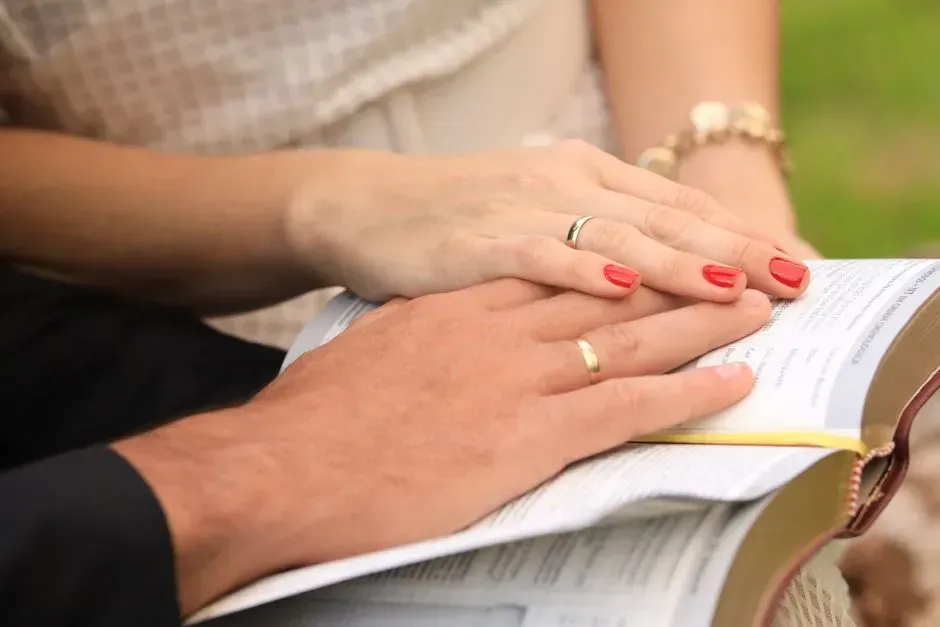
Few things shift as visibly between a man and a woman over ten years as the sexual dimension of their relationship. The early intensity tends to level off fairly quickly. For survey respondents, the honeymoon period lasted an average of roughly twelve months. Once it was over, nearly two thirds noticed a decline in sexual frequency. That number is not a sign of failure – it is simply what the data consistently shows across populations.
Literature indicates that the longer duration of a relationship may lead to a decline in sexual desire, arousal, and sexual activity, even after controlling for confounding factors such as age and the couple’s health statuses. What often becomes more important is how the couple negotiates that gap – whether desire mismatches are discussed openly or silently allowed to create distance. Older married couples continue to engage in sexual activity even as frequency wanes, and this is associated with better physical and mental health.
3. Emotional Intimacy Deepens – or It Erodes

3. Emotional Intimacy Deepens – or It Erodes (Image Credits: Pixabay)
Emotional closeness does not simply maintain itself over a decade. It either grows or quietly shrinks, depending on the patterns both people bring to the relationship. Positive communication patterns enhance relationship quality, whereas the accumulation of negative exchanges erodes couples’ satisfaction. After ten years, those accumulated patterns become the real foundation of the relationship – for better or worse.
Research has shown that emotional, intellectual, and recreational intimacy are the significant predictors of marital satisfaction for both male and female participants. This is a meaningful finding because it suggests that couples who stay emotionally curious about each other – who continue to have real conversations and share experiences – tend to maintain stronger bonds than those who rely primarily on physical intimacy alone. The quality of connection matters more than its original intensity.
4. The Division of Household Labor Solidifies Into Roles

4. The Division of Household Labor Solidifies Into Roles (Image Credits: Unsplash)
By the ten-year mark, most couples have developed a fairly entrenched system for who does what around the home. Those patterns tend to stick. Research confirms that the division of household labor changes over long periods together, and that the effects of relationship duration on the division of household labor remain significant even when work characteristics are accounted for.
A majority of women – roughly three in five – report doing more household chores than their spouse or partner, while only a small fraction say their partner does more. What is particularly notable is how durable these arrangements prove to be. Gendered patterns in domestic labor endure due to entrenched norms and task specialization, even in female breadwinner households. These findings highlight the persistence of early household specializations well beyond the caregiving years.
5. Relationship Satisfaction Hits Its Low Point – Then May Recover

5. Relationship Satisfaction Hits Its Low Point – Then May Recover (Image Credits: Pexels)
This is one of the more counterintuitive findings from relationship research. The ten-year mark is not just challenging – it is, statistically, close to the lowest point in many couples’ satisfaction curves. Relationship satisfaction decreased during the first ten years of the relationship, reached a low point at ten years, increased until twenty years, and then decreased again. That dip is real, and many couples feel it without knowing why.
Cross-sectional results indicate a decrease in relationship satisfaction from age 20, reaching the lowest point at age 40 before increasing again until age 65. Integrating findings on relationship duration indicated a cyclic pattern, with decreases within the first ten years, followed by increases until twenty years. In other words, the discomfort many couples feel at a decade together is not necessarily the beginning of the end. For those who work through it, the arc bends back upward. The couples who know this tend to navigate it more steadily.
6. Attachment Patterns Shift and Often Become More Secure
6. Attachment Patterns Shift and Often Become More Secure (Image Credits: Pexels)
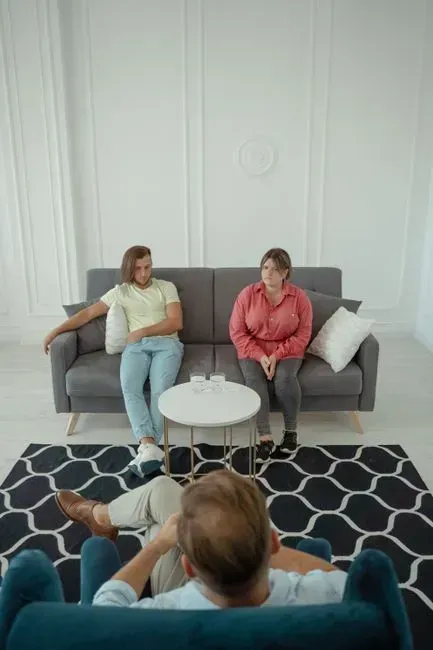
One of the quieter transformations that happens over ten years is in how each person relates to security within the relationship. People who came into the relationship with anxious or avoidant tendencies do not necessarily stay that way. Attachment styles can change over time within relationships, particularly for individuals with anxious attachment. Partners who consistently experience responsive, supportive behavior from their romantic partners often develop more secure attachment patterns over months or years. This finding suggests that relationship experiences can gradually modify attachment patterns established in childhood.
This is one of the more hopeful findings in relationship psychology. The steady accumulation of small moments – being listened to, being shown up for, being comforted during stress – does something real to the nervous system over time. Men and women may express and process this shift differently, but both are capable of growing into greater security through a long-term relationship that functions well. The relationship itself becomes a form of ongoing therapy, whether the couple recognizes it or not.
7. Individual Identity Gets Both Stronger and More Intertwined

7. Individual Identity Gets Both Stronger and More Intertwined (Image Credits: Unsplash)
After ten years, the line between “I” and “we” becomes genuinely blurry. Shared habits, shared references, shared routines – these create a kind of merged identity that is both comforting and, occasionally, suffocating if not managed with care. Research on long-term couples consistently shows that those who maintain some degree of individual interests alongside shared ones tend to report higher satisfaction. Studying long-term trajectories of relationship satisfaction over ten years, researchers found that at the final assessment, partners reported on outcomes including affect, mental health, and life satisfaction. Couples in the subgroup with high initial and relatively stable relationship satisfaction reported the most favorable outcomes, including more positive affect and better mental health.
The couples who thrive at the decade mark tend to be those who have figured out, consciously or not, how to be genuinely interdependent without losing themselves entirely. Relationship science contends that the quality of couples’ communication predicts relationship satisfaction over time. That communication is not just about conflict resolution – it is also the daily practice of reminding each other who you each still are, separately, within the life you’ve built together. That balance is harder than it sounds, and reaching it is one of the real achievements of a long relationship.
Ten years together changes people in ways they rarely anticipate at the beginning. Some of those changes quietly strengthen the bond. Others require conscious attention. The couples who understand what is actually shifting beneath the surface tend to be better equipped to meet those shifts with something more useful than confusion or resignation.