
Language is a shared tool, but it’s rarely a shared experience. Two people can sit in the same room, hear the same sentence, and walk away with completely different understandings of what just happened. This isn’t about intelligence or intention. It’s about the invisible layers that words carry depending on who’s speaking them and why.
Men and women often have different communication styles, which can sometimes lead to misunderstandings. Men tend to focus on objects and results, seeking an efficient process to prove competency. Women, by contrast, concentrate on people and feelings, finding worth in giving advice, sharing emotions, and creating intimacy. The seven words and phrases below sit right at that fault line, ordinary-sounding on the surface, and loaded with meaning underneath.
1. "Fine"

1. "Fine" (Image Credits: Pexels)
When a woman says “it’s fine,” it’s usually a wall. Small and temporary, perhaps, but a wall nonetheless. It protects feelings she may not fully understand yet. She knows something feels off, but also knows that whatever it is could easily paint her as complicated or angry if she tries to explain it before she’s processed it herself.
A man hears “fine” and processes it as a green light. Problem resolved, conversation over, move on. From an early age, many girls receive subtle lessons about how they should move through the world: be polite, be accommodating, don’t make things hard. These messages arrive packaged as some of the first compliments they hear about themselves. The word “fine” is often the adult version of that same learned accommodation.
2. "Nothing"

2. "Nothing" (Image Credits: Pexels)
“What’s wrong?” “Nothing.” For many men, that exchange signals an absence of a problem. Women often give hints, speak abstractly, and then expect their partners to know what they mean. Without ever intending to lie, they don’t express the full truth. At times, they communicate so indirectly that the real message can’t be perceived. “Nothing” is almost never an absence. It’s frequently the presence of something too big, or too fragile, to say out loud yet.
Women often use indirect communication, hinting or suggesting rather than stating outright, rooted in a desire to avoid conflict, maintain harmony, or preserve the relationship. Saying “nothing” can be a way of testing whether the other person cares enough to keep asking. Men, who tend to take language at face value, often stop there and unintentionally fail the test.
3. "Whatever"

3. "Whatever" (Image Credits: Unsplash)
“Whatever” sounds like indifference. To most men, it reads as permission, or at worst, mild annoyance quickly passed. In reality, it’s often the verbal equivalent of giving up on a conversation. Women might feel pressure to be agreeable, leading to indirect expressions. “Whatever” is what comes out when a woman has tried to communicate something and feels she isn’t being heard, and has decided it’s no longer worth the effort.
It’s a common complaint: women often feel unheard, while men feel confused. The gap around “whatever” captures this dynamic almost perfectly. He hears acceptance. She means resignation. Both walk away certain they understood correctly, and both are wrong about what the other person experienced.
4. "Do Whatever You Want"

4. "Do Whatever You Want" (Image Credits: Unsplash)
This phrase is closely related to “whatever” but carries its own distinct weight. A man receives it as genuine permission, sometimes even relief: no debate, no negotiation, just freedom to decide. When women say “do what you want,” it’s usually a wall. It’s a phrase often spoken when a woman has already expressed a preference, feels it wasn’t taken seriously, and has now withdrawn from the decision entirely as a form of protest.
Research consistently shows that women place greater emphasis on communication and interpersonal relations than men, with female communication tending to be more emotional and relationship-focused. “Do whatever you want” isn’t an invitation to act freely. It’s a signal that the relational dynamic has shifted, and the man who takes it literally will often find that out the hard way later.
5. "I'm Just Tired"
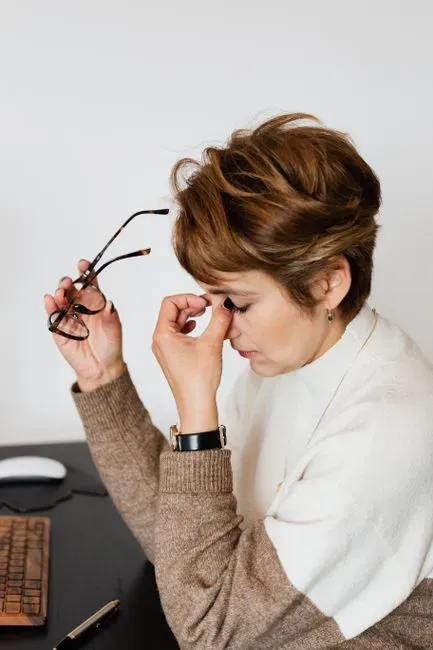
5. "I'm Just Tired" (Image Credits: Pexels)
Fatigue is real, and sometimes “I’m tired” does mean exactly that. Men tend to interpret it as physical exhaustion: someone needs sleep, end of story. Women typically adopt relational and affiliative orientations, responding more strongly to warmth, empathy, and politeness cues. When a woman says she’s “just tired,” she’s often describing an emotional state, worn down by feeling unsupported, unacknowledged, or carrying more than her share of invisible labor.
Deborah Tannen’s influential work argued that women and men have fundamentally different purposes in conversation. Women use talk to build connection, share experiences, and negotiate relationships. “I’m tired” can be an invitation to that kind of connection, a soft ask for someone to notice and inquire further. When a man nods and says “you should get to bed,” he’s solved the literal problem and missed the actual one entirely.
6. "It's Up to You"

6. "It's Up to You" (Image Credits: Pexels)
On the surface, “it’s up to you” sounds like a reasonable delegation of a decision. Men, who often prefer direct communication, aren’t being insensitive when they take this at face value. It’s simply their communication style. They’ll pick the restaurant, choose the movie, or make the plan, and feel good about having been decisive. The trouble is that “it’s up to you” frequently comes with unstated conditions, options she definitely doesn’t want, preferences she’s hoping he already knows.
One of the most consistently documented differences in gendered communication is the use of tentative language, including hedges like “I think” or “sort of,” qualifiers, and tag questions, short phrases added to the end of statements to invite agreement or soften an assertion. “It’s up to you” can function the same way. It softens, it defers, but it doesn’t actually mean she has no opinion. It usually means she has a very specific one and is hoping he’ll land on it without being told.
7. "We Need to Talk"

7. "We Need to Talk" (Image Credits: Unsplash)
Few phrases trigger more immediate dread in men than this one, and the reaction is telling. Women concentrate on people and feelings, finding worth in giving advice, sharing emotions, and creating intimacy. For women, “we need to talk” is simply an announcement that a meaningful conversation is coming, something to look forward to if the relationship is healthy. It’s an invitation to connect at a deeper level.
For many men, the same four words land as a threat or a verdict. Men might interpret indirect cues as a lack of clarity or even manipulation, leading to misunderstandings. The phrase activates anticipation of conflict or criticism, not connection. Women place far greater emphasis on communication and interpersonal relations, which means initiating a “real talk” feels natural and even caring to them. The gap in how those words are received says less about the words themselves and more about the very different emotional maps men and women are navigating when they speak to each other.
None of this is fixed, and none of it is destiny. Research confirms that men and women’s communication patterns are deeply affected by socialization and cultural expectations, formed from early childhood through interactions with parents, teachers, and peers. That’s actually useful information, because what’s learned can be unlearned, or at least understood. Recognizing that the same word can carry a completely different emotional payload depending on who’s saying it is a small shift with an outsized effect on how well two people actually hear each other.