
Most people don’t question their daily routine until something goes noticeably wrong. It’s easy to assume that because you’re moving through the day, checking things off, and getting to bed at a reasonable hour, everything must be working. The truth is, a routine can feel busy and structured on the surface while quietly wearing you down beneath it.
Routines aren’t inherently good or bad. Their value depends entirely on whether they serve your actual needs, and sometimes the ones we’ve carried for months or years have quietly stopped doing that. These eight indicators can help you spot when that’s the case.
1. You Wake Up Tired Even After Enough Sleep

1. You Wake Up Tired Even After Enough Sleep (Image Credits: Pexels)
If you frequently wake up feeling exhausted despite a full night in bed, you may be experiencing what's known as unrefreshing sleep – sleep that doesn't recharge the body and brain enough to help you feel well-rested. This is one of the clearest signs that something in your daily rhythm is off, whether it's irregular sleep timing, too much screen exposure before bed, or chronic background stress that prevents deep rest.
Stress can lead to increased release of physiological hormones like adrenaline and cortisol, which affect sleep regulation centers and cognitive functions, resulting in reduced sleep quality. When a routine doesn't allow for genuine decompression before bed, these hormonal patterns accumulate over time. Sleep deprivation causes fatigue, low energy, and excessive sleepiness, which can affect your ability to do things you love and simply complete day-to-day tasks.
2. Persistent Fatigue That Doesn't Improve With Rest

2. Persistent Fatigue That Doesn't Improve With Rest (Image Credits: Pexels)
Research has shown that day-to-day variation in fatigue is closely related to poor sleep quality and reduced sleep duration the previous night, as well as to higher stress levels. Fatigue was also strongly related to poorer subjective health and sleepiness during the same day. If you're consistently dragging through afternoons regardless of how early you went to sleep, your routine likely isn't providing the right kind of recovery at the right times.
Fatigue is a central characteristic in chronic fatigue syndrome, burnout, depression, and insomnia, which means persistent tiredness that doesn't ease with normal rest is rarely just laziness. It often points to a structural problem in how your days are organized. A routine that packs too much in without built-in recovery windows is a common culprit.
3. You Feel Chronically Stressed or Wired but Tired

3. You Feel Chronically Stressed or Wired but Tired (Image Credits: Unsplash)
A persistent state of being "wired but tired," combined with perfectionism, guilt for not doing enough, and difficulty relaxing or stopping, is a hallmark sign that a routine has tipped into harmful territory. This kind of low-grade, sustained stress is often invisible from the outside because you're still technically functioning. Internally, though, the body is operating in a constant state of mild emergency.
A staggering number of Americans, roughly two in five, reported feeling more stressed and anxious in 2024 than they had in the previous year. The American Institute of Stress has also reported that nearly half of employees believe the majority of their stress is work-related. A daily routine that leaves no room for genuine transitions between work and personal time tends to keep cortisol elevated throughout the day, making it progressively harder to switch off.
4. Procrastination Has Become a Daily Pattern
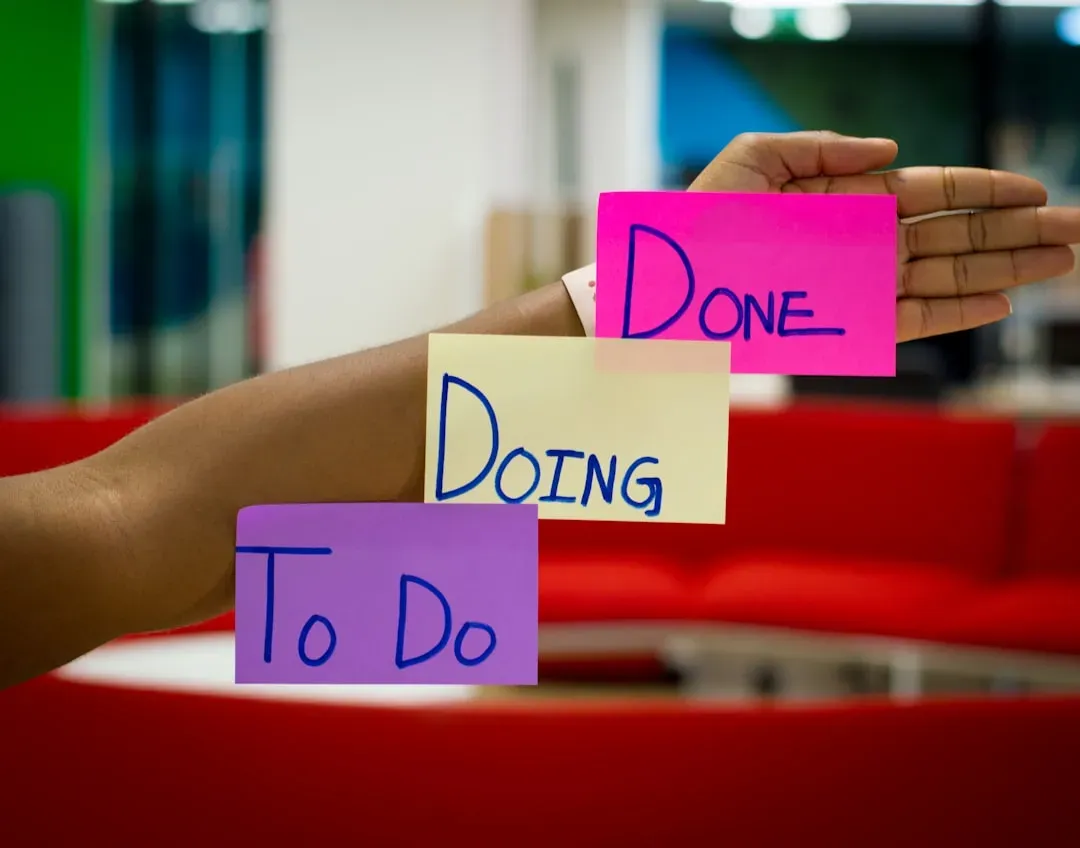
4. Procrastination Has Become a Daily Pattern (Image Credits: Unsplash)
Everyone puts things off sometimes, but procrastinators chronically avoid difficult tasks and may deliberately look for distractions. Procrastination tends to reflect a person's struggles with self-control. When avoidance becomes a daily pattern rather than an occasional slip, it's often the routine itself that's the problem. A structure that doesn't align with your energy peaks or fails to protect your focused time practically invites drift.
Research suggests that roughly one in five adults admits to being a chronic procrastinator, a significant increase from earlier decades, and people spend an average of more than two hours per day procrastinating. Procrastination may relieve pressure in the moment, but it can have steep costs: students who routinely procrastinate tend to get lower grades, workers who procrastinate produce lower-quality work, and habitual procrastinators can experience reduced well-being, including insomnia and immune disturbance. A routine that routinely leads to avoidance needs to be reconsidered.
5. You Rarely Have Time or Energy for Physical Movement

5. You Rarely Have Time or Energy for Physical Movement (Image Credits: Unsplash)
Physical inactivity has become the fourth most important risk factor for death globally after hypertension, smoking, and hyperglycemia, and a recent study found that nearly one third of the world's adult population, approximately 1.8 billion adults, are physically inactive. If your daily routine consistently squeezes out any opportunity for movement, that's not a minor inconvenience. Over time, it compounds into a real health risk.
Procrastination and poor time structure are also linked to a lack of physical activity, with those who have low routine commitment tending to show a low commitment to exercise as well. A lack of physical activity can contribute to a range of long-term health issues, including obesity and diseases related to inactivity. If "I just didn't have time" is the explanation for most missed workouts, that's a routine problem, not a willpower problem. The structure itself isn't making space for movement.
6. You've Stopped Doing Things You Used to Enjoy

6. You've Stopped Doing Things You Used to Enjoy (Image Credits: Unsplash)
Feeling drained and no longer energized by work, side projects, or even hobbies you used to enjoy is one of the classic warning signs of emotional exhaustion. When a daily routine becomes entirely task-driven with no room for leisure, creativity, or genuine rest, the first casualties are usually the activities that once brought satisfaction. This isn't just a mood issue. It's a signal that something structural has gone wrong.
Toxic productivity, an unhealthy compulsion to be productive at all times, often at the expense of mental and physical well-being, relationships, and overall quality of life, is a common sentiment in today's work culture, where the drive to be constantly productive is often celebrated, if not expected. When your routine only has room for "useful" activities and crowds out enjoyment entirely, it's worth asking what the routine is actually for.
7. Your Mood Is Consistently Low or Irritable

7. Your Mood Is Consistently Low or Irritable (Image Credits: Unsplash)
Individuals with poor sleep quality are more likely to experience fatigue, irritability, daytime functional impairment, slower reactions, and increased caffeine or alcohol consumption. Mood is tightly bound to the quality of your daily structure. A routine that doesn't protect sleep, allow for nourishment, or create moments of calm produces a kind of low-level emotional wear that's easy to dismiss but difficult to live with.
Disruptions to daily routines have been linked to unhealthy changes in physical activity, sleep, and diet, all of which feed directly into emotional regulation. It's well established that bad sleep can make you feel irritated, emotional, and short-tempered the next day, and chronic sleeplessness can quickly morph into mental health concerns, with mood disorders like depression and anxiety closely connected to chronic insomnia and sleep deprivation. A routine that consistently undermines sleep is, in a very real sense, undermining your emotional stability.
8. You Feel Disconnected or Increasingly Isolated

8. You Feel Disconnected or Increasingly Isolated (Image Credits: Unsplash)
Research has found that greater procrastination and poor daily structure are significantly associated with higher levels of loneliness, higher perceived social isolation, and greater social withdrawal. When a routine is built entirely around obligations, there's rarely space left for the kinds of spontaneous or intentional social contact that keep people connected. Gradually, meaningful relationships start to thin out simply because the structure of the day never makes room for them.
Blurring the line between productivity and self-worth, where downtime feels wasted or guilty, often causes basic needs like sleep, nutrition, and social connection to suffer. Connection isn't a luxury that fits into a schedule after everything else is done. When it gets repeatedly postponed, isolation tends to grow quietly in the background. That creeping sense of disconnection is often one of the strongest signals that your daily structure deserves a serious rethink.
Routines are supposed to serve you, not the other way around. If several of these indicators feel familiar, the takeaway isn't alarm, it's awareness. Small structural shifts, protecting sleep, making room for movement, carving out genuine recovery time, can have surprisingly large downstream effects on how a day actually feels to live through.