
There’s a particular kind of confidence that comes with growing up before the internet existed. Baby Boomers, born between 1946 and 1964, built their social and practical lives around skills that required no smartphone, no app, and no Wi-Fi signal. They called strangers on the phone without hesitation, showed up at people’s homes unannounced, and wrote entire paragraphs in flowing cursive. It was simply how the world worked.
Gen Z, the generation born roughly between 1997 and 2012, inherited a fundamentally different world. Their social lives were curated through screens, their communication defaulted to text, and their sense of personal space hardened in ways previous generations never anticipated. The result is a fascinating, sometimes comic divide where ordinary Boomer habits feel genuinely intimidating to younger people. Here are eight of them.
1. Picking Up the Phone and Calling a Complete Stranger

1. Picking Up the Phone and Calling a Complete Stranger (Image Credits: Pexels)
For Boomers, a ringing phone was an invitation, not a threat. You picked it up, you talked, and you moved on. The idea of a cold call to a plumber, a doctor’s office, or even a neighbor barely registered as a social challenge. It was simply the primary tool of daily life.
The gap today is striking. Nearly 75 percent of Gen Zers feel anxious about making calls or talking on the telephone. In a 2024 Uswitch survey of 2,000 U.K. adults, nearly 70 percent of those aged 18 to 34 preferred texting over talking, with 23 percent admitting they never answer calls at all. There’s even a clinical term for this now. Generation Z is struggling with telephobia, a phenomenon describing people who fear phone calls. Boomers don’t just tolerate calls. They prefer them.
2. Walking Up to Strangers and Starting a Conversation

2. Walking Up to Strangers and Starting a Conversation (Image Credits: Pexels)
For Boomers, small talk is a cultural expectation. Growing up in a pre-digital world of long phone calls and tight-knit neighborhoods, casual pleasantries weren’t optional – they were part of good manners. Striking up a chat in a grocery line, a waiting room, or a parking lot is second nature. To most Boomers, it signals warmth, not weirdness.
Gen Z tends to read the same interaction very differently. They grew up being told to be wary of strangers, of being watched, of how quickly words and images can be captured and shared. Their social arenas are often curated: group chats, Discord servers, fandom spaces, direct messages. These are not accidental encounters; they’re selected ones. Unsolicited small talk from a stranger, especially when it veers personal, can tingle with a faint alarm bell. The Boomer sees friendliness. The Gen Z brain sometimes registers mild social intrusion.
3. Showing Up at Someone's House Without Warning
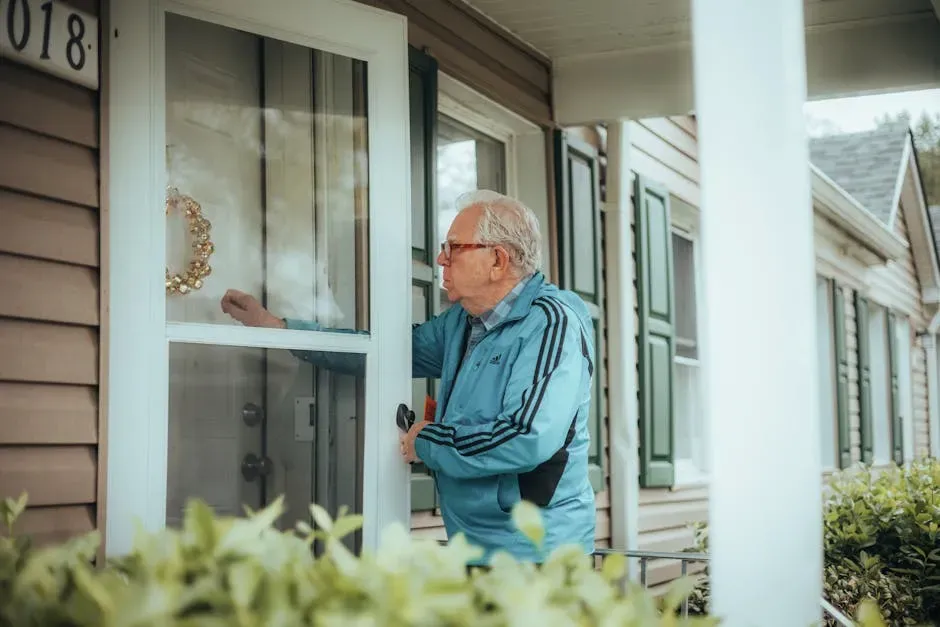
3. Showing Up at Someone's House Without Warning (Image Credits: Pexels)
For Boomers, dropping by someone’s home without warning was standard social practice. Neighborhoods functioned on spontaneous visits. The doorbell rang, you answered, you invited people in for coffee whether the house was clean or not. This was how community worked – organic, unscheduled, based on physical proximity and free time.
Gen Z has a very different relationship to home space. Gen Z experiences unannounced visits as minor home invasions. The idea that someone would simply appear at their door, expecting entry and social interaction, seems aggressive and disrespectful. Homes have become private sanctuaries requiring appointment-style access. Even close friends text from the driveway. They will almost never show up randomly at someone’s house the way Boomers did as young people. With a simple text, they’re getting the same job done, arguably more conveniently.
4. Writing and Reading Cursive Without a Second Thought

4. Writing and Reading Cursive Without a Second Thought (Image Credits: Unsplash)
Boomers learned cursive in elementary school and used it daily for decades. Handwritten letters, grocery lists, birthday cards, signatures – all of it flowed naturally from the pen. It was as unremarkable as tying a shoe. Many still prefer writing by hand and find typed notes oddly cold.
In 2010, U.S. schools were no longer required to teach cursive as part of the education system’s Common Core Standards. The downstream effect has been significant. Many Gen Z individuals cannot read or write cursive at all because schools stopped teaching it. They can’t read their grandparents’ handwriting, can’t access historical documents in their original form, and can’t write signatures beyond printed versions of their names. This seems like obsolete knowledge until you receive a handwritten note you can’t read. What Boomers do effortlessly, a meaningful portion of Gen Z simply cannot do at all.
5. Navigating Without GPS or a Phone

5. Navigating Without GPS or a Phone (Image Credits: Pexels)
Ask a Boomer for directions and they’ll likely point to landmarks, reference the position of the sun, and confidently say “about twenty minutes.” They built mental maps through years of driving, getting lost, and finding their way back. A road trip with no phone was not a crisis. It was just a road trip.
Many Gen Zers are reliant on their cell phones and digital GPS systems to get around, even in their own towns and cities. It’s become a habit, so much so that nearly 83 percent of Gen Zers rely completely on cellular maps over paper ones to get where they need to go. Google Maps and Waze are important tools of 21st century navigation, but there are countless stories of GPS failing travelers, causing them to be stranded in desolate locations. There’s also the question of what happens if your phone runs out of battery or you can’t access online maps. Reading a physical map can be a worthwhile skill to maintain for in-case-of-emergency situations.
6. Talking Freely Across Generations Without Anxiety
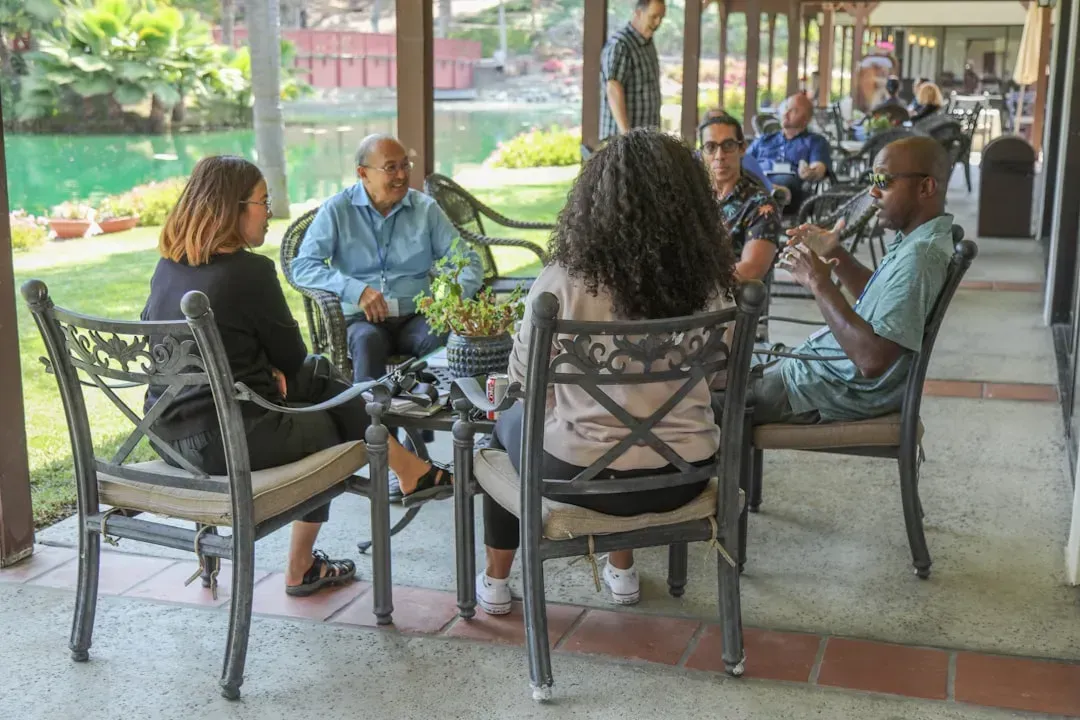
6. Talking Freely Across Generations Without Anxiety (Image Credits: Unsplash)
Boomers grew up in workplaces and neighborhoods where age mixing was just a fact of life. You talked to your boss, your elderly neighbor, the hardware store owner, and the kid who mowed your lawn – often in the same afternoon. Cross-generational conversation wasn’t a skill to develop. It was unavoidable.
Research from LinkedIn suggests that Gen Z’s confidence doesn’t extend to talking with Baby Boomer and Gen X coworkers on their team. One in five Gen Z workers reported that they haven’t had a single direct conversation with someone over 50 in their workplace in the last year. They’re also the least likely to feel confident interacting with other generations generally. A 2024 Forbes report found that over half of Gen Z say their in-person social skills have declined, and 1 in 4 feel their verbal communication has gotten worse. The confidence gap is real, and measurable.
7. Doing Basic Math in Their Head Without a Calculator

7. Doing Basic Math in Their Head Without a Calculator (Image Credits: Pexels)
Boomers were trained to calculate in their heads. Tips at restaurants, percentages at the hardware store, change from a twenty – all of it done mentally without a second thought. They were schooled in arithmetic before calculators were common, and that muscle never left them.
Boomers learned arithmetic by hand – addition, subtraction, multiplication, division, percentages, all done mentally or on paper. They can calculate tips, figure out per-unit pricing, and estimate costs without pulling out a calculator. Gen Z reaches for their phone calculator for even basic calculations. Not complicated math, just basic percentage calculation that Boomers do automatically. The issue isn’t that calculators exist – it’s that the mental math skills never developed because they were never necessary. It’s one of those abilities that looks like a superpower only when you don’t have it.
8. Calling a Business to Resolve a Problem Directly

8. Calling a Business to Resolve a Problem Directly (Image Credits: Pexels)
Boomers wield phones like diplomatic weapons. “Let me call and sort this out,” they announce, dialing from memory. Ten minutes later, the problem is solved, managers have been reached, and discounts applied. They understand the cheat code: humans solve problems faster than chatbots. This confidence is not posturing. It’s a genuine skill forged over decades of phone-first communication.
For many in Gen Z, the same task feels genuinely fraught. A survey by global recruitment agency Robert Walters found that Gen Zers and Millennials preferred to communicate via email and instant messaging at work, with 59 percent favoring those methods, while 50 percent felt uncomfortable making business calls. Only 16 percent of Gen Z and Millennial respondents considered calls an effective use of time. Over half of 18-to-24-year-olds think an out-of-the-blue phone call means bad news, while nearly half prefer to communicate using social media. Where Boomers hear a ringing phone as a tool, much of Gen Z hears a source of dread.
None of this is really about one generation being tougher or more capable than another. It’s about the environments that shaped them. Boomers built practical confidence through analog necessity. Gen Z built different skills – digital fluency, curated communication, a careful relationship with personal space – through an entirely different set of pressures. The gap between them is less about ability than about where each generation had to spend its practice time.