
Something has shifted for younger people in a way that feels different from the usual pressures of growing up. It’s not just one thing making it hard – it’s several massive forces hitting at once, reinforcing each other in ways that are genuinely difficult to untangle or escape. Researchers, employers, and public health officials are paying close attention.
There is a striking consensus forming across generations: most Americans believe entering adulthood today is harder than ever, with an overwhelming share of those surveyed saying becoming an adult now is more challenging than it was a decade ago, and nearly three quarters expecting it to become even more difficult in the years ahead. The eight trends below explain why that feeling has so much data behind it.
1. A Mental Health Crisis That Keeps Deepening

1. A Mental Health Crisis That Keeps Deepening (Image Credits: Pexels)
Young adults in America are reporting higher stress levels than older generations, with 18- to 34-year-olds saying their average stress level is a 6 out of 10, compared with just 3.4 among people ages 65 and older, according to APA's Stress in America survey. About two thirds of 18- to 34-year-olds say stress makes it hard for them to focus, and that age group was also most likely to say that most days their stress is completely overwhelming, that it renders them numb, and that most days they are so stressed they can't function.
Mental health ranks as the second most cited societal concern among Gen Z, and while roughly half of Gen Z and millennials rate their mental well-being as good or extremely good, nearly as many rate their mental health as fair or poor. This vulnerability is particularly acute because about three quarters of all mental illnesses emerge between ages 10 and 24 – meaning the window in which so many young people are absorbing all of this pressure is precisely the window when they are most biologically susceptible to lasting mental health consequences.
2. Social Media's Relentless Grip

2. Social Media's Relentless Grip (Image Credits: Pexels)
Nearly one third of respondents report being constantly connected to the internet or social media, with Gen Z and millennials most likely to fall into that category – and more than half of Gen Z respondents identify with the term "chronically online," meaning they believe it accurately describes their relationship with social media. For the first time, nearly half of U.S. teens say social media has a mostly negative effect on people their age, a significant increase from just a third who said the same in 2022.
Adolescents who spend more than three hours a day on social media are twice as likely to experience poor mental health outcomes, and young females and minorities are at higher risk of harm from more social media use. A 2024 study published in JAMA Pediatrics found that teens who reduced their social media use to 30 minutes daily showed significant decreases in depression and loneliness after just three weeks, while the control group, who continued normal usage patterns, showed no improvement.
3. The Housing Affordability Wall

3. The Housing Affordability Wall (Image Credits: Pexels)
As of 2024, only about one in eleven Gen Z adults owns a home, and the generation is coming of age during an affordability crisis unlike anything faced by earlier generations, with home prices having surged by more than half since 2020 while elevated interest rates further compound the costs. Approximately nine in ten Gen Zers say they want to own a home someday, but roughly six in ten worry they never will – and of those who think they'll never own a home, the vast majority say it's simply because they can't afford it, a share that has grown sharply from just a year earlier.
In 2005, millennials could rent a one-bedroom apartment for around $759 per month, representing about 23% of a graduate's monthly salary. By 2025, Gen Z faced average rents of over $1,650, roughly 30% of the median graduate's monthly income – and while the share of income spent on rent has risen only moderately, the absolute cost has more than doubled, leaving far less disposable income for other essentials. Nearly one third of Generation Z adults live at home with parents because they can't afford to buy or rent their own space.
4. Financial Insecurity and the Paycheck-to-Paycheck Reality

4. Financial Insecurity and the Paycheck-to-Paycheck Reality (Image Credits: Unsplash)
Three in ten Gen Z respondents say they do not feel financially secure, and roughly six in ten live paycheck to paycheck. The cost of living remains their top concern by a wide margin compared to their other leading concerns, which include climate change, unemployment, mental health, and crime or personal safety. These aren't abstract worries – they shape daily decisions about food, transportation, and whether to see a doctor.
Financial concerns emerged as the leading driver of burnout, with a significant share of respondents citing money matters as their top stressor, followed by politics and work-related pressures. For younger Americans specifically, work stress was the most significant factor, followed by financial instability and mental health struggles. Many are pouring funds into high rents and education costs, engaging in what some call doom spending on essentials and small luxuries instead of saving up for bigger investments that feel unattainable, while also trying to manage high credit card and student loan debt.
5. AI Anxiety and the Fear of Career Displacement

5. AI Anxiety and the Fear of Career Displacement (Image Credits: Unsplash)
Nearly one in five Gen Z workers is deeply worried that artificial intelligence will put them out of work within the next two years, according to a survey by Deutsche Bank Research. The generational divide is stark: while nearly a quarter of young adults aged 18 to 34 expressed high levels of concern on a scale of zero to ten, only about one in ten baby boomers and Gen Xers aged 55 and above felt comparable anxiety.
Seven in ten Gen Zers and millennials who use generative AI regularly believe AI-driven automation will eliminate jobs, and frequent users of these tools are also more likely to believe that younger generations will find it harder to enter the workforce because of AI, potentially because the technology will automate many of the manual tasks that entry-level workers typically perform. Meanwhile, the youth unemployment rate in the U.S. hit 10.8% at points in 2025, compared to just 4.3% overall for the broader population.
6. Climate Anxiety and Eco-Grief
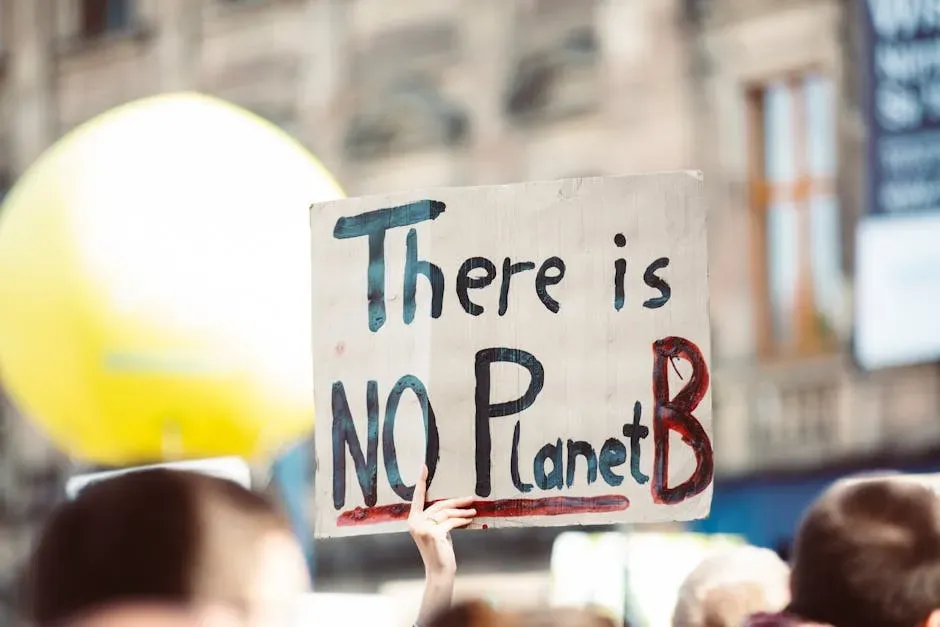
6. Climate Anxiety and Eco-Grief (Image Credits: Pexels)
Climate change is anxiety-inducing for the majority of younger respondents, with roughly six in ten Gen Zers and nearly as many millennials reporting feeling anxious about the state of the planet in the past month alone, according to a Deloitte survey of more than 22,800 young people across 44 countries. Across the board, more than three quarters of respondents say "the future is frightening," which impacts where they want to live, how many children they want to have, and how much they care about their careers.
About 45% of Gen Zers and millennials plan to quit or have already quit a job over climate concerns, according to Deloitte research. This is a notable shift from earlier generations, who largely kept personal environmental values separate from professional choices. Many Gen Zs and millennials are now actively choosing career paths based on environmental concerns, or which they believe will be less vulnerable to automation.
7. Loneliness and the Collapse of Real-World Connection

7. Loneliness and the Collapse of Real-World Connection (Image Credits: Pexels)
More than half of Gen Zers report feelings of loneliness, and more than half also report feelings of failure to achieve life goals – additional stressors linked to worsening mental health – compared to far smaller shares of the overall adult population. Gen Z has been raised with technology, social media, and direct access to information through the internet, while at the same time proving to be lonelier, more prone to depression, and more likely to struggle with suicidal thoughts than earlier generations.
As digital engagement has risen, face-to-face interaction has declined by an hour per day since the late 1980s, and with it the irreplaceable social skills and deep relationships that screens simply cannot cultivate. Six in ten Gen Z members report feeling overwhelmed by news and events happening in their community, their country, and the world at large – and that sense of overwhelm directly erodes well-being and feelings of personal empowerment.
8. Burnout in the Workplace Before Careers Even Fully Begin

8. Burnout in the Workplace Before Careers Even Fully Begin (Image Credits: Pexels)
According to the Deloitte 2025 Gen Z and Millennial Survey, more than a third of Gen Z respondents feel exhausted all or most of the time, and a similar share feel mentally distanced from their work. An additionally concerning share of Gen Zers often struggle to perform to the best of their ability due to burnout. Work-life balance remains the top priority for both Gen Z and millennials when choosing an employer, and the ability to maintain a positive balance is the top thing they admire in peers, well above traditional markers of success like job titles or material possessions – yet many are not achieving the balance they seek.
Transparency about mental health in the workplace continues to carry a stigma, with nearly three in ten from both generations worried that their managers would discriminate against them if they were to raise concerns about mental health. For those in the first fully online generation, the employment challenge extends beyond AI and automation: they are also facing a structural slowdown in hiring, stalled social mobility, and deepening skills mismatches, all against a backdrop of economic uncertainty and rising geopolitical tension.
Taken together, these eight trends don't operate independently. Financial pressure feeds mental health struggles. Climate anxiety layers onto career uncertainty. Loneliness grows in the very digital spaces that were supposed to connect people. What makes this moment distinct is not that young people face difficulty – every generation has – but that so many of these pressures have converged at the same time, during the same formative years, with the same cohort of people still figuring out who they are.