
Age-gap relationships have moved from whispered gossip to fairly ordinary conversation. Surveys suggest a large share of adults have dated someone a decade or more removed from their own age bracket, and nobody bats an eye the way they might have a generation ago. Yet familiarity hasn't erased friction, and plenty of younger women who date older men describe a specific set of habits that quietly wear on them over time, patterns that rarely show up on a first date but surface once the relationship settles into routine.
1. Treating the relationship as proof of their own desirability

1. Treating the relationship as proof of their own desirability (Image Credits: Unsplash)
For some older men, dating someone significantly younger becomes less about the actual person and more about what it signals to friends, coworkers, or an ex. In some social circles, dating a younger woman is seen as a status symbol or indicator of desirability, which can motivate some men’s choices. That framing tends to leak out in small ways, an offhand comment at a party, a certain pride in being seen together in public.
Younger women pick up on this faster than most men expect. Being treated as an accessory to someone else’s self-image, rather than as an equal partner, is one of the quicker ways a relationship starts to feel hollow. The double standard around this dynamic hasn’t fully disappeared either, since research shows that just over half of people believe it’s more socially acceptable for a man to date someone 10 or more years younger than for an older woman to date a younger man, which only reinforces the temptation for some men to lean into the optics rather than the substance.
2. Refusing to adapt their communication habits

2. Refusing to adapt their communication habits (Image Credits: Unsplash)
Texting sounds like a small thing until it becomes a daily source of tension. One of the biggest differences when dating someone a decade or more older or younger is that each person may communicate in the way it was done when they were coming of age, from texting versus phone calls to how much of life gets shared on social media. Many older men default to short, purely functional messages, then wonder why their partner reads distance into it.
That instinct isn’t random. People in Generation X or earlier usually text with a different purpose and mindset, treating it as more functional, for example to confirm plans, than conversational. A younger woman who grew up narrating her day through texts can experience that clipped style as coldness, even when nothing personal is meant by it, and when a man refuses to even try adjusting, the gap tends to widen rather than close.
3. Going quiet on health and aging instead of planning together
3. Going quiet on health and aging instead of planning together (Image Credits: Pexels)
Nobody wants to spend a date talking about future medical needs, but avoiding the topic entirely creates its own problems. Health and aging pose real challenges in age-gap relationships, since older partners may face declining health sooner, raising questions about caregiving or longevity. When an older man brushes off every mention of this as unnecessary worry, it often reads as denial rather than confidence.
The concern isn’t really about mortality itself. It’s about fairness. Younger partners may end up assuming caregiving roles earlier than expected, which can lead to emotional and physical burnout, though open discussions about future health needs can help mitigate these risks. A partner who refuses those conversations is quietly shifting a heavier burden onto someone who never agreed to carry it alone.
4. Keeping finances vague or using money as leverage

4. Keeping finances vague or using money as leverage (Image Credits: Pexels)
Money differences show up almost immediately in age-gap couples, and how a man handles that gap matters more than the gap itself. Financial planners who work with these couples note that money conversations are crucial in any relationship but especially when there’s an age gap, since one partner might be nearing retirement financially while the other is still paying off debt. A man who dodges those talks, or who uses financial stability as a quiet form of control, tends to raise flags fast.
There’s a psychological layer here too. Research on age-gap couples has found that perceived financial stability is something the younger partner often values more than the older one, with young women dating older men reporting higher perceived financial stability compared to being with a younger partner. That imbalance can be perfectly healthy when handled openly, but it turns uncomfortable the moment resources get used to steer decisions rather than simply support the relationship.
5. Constantly measuring her against exes, ex-wives, or his own younger years
5. Constantly measuring her against exes, ex-wives, or his own younger years (Image Credits: Pexels)
Some older men carry an entire relationship history into a new one and never quite set it down. Comments about how a previous partner handled things, or nostalgic references to who he used to be at her age, might seem harmless in the moment. Repeated often enough, though, they start to feel like she’s competing with a memory instead of building something new.
This pattern tends to reflect unresolved history more than genuine reflection. A younger partner rarely signed up to be a stand-in for someone else’s past, and when comparisons become a running theme, it signals that the emotional work of moving on hasn’t fully happened yet. That’s less about age and more about readiness, though age often gives more time for old patterns to calcify.
6. Expecting traditional roles while claiming to want an equal partnership

6. Expecting traditional roles while claiming to want an equal partnership (Image Credits: Unsplash)
Plenty of older men genuinely believe they’re progressive, right up until old scripts kick in during a disagreement. One might assume that a younger woman dating a significantly older man implies traditional gender roles, though many age-gap relationships in the current decade challenge that assumption by embracing more egalitarian structures. The gap between stated values and daily behavior is where the concern actually lives.
It shows up in small decisions, who’s expected to compromise on career moves, who manages the household logistics, whose schedule takes priority. When an older man’s actions quietly default to a more traditional arrangement despite saying he wants equality, younger women tend to notice the mismatch quickly, and it rarely feels accidental after it repeats a few times.
7. Mentoring her in ways that slide into condescension
7. Mentoring her in ways that slide into condescension (Image Credits: Pexels)
Guidance from someone with more life experience can be genuinely valuable, and plenty of age-gap couples describe this as a real strength of their relationship. The older partner might serve as a mentor in career or personal decision-making, while the younger partner can reignite curiosity or adaptability in the older one, fostering learning on both sides. The trouble starts when mentorship stops being mutual.
Unequal footing in a relationship rarely goes unnoticed. Researchers studying attitudes toward age-gap couples have found that prejudice toward these pairings often stems from perceived relational inequity, with age-gap relationships more disliked and seen as less equitable compared to age-matched couples. An older man who talks over her opinions, treats his experience as automatically superior, or frames every disagreement as her simply not knowing better yet is turning a potential strength into a source of resentment.
8. Being reluctant to make the relationship visible
8. Being reluctant to make the relationship visible (Image Credits: Pexels)
Some older men are perfectly comfortable in private but noticeably hesitant in public, avoiding introductions to family, skipping work events together, or keeping things low-key around friends. Given how age-gap relationships are still perceived, that hesitation isn’t entirely surprising. Old stigmas around these pairings have gradually faded, and younger women and older men are finding renewed acceptance, though some suspicion remains.
Still, understanding where the hesitation comes from doesn’t make it easier to sit with. When a partner seems more concerned about outside judgment than about showing genuine commitment, it sends a message regardless of intent. Younger women in these relationships often say this particular behavior stings more than any age difference itself, because it feels like being hidden rather than protected.
9. Monitoring her social life instead of trusting the relationship
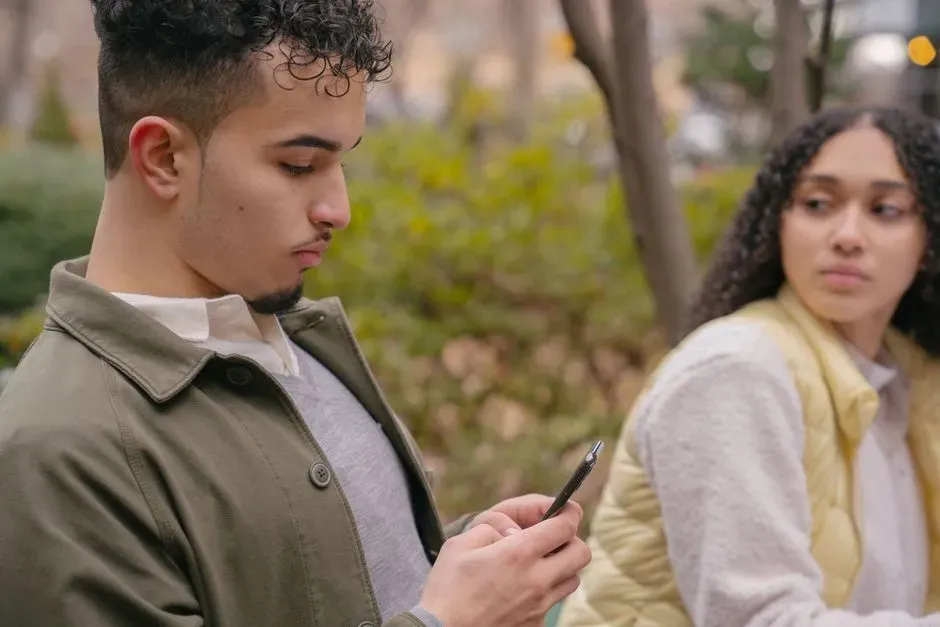
9. Monitoring her social life instead of trusting the relationship (Image Credits: Pexels)
Jealousy isn’t unique to age-gap couples, but it can take a distinct shape when the age difference is significant. Older romantic scripts often positioned the man as protector and primary provider, a dynamic that followed a familiar order for years, where the man was older, had more resources, and sometimes played the role of protector, while the woman was often younger with fewer resources to her name. That inherited imbalance can quietly morph into possessiveness if it goes unchecked.
It shows up as pointed questions about who she’s texting, subtle discomfort with her friendships, or a need to know her schedule down to the hour. None of that reads as care once it becomes a pattern. Most younger women can tell the difference between a partner who’s simply interested in her life and one who’s trying to control it, and that distinction matters more than any birth year on a driver’s license.
These patterns don’t describe every older man in a relationship with a younger woman, and plenty of age-gap couples navigate their differences with patience and genuine mutual respect. What tends to separate the relationships that last from the ones that unravel isn’t the age gap itself, but whether these specific behaviors get named, discussed, and adjusted before they harden into habits nobody wants to break.