
Some relationships feel effortless not because the couple never argues or never gets tired, but because of a handful of small habits that quietly say "you matter most to me." These gestures rarely show up in grand romantic speeches. They live in the ordinary moments, the texts, the glances, the way you show up on an unremarkable Tuesday.
Relationship researchers have spent decades studying what actually predicts closeness and satisfaction over time, and the findings consistently point to small, repeated behaviors rather than occasional big gestures. Below are nine of the most well-documented habits that make a partner feel genuinely chosen, seen, and prioritized.
1. You put the phone down when they walk in the room
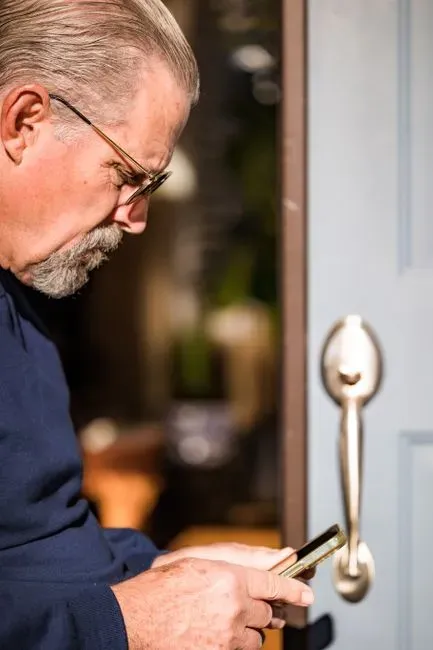
1. You put the phone down when they walk in the room (Image Credits: Pexels)
Full attention has become one of the rarest gifts a person can give another, which is exactly why it lands so hard. Psychologist John Gottman’s research on couples found that consistent, attentive presence during everyday interactions builds what he calls emotional bank accounts, small deposits that add up to trust and closeness over time. When someone closes a laptop or sets a phone face down the moment their partner enters, it sends an unmistakable signal of priority.
This habit matters more now than it did a decade ago, simply because distraction has become the default state for most people. A 2023 Pew Research Center survey found that many partnered adults report feeling at least occasionally distracted by their phone while spending time with their significant other. Choosing to override that pull, even for a few minutes, reads as a deliberate act of care rather than a coincidence.
2. You remember the small details they mentioned once

2. You remember the small details they mentioned once (Image Credits: Pexels)
Bringing up a detail your partner mentioned weeks earlier, a stressful meeting, a childhood memory, a random craving for a specific snack, tells them you were actually listening rather than just waiting for your turn to talk. This kind of attentive recall is closely tied to what researchers call responsiveness, a concept studied extensively by psychologist Harry Reis and colleagues at the University of Rochester. Their work suggests that feeling understood and validated by a partner is one of the strongest predictors of relationship satisfaction.
The effect compounds over time because it signals ongoing interest rather than a one time performance. Asking “how did that presentation go?” three days after they mentioned it in passing carries more weight than any generic “how was your day.” It shows the information registered as important simply because it came from them.
3. You defend them, even when they're not in the room

3. You defend them, even when they're not in the room (Image Credits: Pixabay)
Loyalty expressed in someone’s absence often matters more than loyalty expressed to their face. When a partner hears secondhand that you stood up for them, corrected a misunderstanding about them, or simply refused to join in when someone criticized them, it builds a specific kind of trust that direct compliments cannot replicate. This is because it proves the care exists independent of an audience.
Attachment researchers have long noted that felt security, the sense that a partner is reliably on your side, is foundational to long-term relationship stability. This security does not come from occasional dramatic gestures but from consistent behavior across many small situations, including ones the partner never even witnesses. Knowing someone has your back when you’re not there to see it is a quiet but powerful form of reassurance.
4. You ask follow-up questions instead of moving on

4. You ask follow-up questions instead of moving on (Image Credits: Unsplash)
A follow-up question is a small thing, but it changes the entire texture of a conversation. Instead of nodding and shifting to a new topic, asking “what happened after that?” or “how are you feeling about it now?” keeps the focus on your partner’s experience a little longer. This pattern aligns with what relationship scientists describe as active constructive responding, a communication style linked to higher relationship satisfaction in studies led by psychologist Shelly Gable.
Gable’s research specifically found that how partners respond to each other’s good news, not just bad news, shapes relational closeness significantly. Enthusiastic, curious follow-up when someone shares something positive tends to strengthen the bond more than a passive or muted reaction. People remember who got genuinely excited for them, and who just moved the conversation along.
5. You apologize without adding a "but"

5. You apologize without adding a "but" (Image Credits: Pexels)
A clean apology, one without justification, deflection, or a counter-complaint tacked on, communicates respect in a way that few other phrases can. Saying “I’m sorry I was short with you earlier” and stopping there is different from saying the same thing followed by an explanation of why the other person provoked it. Conflict researchers, including Gottman, have identified defensiveness as one of the four communication patterns most corrosive to relationships, alongside criticism, contempt, and stonewalling.
Partners who consistently avoid layering excuses onto their apologies tend to resolve conflict faster and with less residual resentment. It signals that the relationship matters more than winning the specific argument. Over time, this builds a pattern where both people feel safe admitting fault, which lowers overall conflict intensity.
6. You make small plans just for them

6. You make small plans just for them (Image Credits: Pexels)
Not every gesture needs to be an anniversary dinner or a surprise trip. Picking up their favorite coffee order without being asked, saving an article you know they’d find interesting, or planning a low-key evening around something they mentioned wanting to do carries real weight precisely because it wasn’t required. These micro gestures function as what researchers call responsive caregiving, small acts that demonstrate ongoing attentiveness rather than obligation.
A 2022 study published in the Journal of Social and Personal Relationships found that partners who reported frequent small acts of thoughtfulness also reported higher daily relationship satisfaction, often more so than those relying primarily on occasional grand gestures. Consistency, in other words, tends to outperform intensity. It is the accumulation of these unforced plans that creates the sense of being someone’s priority.
7. You give them credit in front of other people

7. You give them credit in front of other people (Image Credits: Unsplash)
Publicly acknowledging a partner’s accomplishments, ideas, or good qualities in front of friends, family, or coworkers does something private compliments cannot. It combines validation with a form of social proof, showing the partner that the admiration is genuine and not just something said behind closed doors. Bragging about a partner’s promotion, mentioning their talent at a dinner party, or simply saying “she’s the one who actually figured that out” reinforces status and appreciation simultaneously.
This behavior also reduces what social psychologists sometimes describe as relational insecurity, the low-grade worry that a partner’s affection is conditional or private only. When someone sees their partner speak well of them to others, it removes ambiguity about where they stand. It is a small act, but it carries social weight that a private “I’m proud of you” cannot fully replicate.
8. You check in during hard days without being asked

8. You check in during hard days without being asked (By laszlo-photo, <a href="https://commons.wikimedia.org/w/index.php?curid=9020864" target="_blank" rel="noopener">CC BY 2.0</a>)
Sending a message like “thinking about you today, how’s the meeting going” during a partner’s stressful stretch requires noticing their schedule and emotional state without being prompted. This kind of proactive check-in reflects sustained attention rather than reactive support, meaning it happens before a partner has to ask for help or comfort. Emotional support researchers note that anticipatory support, offered before it’s explicitly requested, tends to feel more meaningful than support given only after a partner voices distress.
This matters because asking for support can sometimes feel like admitting vulnerability or being a burden, which many people are reluctant to do even with a partner. When someone checks in first, it removes that barrier entirely. The partner receiving the message doesn’t have to ask, doesn’t have to explain, and doesn’t have to wonder whether their stress was noticed.
9. You choose them during disagreements, not just during peace

9. You choose them during disagreements, not just during peace (Image Credits: Pexels)
How a couple handles conflict often reveals more about the relationship’s health than how they behave when things are calm. Choosing curiosity over contempt during an argument, staying in the conversation instead of shutting down, and treating the disagreement as a problem to solve together rather than a battle to win are all markers of what Gottman’s research identifies as a strong friendship foundation within a romantic relationship. Couples who maintain basic respect and warmth even mid-conflict tend to report significantly higher long-term satisfaction than those who let arguments turn adversarial.
This does not mean avoiding disagreement or suppressing frustration. It means the underlying commitment to the partner remains visible even when the specific issue is tense. A partner who feels chosen during a hard conversation, not just during easy ones, tends to feel far more secure in the relationship overall.
None of these nine habits require grand romantic gestures or significant financial investment. What they share is consistency, attentiveness, and a willingness to prioritize a partner in ordinary, unremarkable moments rather than only on special occasions. Relationship research from the past several years continues to reinforce the same basic pattern, that small, repeated behaviors shape long-term satisfaction far more than occasional dramatic ones ever could.