
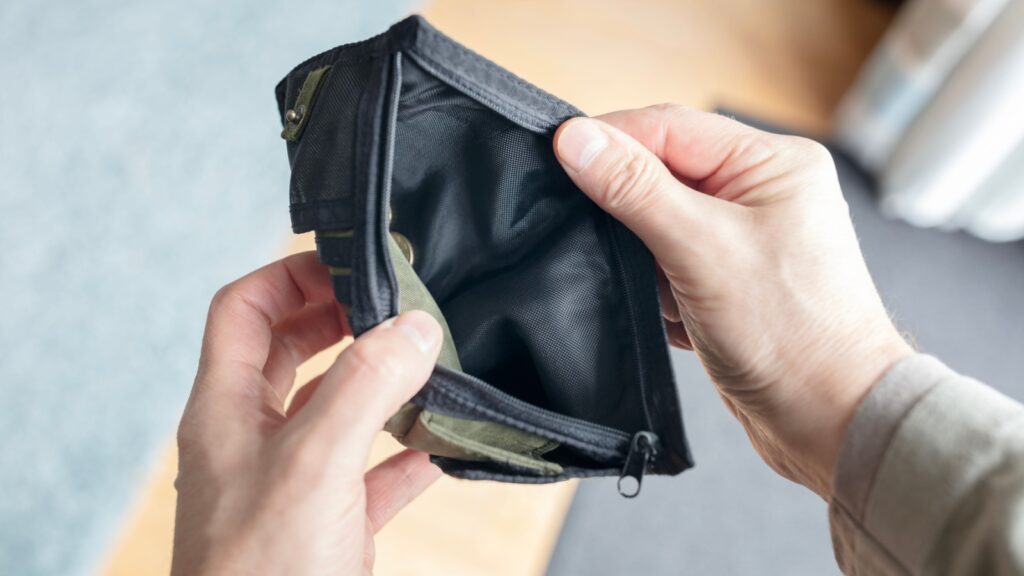
Here is the weird part about money: you can be financially fine and still feel broke. You can have all of your bills paid off, have a sum of money in your bank account, be at no risk of losing the roof over your head… and yet, for some reason, you hesitate before adding any additional toppings. You overthink even small purchases and get a tiny wave of stress when someone suggests a spontaneous weekend trip.
Sometimes it has a psychological component, sometimes it is just a habit, and at times it is just comparing yourself to others. Here are 7 small ways you could feel financially insecure (even if your bank balance tells you otherwise).
That Millisecond of Fear When Your Card Takes Too Long

You tap your card on the reader, it beeps, but then there is silence and a blinking screen. And in that half-second, you start thinking of all the horrible things that can happen in the next minute. Your brain goes into total panic mode, and you think, “This is it.”
And the next second you know, your nervous system is preparing you to face that inevitable public humiliation if your card declines. Even though rationally you know that there is money in your account. But finally, once the machine approves it, you smile casually like you are the calmest person on earth. But your nervous system? It just ran a marathon.
Checking Your Bank Account Before Every Small Purchase

You just want to buy a cup of coffee, not a yacht, but still you check your banking app to make sure you have enough in your account before pressing “pay.” You know that your balance has not changed that much in the past 24 hours, yet you still feel like every time you press that button without looking is a total reckless act.
There’s this constant feeling that you are just one impulsive latte away from bankruptcy. You know that you are not broke and that your money is safe in your bank account, but the issue is that some people are just wired to think that money will disappear the second they look away from the transaction.
Automatically Sorting by “Lowest Price”

The first thing you do when you have to find a product or purchase something is search by “price – low to high.” You do not bother to look at other categories (average star rating or most popular) first, even when you know you’re willing to pay more for a better-quality product.
And no, there is nothing wrong with saving money, but if you are willing to buy something at the lowest possible price, no matter how poor the product may end up being, your behavior is not based on logic. This habit of yours can quietly reinforce the idea that you are operating from a place of lack and scarcity.
Feeling Guilty After Treating Yourself to Something Nice

You treat yourself to a delicious meal, a nice new pair of shoes, upgrade your smartphone, go out for a weekend getaway, etc., but once you pay for them, instead of enjoying what you’ve purchased, you spend time questioning whether or not you were irresponsible. You think like “Did I really need to buy these shoes?” or “Could I have saved the money instead?”
Your guilt makes you feel as if your financial situation is fragile and that it will all unravel because of one treat you bought yourself. Just because you feel broke doesn’t always mean you have an empty wallet. You may also feel broke because you cannot relax and enjoy what you have worked hard to earn.
Always Skipping Over “Fancy” Places Out of Habit

You find yourself automatically passing over the upper-end restaurant, the higher-end department store, or the first-class flight, not because of not having enough money to justify it, but because you have trained yourself not to even think about those luxury things.
All that scarcity you experienced in your childhood has a very strong hold on you. You just feel like you do not belong in certain spaces, even though your bank account says you do. A lot of the time, when you feel broke, it is not even about money; it is more about identity and the conflict between who you think you are and your income level.
Keeping Old, Worn-Out Stuff “Just in Case”
You keep holding onto old things “just in case,” like your old cracked mug, your barely working headphones, and that black jacket with the broken zipper? You can throw all of these items away easily, but there is something in you that is holding back and resisting the thought of throwing them away.
You always have thoughts like “it still works” or “what if I need that thing later?” By no means are these frugal thoughts; they are actually fear thoughts dressed up as “practical.” These fears keep you in the mindset of being closer to having less or losing everything rather than moving toward stability.
Obsessing Over Small Discounts

You spend literally 20 minutes finding a £5 coupon code, and you feel a weird sense of victory when you save £2. That adrenaline you feel is not because of the money you saved, but because it gives you some kind of sense of control.
When you win a bargain, it gives you a sense of security that you have just outsmarted the system. Again, there is nothing wrong with being frugal, but when every purchase is treated as a battle or a negotiation, you always feel stuck in a “never enough” mindset.
14 Things Poor Kids Learned That Rich Kids Might Not Understand

While rich kids are debating which brand of sneakers to wear, poor kids are learning how to make dinner last three nights or fix something with duct tape and prayers. These are the bitter, unfiltered lessons poor kids bear in their hearts that rich kids might never fully understand. Ever.
14 Things Poor Kids Learned That Rich Kids Might Not Understand